Tom Dunne: The Ian Brown horror show and the folly of backing-track karaoke
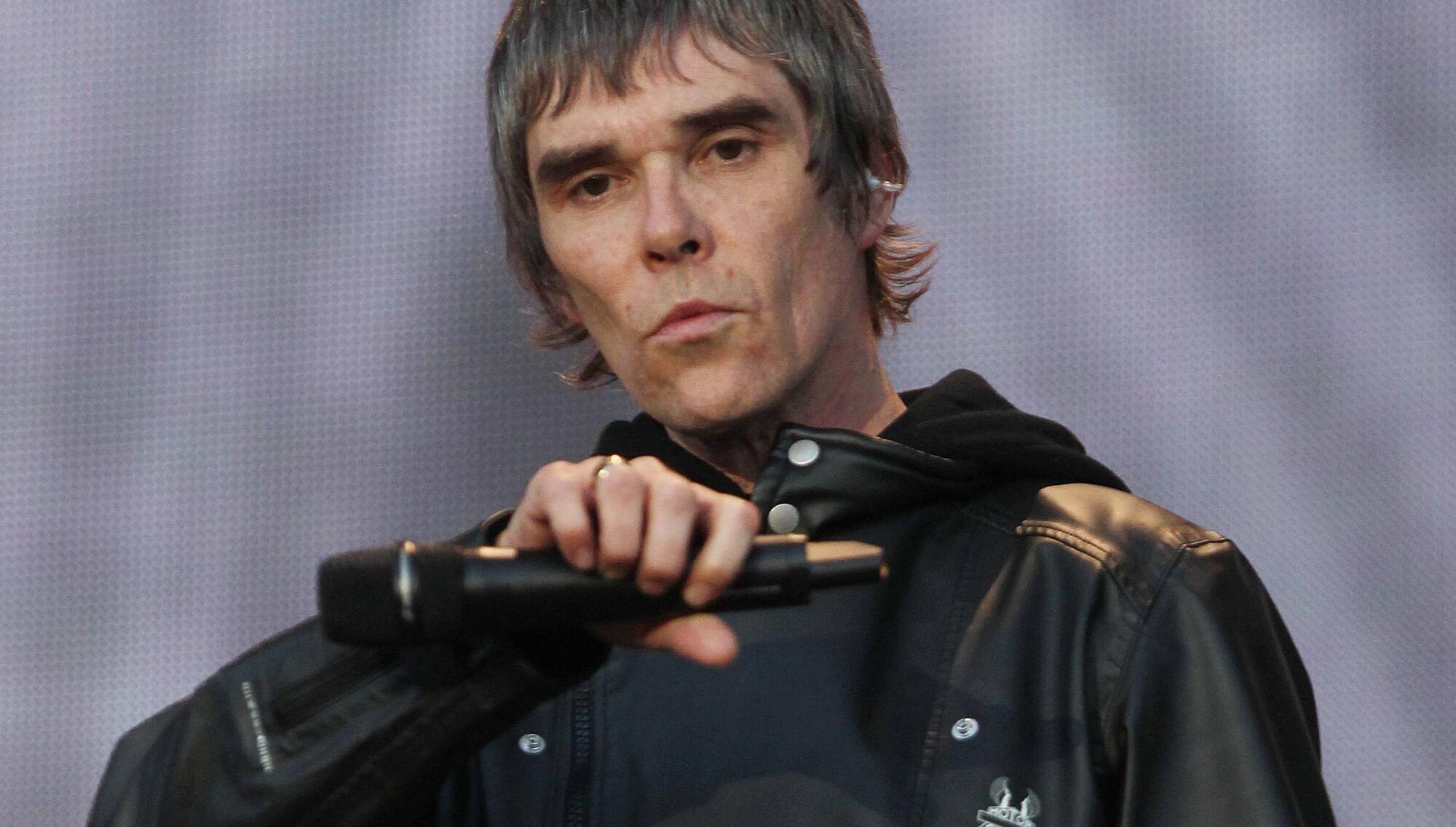
Ian Brown has been getting stick for performing badly with a backing track. Picture: Collins Photos
âTonight Matthew, Iâm going to be Ian Brown,â said the man in the 90s top. âUncle John isnât handling the divorce well,â we thought collectively eyeing his clothes and hair.
 âA head thatâs worn out two bodies,â said one cruelly. âGo on, Uncle John, show us what youâve got.âÂ
 And then he started to sing. It was woegeous. âAh, the poor man,â we sighed, âNot a note in his head, a crime, an illegal noise, someone do the kind thing and stop him!âÂ
It was then the penny dropped. âWait! This is so bad, so utterly note-free, it can only be the real McCoy! Ian Brown!âÂ
It was hard to take. Watching the infamous footage that emerged this week of him at that gig in Leeds, a live vocal over a backing track, the crowd stupefied at the karaoke from hell. How had it come to this? The man who was once at the beating heart of the coolest band on the planet now skirting perilously close to Milli Vanilli territory.
Gutted to see @ianbrown turn up to his ÂŁ40 a ticket, sold out gig at leeds tonight WITH NO BAND. Iâm a life long fan but it was bad. #ianbrown does karaoke and butchers his own tunes. Most were too pissed to care but I had to get out after this one. Longsight M13 was a highlight. pic.twitter.com/8owVy2NHjS
— Steve Latham (@I_R_Mole) September 25, 2022
I very specifically blame The Beatles and Brian Wilson for all this. It was they who introduced the concept of âusing the studio as an instrument". Previously the rule had been to not record anything that you couldnât recreate live. But, âto hell with that,â they said, âletâs see what this little four-track monster can do!âÂ
The answer turned out to be and . So okay, they were onto something. Soon Pink Floyd was bringing beds into the studio. âWe wonât be out âtil this is done,â they said. We thought this craziness ended with Tears for Fears , which took 3,000,000 studio hours to record, but we were wrong.
The only problem with the âuse the studio as an instrument,â idea is that it didnât quit while it was ahead. Instead, it hung around like Manchester United after Ferguson. That team should have dissolved like ashes in the wind. The players should have all gone solo. But no. And instead, well, indeed.
Musically, the real problem was 'what happened next'. Some bright spark suggested that we could get over the problem of ânot being able to re-create what we recorded in the studioâ, by recording some sounds onto a backing track that the live band would play along to.
Over the years we all got used to this. A four-piece band would at times produce sounds we knew werenât coming from their instruments. But we didnât mind. The people on stage were live, the vocal was live. It was just a bit of tech trickery and we loved it.
But there were some drawbacks. The bigger the show the more backing track there seemed to be. Everything sounded like the record. When was the last time you saw Edge play a solo different to the one on the record â or, for that matter, just make a mistake?
Once, mistakes were often the unexpected highlight of a gig. The guitarist would lose the plot, the singer might forget the words or the drummer falls from the riser. Little foibles that just acted to underline the humanity of it all.
One such odd highlight was at a Joe Jackson gig in the Olympic Ballroom. Joe was at the peak of his Iâm The Man fame. Hits like 'Is She Really Going Out with Him' and 'Itâs Different for Girls' were driving the audience into a sweat-drenched frenzy.
And then, calamity! Guitarist, Gary Sanford, broke a string. It was mid-song, we eyed him nervously as the band played on, as if waiting for him. Today the guitar would be swapped out seamlessly but Gary carried on.
He somehow managed to maintain a rhythm whilst, at the same time, like a circus magician, he also changed the string. We held our breath. Slowly he got the string on and tuned it, and then, with a nod to the band, launched into the solo. The venue erupted.
Backing tracks donât break strings. They donât make mistakes. Nor do they trade knowing glances or hold your hand for a post-gig bow of celebration. You donât have shared history with them, or chemistry. But at least they canât disagree with you, about say, vaxxing.
GLASGOW. HATERS HATE AND LOVERS LOVE! https://t.co/QlfHexHeW8
— Ian Brown (@ianbrown) September 27, 2022
So where does this leave Ian? He would appear to be moving from a rock pantheon to another world completely. Here he will rub shoulders with the other backing track greats: with names such as Britney, Tiffany, Milli, and Westlife.
Not quite The Resurrection weâd hoped for.