Robert Harris: 'You can’t escape history. It will come back and bite you'
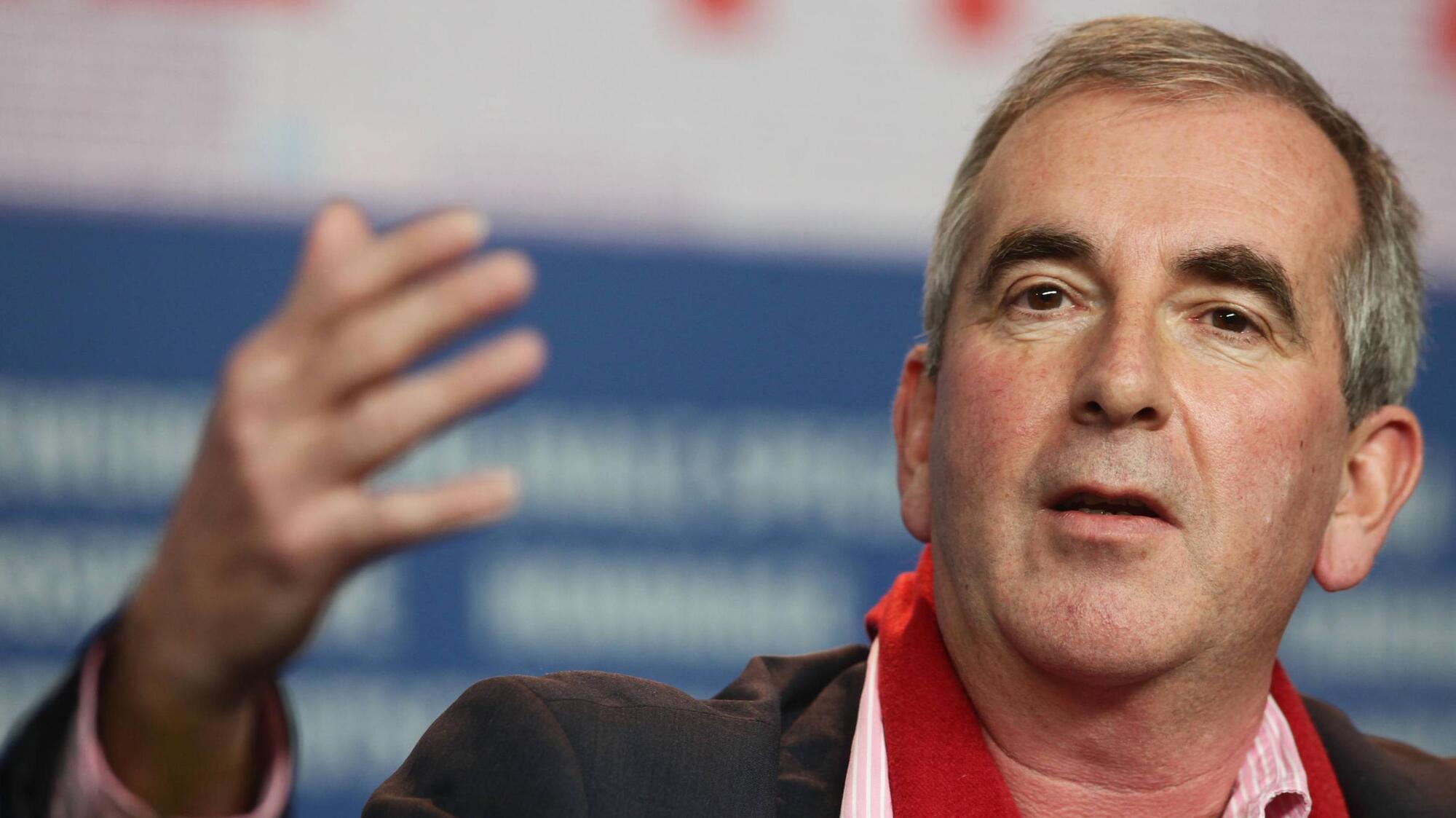
Act Of Oblivion by Robert Harris is riding high in the Irish books charts. Picture: Sean Gallup/Getty Images
Robert Harris’s novels are crystal balls that give us a glimpse of a future rushing at us like a freight train. Archangel, his bestseller from 1998, is about the revival of Russian Imperial nostalgia (as physically embodied by a ‘secret heir’ to Stalin).
In the Fear Index, from 2011, he predicted machine intelligence — the algorithms that pull the strings of our social media feeds and internet searches — leading us down a dark path. His 'Rome' trilogy — Boris Johnson is a fan — explored American decline and fall through the prism of the classical world.
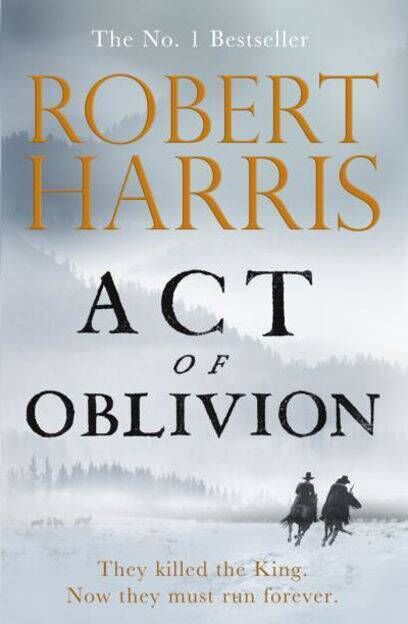
Harris’s latest, Act of Oblivion, also has an oracle-like quality. But the degree to which it plugs into our present moment was not clear to him when writing it.
The subject is the death of a monarch — in this case King Charles I during the English Civil War — and how their passing changed the world in ways nobody could have foreseen. It's a topic conversation that has, for obvious reasons, taken on fresh relevancy.
For Harris, a novel should never simply be a novel. If his books have a lesson, it is that you can’t escape history.
“You know, there’s the inherent power of Germany in the heart of Europe. Or the inherent resentment and a mild paranoia of Russia. Or the nature of America — weaknesses or flaws in its history. The fact it is founded essentially on a genocidal process… and a reliance on slave labour to make the economy work. You can’t escape history. It will come back and bite you. That is one of the things I believe very strongly and I work through in my books.”
Archangel, which presented Russian imperialism as a sleeping beast buried in the permafrost but sure to one day reawaken, feels particularly prescient in 2022. “ You had a kind of a flourish of interest,” he nods. “Of course, it does predict why Russia will be a menace in the future. My stock in trade is power and politics.”
Act of Oblivion is, in the first instance, a ripping yarn. Harris has always believed that, whatever their deeper meanings, the primary duty of his books, is to take the reader on a journey. This one is a rollicking 17th-century rollercoaster ride.
The setting is Colonial North America in the 1660s, during the bloody aftermath of the English Civil War. The Monarchy has been restored with the accession of Charles II and two of the puritan militants who signed the previous king’s death warrant have gone on the run in America. The secretary of the “Regicide Committee” is charged with tracking down the fugitives (both real historical figures). He will stop at nothing to bring the duo to justice.
“You are aiming for a novel to work on lots of different levels. The most fundamental level is that of engaging the reader and holding the attention throughout,” says Harris.
“The chase element made that possible. And also that landscape — it’s not very much written about [pre independence North America]. I also wanted to write about the battle of ideas of the Civil War. It was a huge formative event. In the 17th century, the English, of all people, cut off the head of the king and became a republic for 11 years. It’s startling — 150 years before the French, 250 years before the Russians. And I think this affected the whole world, actually. It was the beginning of Britain being a powerful nation. It had now a huge army. And militarist rulers. It was a military dictatorship, essentially.”
Harris was a successful political journalist before becoming a novelist (he was appointed political editor of the London Times at 30). And so he is well aware that writers are shaped by their times. In the case of the Act of Oblivion, this book about the British civil war was written while the UK was caught up in another, thankfully less violent, internecine conflict — over Brexit. It also came together against the backdrop of the British Black Lives Matter protests, which turned into a public reckoning with the country’s imperial legacy.
“I started thinking hard about the book around that time. These subjects, they kind of pick you. It’s a lot about historical legacy and memory. You think you’re right and then you realise you may have been wrong [about British history and Cromwell]. It's such a giant political episode, the Civil War. Its ramifications are so endless. It touches on how you run a society and on faith. And elemental things like vengeance and justice.”
Cromwell is several years dead during the time frame of the novel. But the Lord Protector looms throughout: there are references to the atrocities he committed in Wexford and Drogheda, in which Irish forces and civilians were butchered by his army. Harris says that people in Britain have a nuanced take on Cromwell and do not necessarily see him as a guardian of British democracy.
“There's a degree of ambivalence. He’s recognised as having been 'a great man'. At the same time, what happened in Ireland is a great stain upon his reputation. And the fact that his statue stands outside the Houses of Parliament is remarkable, given that nobody shut it down more often than he did if he didn't like what it was saying. So as a figure he was regarded ambivalently at the time. And I think he’s regarded with some ambivalence today."
Except for The Fear Index — which takes place in the contemporary world of high finance — Harris’s novels tend to be set in the past. He did try to wrestle with modern America but found the subject too vast and problematic and turned to Ancient Rome instead (and wrote about America through the back door essentially). Could he imagine writing about contemporary British politics and the circus into which it has descended?
“Given that I was a journalist, obviously, it’s a natural temptation to me to try and grab at the contemporary world in a novel. It would date almost before you've finished it — before the ink had dried on the page, it would have been overtaken by events. So imagine you'd started writing a novel about Boris Johnson. And now he's got gone — at least he’s gone temporarily.”
The danger with ripping a story from present-day headlines is that it would tip into caricature, he feels. “The whole idea of fiction is to tell a story. But if you want to explore interesting themes, you have to take a step back, have to find some way of universalising what it is you want to say. And creating characters and creating a world that is all of itself and isn't at the mercy of being a kind of Spitting Image sketch… that is journalism. That’s the difference. Fiction should be its own world. And it should last, really.”
Harris was close to Tony Blair though they had a falling out over the Iraq War. He wrote about a Blair-like figure in his 2007 novel The Ghost. Given the atrocious quality of recent British prime ministers, have his views on Blair softened in the intervening decade and a half?
“Of course one would wish that he were back. But given that he won't acknowledge that the invasion of Iraq was a mistake, given that he walked away from politics and went off to make money… He's sort of ruled himself out, unfortunately. But he still talks a lot of sense. He was of his time. It's very hard to reinvent yourself — especially if you've taken yourself out of the day-to-day rough and tumble. If he had stayed in the House of Commons — he could have come back. He was a relatively young man.”
Blair was a fascinating character. He contained multitudes: idealism, hubris, ambition — a zeal to change the world for the better that eventually tipped into a messiah complex. And he and Harris were at one point close — friends really (Blair’s political ally Peter Mandelson is godfather to one of Harris’s children).
“It was a great opportunity for me. Henry James referred to a particular summer that he spent with friends — five or six weeks. He said afterwards that from that one summer he got all the material he would ever need to write fiction. I'm not comparing myself to Henry James. But in that time when I was a political journalist, in particular, when I was very close to the New Labour leadership, I saw power close up — in a way that has stood me in good stead ever since.
"Very few journalists and almost no novelists have ever actually stood with the prime minister at 10 o'clock on election day when the exit polls come in. I was there with him, just the two of us. It gives you confidence in a way of writing about power, which is very useful."
A knock on the door announces the arrival of Harris’s lunch. In a few hours, a taxi will convey him to Dublin Airport for his flight back to London. While there, reminders of Elizabeth II’s decline will be everywhere.
Harris’s novel about monarchs and how their deaths can change the world has already acquired a new resonance. It will be another reminder of how his books — even when they have both feet in the past — serve as guideposts to the world in which we live today.
- Act of Oblivion is out now