How Maggie O'Farrell is shining a light on the hidden Renaissance past
"The best book you’re going to write is the one you can’t not write – the one that’s shouting loudest in your ear."
How Maggie O'Farrell is shining a light on the hidden Renaissance past

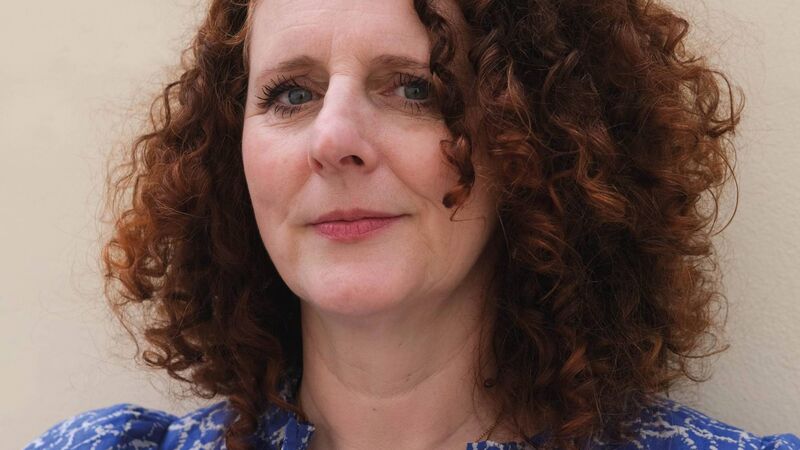
Maggie O'Farrell: listed by Google as British, but very much identifies as Irish

Maggie O’Farrell is stuck in Edinburgh Festival traffic. Living there for the past 12 years, she says festival jams are part of the city’s summer life. She’s rushing home to tell me about her new book, The Marriage Portrait, a rich compelling historical novel, set in Renaissance Italy, which imagines the life of a lesser known Medici, a teenage girl called Lucrezia. This follows her hugely successful, award-winning novel, Hamnet, published in 2020, featuring another lesser known family member, Shakespeare’s only son, Hamnet, who died of plague aged 11.


Lucrezia de’Medici was a real person. The daughter of the Duke of Florence and Tuscany, she was married aged 15 to the Duke of Ferrera, before dying a year later in suspicious circumstances – it is thought that her husband poisoned her. Uxoricide amid the ruling classes was not uncommon. There is only one known portrait of Lucrezia, hanging at the Uffizi in Florence – she is believed to be the subject of the Robert Browning poem, My Last Duchess.

So why, I wonder, did O’Farrell pick such a relatively obscure person from history? What she does with Lucrezia’s life arc is immersive and cinematic, and as the end of the story approaches, suspenseful and thrilling – but why her?

“It goes back to my love for Robert Browning,” she says. “I’ve always loved his dramatic monologues, such amazing pieces of work. They’re so technically perfect, but also incredibly perceptive psychological studies. I was rereading them just before the pandemic, and wondering if My Last Duchess, his most famous one, was based on a real person, so I looked it up.”

It was. And it sparked a visceral reaction in O’Farrell.

“There’s only one known portrait of Lucrezia in existence – and as soon as I saw her face, loading really slowly on my phone, I thought, this is my next book, this is who I want to write about,” she says. “To give this girl a voice and a story, and bring her out from behind Robert Browning’s curtain, allow her to tell her own narrative. That story really fired me.” Lucrezia is a very modern character – bright, kind, creative, brave.

“Obviously the life of a teenager in 16th century Florence is unimaginably different from the lives of young women in the 21st century,” says O’Farrell. “But I don’t think the human spirit or the human heart changes that much. Her life was so constrained and she only had one destiny, but that isn’t to say that she didn’t have dreams and hopes and fears, and a rich, complex inner life.” 

Lucrezia – the real one – also had a forward-thinking father, the Grand Duke. “What interested me about her father was that although his daughters were destined to make marriages that were essentially political mergers for him to consolidate his interests and power, I think he had great respect for women,” she says.

“Very unusually for his class and time, he was faithful to his wife – he adored her, and ceded his rule to her during his frequent absences, which was astonishing. Nobody else did that. There were lots of letters from the Florentine court from people who were shocked because they had to be deferential to a woman.

“Also, he educated his daughters alongside his sons, so Lucrezia and her sisters would have had access to this incredible education – they’d have spoken several languages, played musical instruments, painted, everything. Despite her destination being marriage, all that education and intelligence doesn’t just disappear – it needs some kind of outlet. Even the walls of the Medici castle where Lucrezia would have grown up were covered in original Botticelli frescos. Imagine the effect that would have on you.”

O’Farrell had a strange experience when visiting the tomb of the real Lucrezia. “I wrote the book before I did the footwork,” she explains. “When I did visit Florence, just after lockdown, it was incredible. The whole place was deserted – I had the Uffizi gallery to myself. And then I went to Ferrara, after I’d been writing and thinking about Lucrezia for almost two years, to the point that she almost felt like one of my family. So going to her tomb was incredibly emotional. I hadn’t quite bargained on that.” 

O’Farrell is not exclusively a writer of historical fiction (which she defines as novels which “go back further than living memory – you can’t just ask someone”) – but creates novels from ideas which arrive unbidden: “It’s not necessarily you who chooses the book – it’s the book which chooses you. The best book you’re going to write is the one you can’t not write – the one that’s shouting loudest in your ear.”

Maggie O'Farrell: "I don’t have an accent and I left when I was two – so I suppose I’m aware of that whole Plastic Paddy thing. I didn’t want to be that!"

Since 2000, there have been 11 – nine novels, a memoir, and a children’s book. There have also been a lot of awards – the Betty Trask for her debut, After You’d Gone; the Somerset Maugham for The Distance Between Us; the Costa for The Hand That First Held Mine; the PEN for her memoir I Am, I Am, I Am; and multiple awards for Hamnet, including the Women’s Prize for Fiction.

She had the idea for Hamnet around 2014, but couldn’t write it until her own son was past the age of 11. “It was a kind of superstition,” she says. “I knew there would be elements of my own son in Hamnet, the boy character, and it did turn out that way. But in Hamnet’s twin Judith there’s an awful lot of my middle daughter, and Judith was the one who survived and lived until she was 72, which in those days was astonishing.”

O’Farrell’s daughter, now 13, was born with anaphylaxis, which results in severe life-threatening allergic reactions: “So if there’s any wish fulfilment or chanelling of my daughter in the novel, it’s Judith living an incredibly long life.” 

O’Farrell has three children with her partner, the novelist, William Sutcliffe, whom she met at Cambridge University when she was 19, and with whom she was friends for a decade before they became romantic partners. She says living with another novelist feels “normal”, apart from recently having to hide one of his novels from the 13-year-old. (It’s his 1998 book Are You Experienced?, about backpacking in India, and is hysterically funny but NSFW – or kids.)

Maggie O’Farrell is listed by Google as British, but very much identifies as Irish. Born in 1972 in Coleraine, Co Derry, the family moved to Wales two years later, when her dad, an economist from Dublin, got a job at the University of Cardiff. Her mum is second-generation Irish. “I don’t think my parents ever thought the move from Ireland was anything but temporary,” she says.

When she was 13, the family moved again, to Scotland, where she stayed until university. Her accent is neither Irish, Scottish, or Welsh, but soft English with a Celtic tinge. She remembers what it was like growing up Irish in Britain in the 70s and 80s.

“It wasn’t that easy – we had a lot of anti-Irish stuff aimed at us,” she says. “At one end it was lots of Irish jokes, and at the other it was things like a teacher taking the register when I was about 11, who stopped and said, ‘oh that’s an Irish name, are you Irish, are your parents in the IRA?’ It was horrible – everybody laughed, but it wasn’t funny. It wasn’t funny at all.” It kept happening, well into the 90s. “When I worked at the Independent [newspaper, in London], I remember a colleague took a phone message for me from my dad,” she says. “He said ‘whenever I speak to your dad on the phone, I always think we’re going to get a bomb warning.’ Again, he thought it was funny.” She laughs at how things have changed.

“Now everyone in the UK wants an Irish passport. The wheel has turned. I no longer get terrorist jokes – just pleas for my passport.”

A fan of Irish writing – she mentions Claire Keegan ( “a genius”), Anne Enright, Donal Ryan, and says Joyce’s Dubliners is “one of my favourite books of all times” - she’s mindful of being perceived as what she terms a ‘plastic Paddy’.

“The Irish diaspora is so enormous,” she says. “I’ve met people in far flung parts of the world who have said they’re Irish because they have one great-great-grandparent – I don’t want to be one of those people.

“Obviously I’m incredibly proud of my Irish background, but there’s such an astonishing literary tradition, the writing that comes out of Ireland is jaw-dropping, and I don’t want to seem as though I’m elbowing my way into that tradition. So although I am Irish, I don’t have an accent and I left when I was two – so I suppose I’m aware of that whole Plastic Paddy thing. I didn’t want to be that!” No chance. O’Farrell’s writing transcends time and place, far-ranging and without borders.

The Marriage Portrait is out now in trade paperback. O’Farrell will be in conversation with Irish Examiner columnist Edel Coffey in the Pavilion Theatre in Dun Laoghaire on Friday Sept 16 at 8pm.

More in this section

Scene & Heard

Newsletter

Music, film art, culture, books and more from Munster and beyond.......curated weekly by the Irish Examiner Arts Editor.

Cookie Policy Privacy Policy Brand Safety FAQ Help Contact Us Terms and Conditions

© Examiner Echo Group Limited