Francis Fukuyama's book defends liberalism — in the classical sense
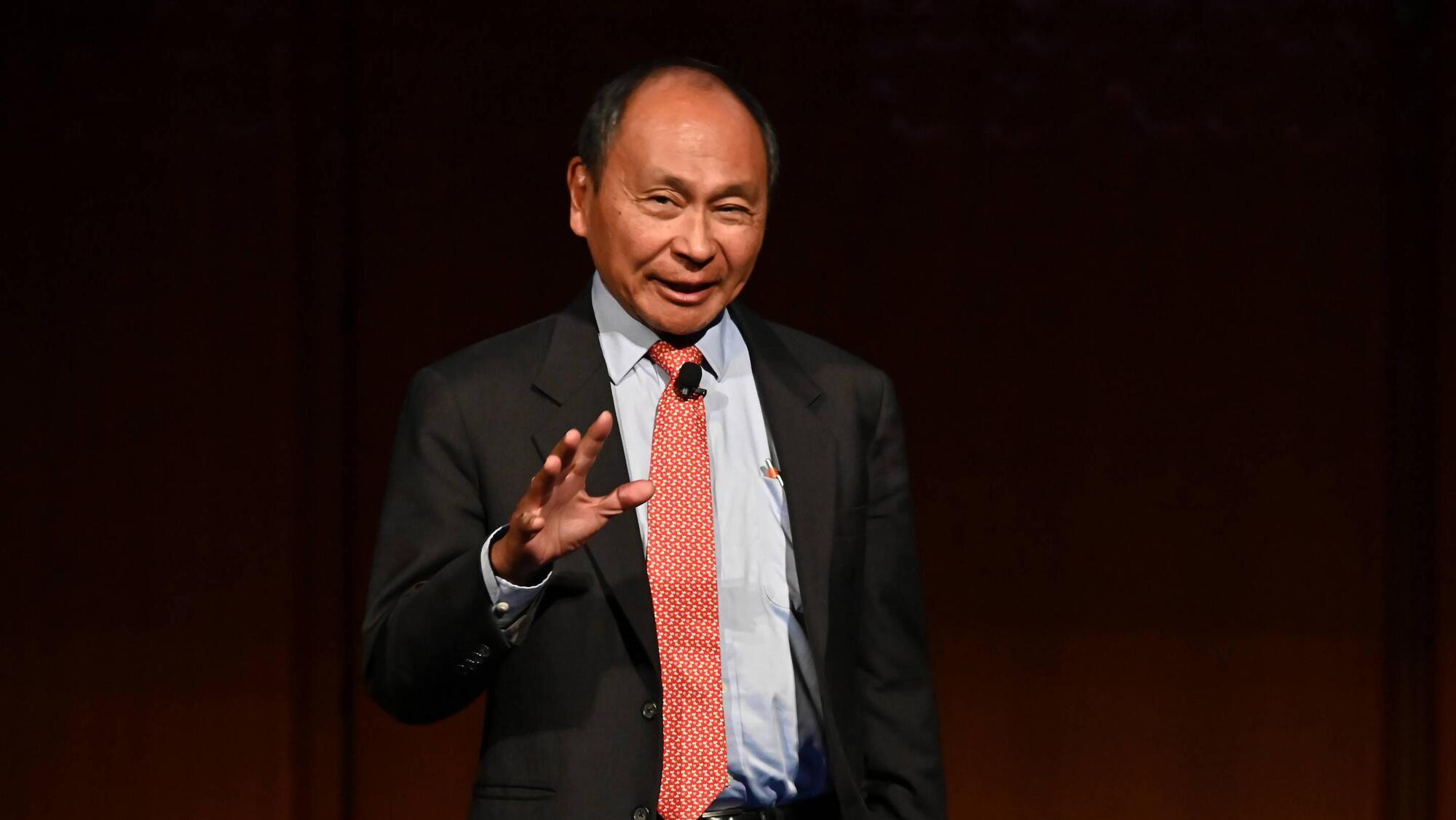
JP O’Malley speaks to the influential political scientist Francis Fukuyama about hislatest book which argues that, while liberalism is under attack, it is far from obsolete
Francis Fukuyama's book defends liberalism — in the classical sense

Francis Fukuyama's book defends liberalism in the classical sense

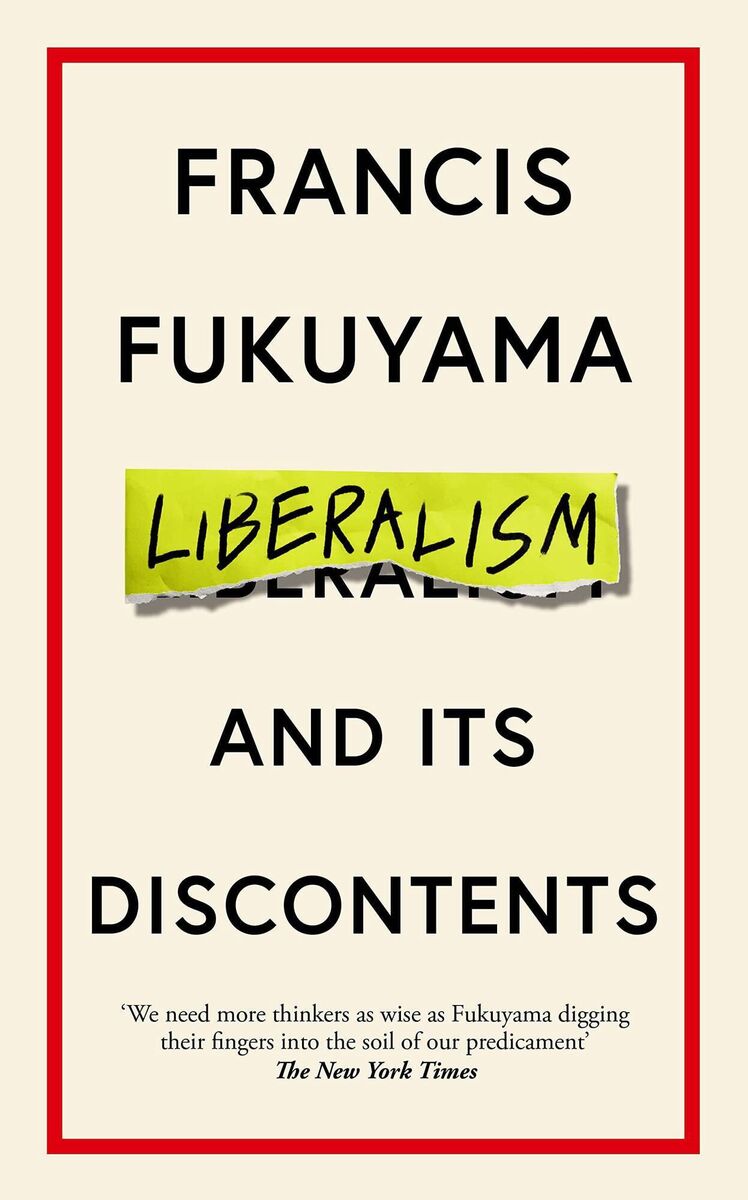
  • Liberalism and its Discontents
  • Francis Fukuyama
  • Profile Books, €14.99

Back in the summer of 1989 Francis Fukuyama published a seminal essay in the neoconservative journal, The National Interest. Entitled ‘The End of History?’ it claimed the world had entered a post-ideological age. “The triumph of the West is evident in the total exhaustion of viable systematic alternatives to western liberalism,” Fukuyama wrote at the time.
Three years later, that essay evolved into a bestselling book with the same title and was subsequently translated into 20 languages. Fukuyama essentially became to political science what Bono is to rock music.

Remarkably, global political events seemed to match Fukuyama’s hubristic political theory, at least for some time. In November 1989 the Berlin Wall fell. So too did communism across eastern and central Europe. Then the Soviet Union officially dissolved on Christmas Day, 1991. When the Russian Federation emerged shortly afterwards, many political elites and intellectuals in Washington believed economic progress would make old Cold War hostilities gradually disappear.

Liberalism and its Discontents by Francis Fukuyama

Fukuyama was among those voices. But history, of course, did not end. Liberalism, meanwhile, now faces its biggest crisis since the 1930s. 

Take Vladimir Putin, for instance. He has been slamming liberalism as a global elitist conspiracy for some time. Before the G20 summit back in June 2019, the Russian president told the Financial Times that liberalism was an “obsolete doctrine”. Viktor Orbán also shares that view. In a speech he gave to ethnic Hungarians in Romania back in the summer of 2014, the Hungarian prime minister declared how he intended to build “an illiberal new state based on national values”. To some extent he has succeeded. Orbán then cited China, Russia, and Turkey as model states that Hungary should strive to emulate.

Today, Fukuyama offers a more sober and measured analysis of the current geopolitical international order. His tone is noticeably less celebratory than it was more than 30 years ago. Nevertheless, the 69-year-old political scientist remains optimistic.

“Liberalism is still an extremely powerful idea, but right now, it’s going through one of these cyclical ups and downs,” Fukuyama explains from his office at Stanford, California, where he holds the position as senior fellow at the Freeman Spogli Institute for International Studies at the prestigious university.

“One reason I wrote this book is to remind people that liberalism is not dead, discredited, nor has it has been overtaken by some alternative political ideology.”

Fukuyama has recently published Liberalism and its Discontents. In lucid, uncomplicated, prose, his book makes occasional comments to present-day global political affairs, and to culture wars on social media. He believes they have only served to increase attacks on liberalism, from both the left and the right. Fukuyama also talks about important changes within liberal societies themselves over the last few decades. These have come from what he calls “parallel distortions of liberalism”.

“On the right, there was the rise of so-called neoliberalism in the 1980s and 90s. Essentially, this was an extreme version of market ideology, where there was great hostility to the state,” Fukuyama explains. 

“It was represented by Chicago School economists like Milton Friedman, and politicians like Ronald Reagan and Margaret Thatcher.” 

Fukuyama says the neoliberal revolution resulted in “a very prosperous, globalised economy”. But there were some downsides too, he admits: “The benefits were not shared, which increased inequality. This then created the grounds for the populist upsurge that we saw in the 2010’s.” 

Fukuyama believes in the value of a globalised market economy. But he has never seen himself as “an economic neoliberal”.

“I never adopted all the Chicago School theories about antitrust, or about market solutions to problems — this is an anti-state view,” he says. 

“In fact, if you look at my two books, The Origins of Political Order (2011) and Political Order and Political Decay (2014) I consistently argue that you cannot have a modern developed society when you do not have a strong state.”

Fukuyama then points to another distortion of traditional liberalism. It’s coming from the progressive-aggressive left. Specifically, this has centred around a redefinition of what inequality meant. During the 20th century this understanding of inequality

was very much defined in class terms. “This then shifted to one that was based on a much narrower identity,” Fukuyama explains.

“So many marginalised groups — racial minorities, immigrants, women, gays and lesbians, for instance — argued that they simply weren’t being treated as equally as liberalism had promised.” To some extent that was true, he admits. “However, when liberalism finds itself [doing nothing but defending] identity politics — that is, only defends groups, rather than individuals — then it becomes illiberal, and begins to question the underlying premise of liberalism itself.”

Fukuyama claims many on the progressive left have now abandoned basic liberal values altogether. 

“One extremely important value of liberal thought is freedom of speech, which encourages people to listen to others and be open to new ideas. But you now have many cases where views that don’t conform to a particular progressive ideology, or a certain group of identity politics, are seen as intolerable.”

The “liberalism” Fukuyama’s book sets out to defend is liberalism in the classical sense. It typically circulates around three main ideas: The foundational importance of equal individual rights, the rule of law, and personal freedom. The book also notes how the roots of classic liberalism evolved from the ashes of Europe’s wars of religion, which followed more than a century of almost continuous violence, largely triggered by the Protestant Reformation, which resulted in the Peace of Westphalia in 1648.

Early proponents of liberalism came from a wide range of thinkers, theologians, economists, and philosophers. It included people like Martin Luther, Thomas Hobbes, John Locke, Thomas Paine, and Adam Smith.

Fukuyama also points to conflicts like the English Civil War, and the French and American Revolutions. Largely inspired by liberal ideas, they were crucially important for concepts we take for granted today, like global capitalism, free trade, liberal democracies, voting rights, universal equality, and the modern nation state.

The core of classic liberalism is based on several assertions, says Fukuyama. Firstly, the universality of human dignity. 

“This is based on the human capacity for moral choice. It is why liberal thinkers believe in universal human rights: this argues that no matter what country you live in as a human being, you still are entitled to a society respecting your basic rights. Namely: the right to believe, to talk, to action, and to speech.”

Individualism is also fundamentally important to liberal thinking, he stresses. 

“This has to do with the fact that each of us is a moral agent. We can voluntarily be members of groups, be sociable, or work together in civil society. But those associations really ought to be voluntary and not coerced.” 

A flexible approach to economics is definitely an important component of liberalism, Fukuyama points out. But its fundamental principles are built on a belief in lasting political institutions. They ensure that changes to a nation’s political structures are measured, incremental, and, that power is never concentrated solely with one individual, or by one group indefinitely.

Fukuyama then cites the constitutional checks and balances that separate powers between the three branches (the legislative, executive, and judicial) of the US federal government. This ensures that power dynamics never swing too far in one direction, so the president cannot become a dictator. Did this robust political system prevent the Trump administration potentially bringing the US towards political anarchy?

“There were a lot of things that Trump wanted to do that he couldn’t because of those checks and balances,” says Fukuyama. 

“Namely: Trying to ban Muslims coming into the United States, which was immediately struck down by the courts. Building a border wall, along the Mexican border, which Trump never even got close to completing. And a feeble attempt to invalidate Obama’s health care plan (Obamacare).” 

But the biggest threat that Trump posed was to overturn the 2020 election. Thankfully, there were enough officials in those states — where Trump tried to [claim a political victory where there clearly was none] — who were able to put principle above their loyalty to Trump, he says.

Fukuyama admits that liberalism is not perfect. It can be flawed, contradictory, and, on occasion, even violent. I mention Winston Churchill, who described democracy as “the worst form of government except for all those other forms that have been tried from time to time”.

Perhaps, then, we should apply those same fallible credentials to liberalism. In other words, for all its flaws, it has lasting stamina. Fukuyama agrees.

“History has shown when the world tries alternatives to liberalism, it then experiences a great deal of violence. This is really what gave rise to the liberal institutions that were put in place in 1945, after the Second World War,” he concludes. 

“They helped shape the political conditions that allowed for the European Union that came later. Right now, people take liberalism for granted. That is problematic because people assume that the world has always been stable and peaceful.”

x

More in this section

Scene & Heard

Newsletter

Music, film art, culture, books and more from Munster and beyond.......curated weekly by the Irish Examiner Arts Editor.

Cookie Policy Privacy Policy Brand Safety FAQ Help Contact Us Terms and Conditions

© Examiner Echo Group Limited