Book Review: Terence Dooley interrogates the burning of Ireland's 'Big Houses' in latest book
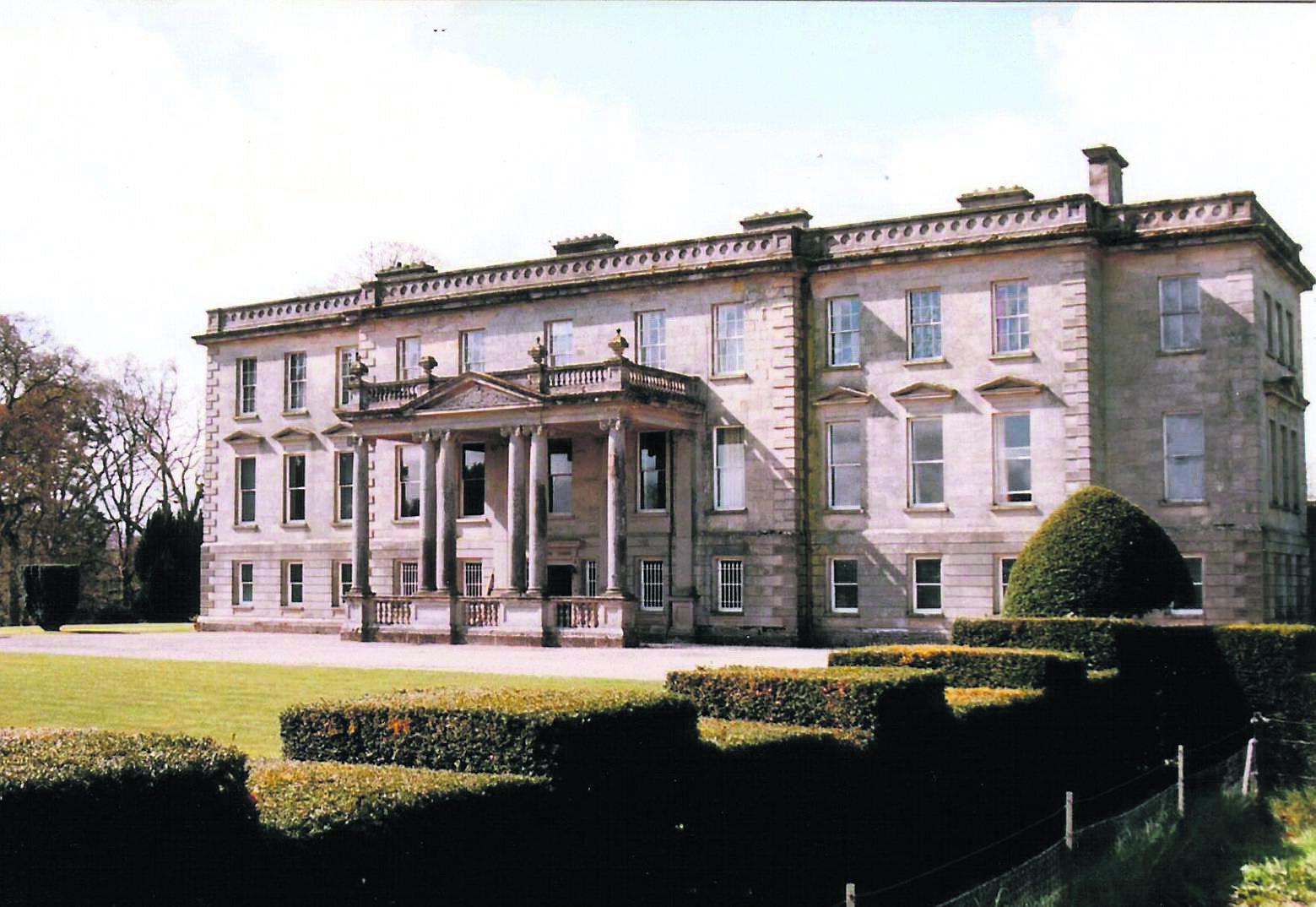
Hilton Park House in Co Monaghan: JCW Madden of Hilton Park trained every man on the estate in rifle practice to prevent the destruction of the property.
- Burning The Big House: The Story of the Irish Country House in a Time of War and Revolution
- Terence Dooley
- Yale University Press
- €31.50, dubraybooks.ie
The insurgents came to Ballyrankin on a summer night in 1921. Furniture heaped up in the hall was doused with petrol, but the arsonists placed two armchairs on the lawn so that the owners could watch the blaze in comfort.
A dry east wind fanned the flames. Scorning the armchairs, Walter and Nesta Skrine leaned for a while against the haycocks and then, in their night clothes, walked the three miles to Bunclody. The country air smelled of clover and smoke.
Their 17-year old daughter, Molly, was at school in Dublin but had loved the 18th century house with passion.
“The loss remained with her”, writes Sally Phipps in her biography of her mother, Molly Keane (2017), “and all her life she continued to visit [those] ruins.”
Ballyrankin is one of the many properties included in Terence Dooley’s interrogation of the extraordinary contradictions of this single event and, on a much wider map, of a historic and deliberate programme of destruction. The behaviour at Ballyrankin was not exclusive to that family.
Among the nearly 300 casualties of this campaign, some properties, estates and landowners were treated with respect, or deference, even as their homes and their possessions were put efficiently to the torch.
Many escaped entirely, sometimes because a big house with its farm, dairies, laundry, smithy, grooms, gardeners, and gamekeepers, not to mention indoor staff, provided vital employment for the local community. Other landowners took their own measures: the gamekeepers at Castle Leslie were armed; JCW Madden, of Hilton Park, trained every man on the estate in rifle practice; Lord Dunraven had a Republican ghillie who kept Adare Manor safe.
The terror and torment of this country-wide rampage had causes other than a nationalist fervour, and these causes are what Dooley has set out in a thought-provoking and well-documented inquisition.

Already renowned for his studies of the big houses and estates of Ireland, he is able to offer a cumulative context of motives examined with an eye steadied by a solid foundation of research and archival diligence.
This cogent exposition of a period overlooked — deliberately, or, perhaps, just too short-lived to deserve much attention — is not merely a matter of setting the record straight.
It is a matter of re-writing the record on the grounds that so far the record has been incomplete, poorly researched or rejected for its unpopular implications.
The big house was sometimes a great house, even aristocratic, and contained priceless and irreplaceable paintings, sculptures, furniture and, of course, libraries.
Here is a balanced and far-reaching account, of what happened which also defines what the big house actually was in its symbolism and culture.
As a historian, Dooley follows the vagaries of legislation, events, and personalities and, through rigorous attention to individual properties and families, brings background into alignment with smouldering foreground.
The facts carry the weight of this history, accompanied as it must be by the ivy-curtained skeletons in the Irish landscape, their images stark enough to be used for the cover of U2’s album The Unforgettable Fire.
The political background is provided in all its bleak confusions and complexity, its half-promises and feuds and irresolute pacts.
All these houses and demesnes did not fall before the passions of the Irish revolutions; they began to fade with the Land Wars and the Land Acts of the late 19th century, while their owners, although largely Anglo-Irish and Protestant, found little support among their British counter-parts (often, their relatives).
It was, however, the Land (or Wyndham) Act of 1903 which led to the diminution of the landed estates and the departure of many of their owners.

A gradual process was hastened by the loss of family members in the First World War, and then by the War of Independence and the Civil War. It is this latter episode which heightens the mysteries of the burnings, which ranged sometimes with savagery across the country, north and south.
The rural Irish society and its expectations are explained with typical lucidity by Terence Dooley, who also unwinds other scholarly attitudes to the subject, with a forensic assessment of new archival material.
Earlier studies on the subject were diluted by an unwillingness to spoil Irish illusions: “Stories of agrarian tensions in 1920–23,” he writes, “land grabs and the burning of country houses would have provided an unwelcome subtext to the nationalist narrative of the foundation of the Irish Republic.”
Another politically unpopular awareness may have been that decades of Irish rural life after independence remained “unanimated by the politics of land redistribution”.
The conclusion must be that the inherited antagonisms of a sustained legacy of victimhood; the divisions between religions; the bitterness of factions operating without significant oversight; and the policy of reprisals and of military billeting, were elements uniting to fuel this terror.
Although probably still up for discussion Dooley presents the argument that the foremost ingredient was the deprived natives’ hunger for land, especially for land believed to have been stolen from them: in other words, theirs by right.
Thus grazing land was appropriated by local agitators, herds driven off the fields, an estate herdsman at Ballyglas in Co Mayo was battered to death for refusing to leave his employment.
By 1923, some owners of big houses and estates had become senators in the new Irish parliament, a potent aggravation to anti-Treaty activists, especially where the new state was unable to accelerate the formal process of land redistribution.
While the burnings persisted, with far more of them during 1923 than in 1921-22, the government was overseeing the final dismantling of the Irish aristocracy’s physical landscape with the Land Act of 1923.
This act was meant to complete the land purchase schemes and alleviate district congestion. The Northern Ireland Act of 1925 did rather better than in the south but what matters is that it was all happening without the fires.
The insurrectionist priority was speed of acquisition; Dooley’s chapter on destruction and looting makes uncomfortable reading during this decade of commemorations as estates were broken up during what has been called ‘a bonfire for a generation’.
The land itself became a quagmire as even gardens, greenhouses and woods were trampled, pillaged and smashed.
A compensation system was established for proprietors sent into enforced exile with their pedigree herds auctioned and their farmlands illegally occupied. If the operation of that system were not so tragically typical of the implacable loyalties of the times, these pages would be laughable.
While judicially agreed payments were subsequently reduced or conditional to implausible requirements, the new Irish government finished off a process of eradication through the succeeding years.
The loss of Summerhill in 1921 at the hands of the IRA has been described by the late Desmond FitzGerald, Knight of Glin, as “probably the greatest tragedy in the history of Irish domestic architecture”, but what of the fate of Shanbally, said to be John Nash’s largest and most important Irish castle, still intact and in good condition yet demolished by the Land Commission in 1958?
More was lost to Ireland than stone and slate, but perhaps it was not all due to those whom Elizabeth Bowen in her novel, The Last September (1929), writes of as the bland executioners driving away from Danielstown House where “the door stood open hospitably upon a furnace”.

Subscribe to access all of the Irish Examiner.
Try unlimited access from only €1.50 a week
Already a subscriber? Sign in