Book review: Child killer haunts grisly thriller

Author and writer Patricia Gibney.
Apparently, there are over 1.8m Lottie Parker e-books sold — the fictional detective created by Patricia Gibney, an Irish crime writer from Mullingar.
It is not clear what specifically has inspired Buried Angels but the book’s broad skeleton of buried children and hidden bodies that are difficult to identify is so common a trope as to be familiar across many countries.
There is no doubt Buried Angels is a page-turner. It revolves around the murder of a mother and her children.
A likeable young woman, Faye Baker, and her partner, a butcher named Jeff, are renovating a home which Jeff has inherited from his aunt when Faye finds a child’s skull hidden in a wall. Lottie Parker is called in to investigate.
A dismembered female child’s torso is found defrosting on a railway track, discovered with a drone by two young boys, Gavin Robinson and Jack Sheridan.
However, it is not the skull of the child found on the railway track. Something terrible is going on.
Faye is then murdered, her body found in the boot of a car dripping out blood. No marks for where that idea springs from.
Jeff’s life becomes even more wrecked than it had already been. Tragedy is piled on tragedy in the backgrounds of even the most minor characters and Jeff is one of the few likeable male characters.
Across the book, men are not depicted in an appealing manner; usually, violent, vain, unfit, seriously ill, problematic. The only really attractive male in the book is the teenager Séan, the detective’s son.
The picture of Irish life from the Midlands writer is not an attractive one.
Women are overworked, barely managing their households, themselves or their relationships, or they are abused. Or they are in constant fear. Or they only really come alive on social media.

The Irish property market gets a deservedly wry appraisal, mostly through the eyes of the female characters.
Some have perfect houses, Celtic Tiger era mansions, and others are squashed into tiny apartments which they struggle to get out of.
Or there are old houses which are so disgusting and so full of ghosts and hidden histories, they really should be razed to the ground.
There seems little in between. The perfect mansions do not house perfect lives and the old houses are more in tune with dark secrets from the past.
The male work environment is terrible, brimming with nastiness, and offices are stuffy and small; warehouse settings are bleak.
The grey relentlessness of midlands weather is echoed by grisly murder after grisly murder, and the past is dug up like the excavation of victims of ancient bog murders.
“Bodies are always found. Even bog bodies are found thousands of years later. Nothing is hidden forever,” Jack Sheridan’s father, Charlie, tells him.
But at times there is so much crime that credulity is stretched not least as it is children who are being murdered and threatened.
It is hard to imagine anywhere, even in Lottie’s fictional Ragmullin (read Mullingar), where such crimes would not cause outrage. Yet little of this reaction is reflected. Murder is just part of life in this page-turner.
There is little development of Lottie as a character in this book as she acts in a daze through to the resolution so readers need to be advised this is number eight in the DI Lottie series.
For those who cannot get enough of grisly murder upon murder, and who want a twist in the plot, this is the perfect read.
Personally, I could not wait to get to the end and get back to reading Inspector Maigret.
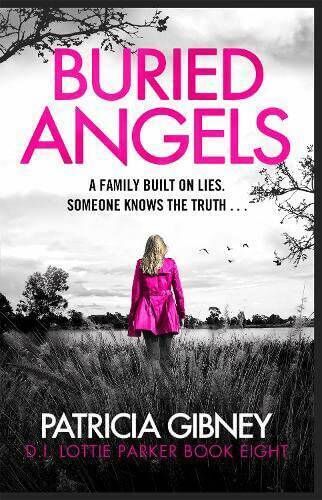
- Buried Angels, Patricia Gibney - Sphere, £13.99