Book Interview: When one fascination leads to a wealth of realisations
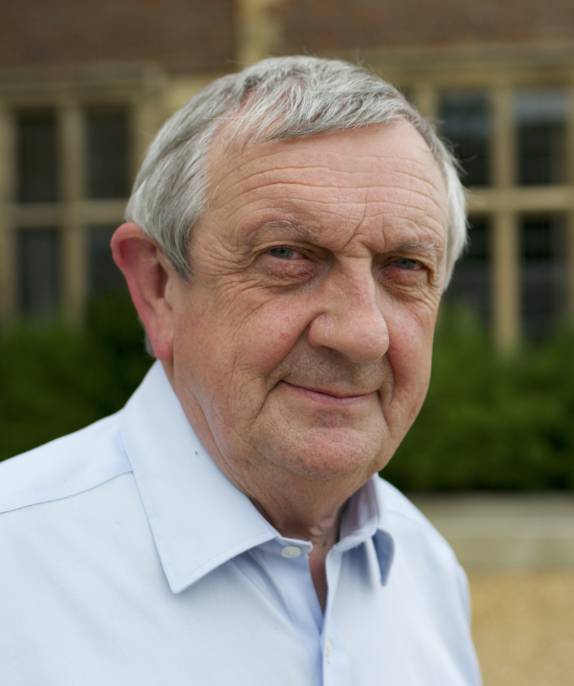
Eamon Duffy once believed he had a vocation to the priesthood, instead he became an expert on Christian history, he tells Michael Duggan
Book Interview: When one fascination leads to a wealth of realisations

Eamon Duffy specialised in the history of the English Reformation, becoming one of the acknowledged giants of the field. Picture: Jon Hirsch

When the now professor, Eamon Duffy, moved with his family from Ireland to Birmingham in 1961, at the age of 13, he had barely been out of his home town of Dundalk. His father, a boiler maker for the Great Northern Railway, had been offered a job in England’s second city when the works in the Co Louth town closed down.

Eamon had no idea of what to expect of life in England. What he got was “a huge opening up” in the possibilities ahead of him. He was sent to St Phillip’s, a grammar school on the other side of town, run by priests from the Birmingham Oratory. Eamon joined “the arty set” at the school and found himself in a place of intellectual liberation, tolerance, encouragement: The priests there gave him his first vision of “people living the scholarly life in community. I found that deeply attractive. I thought at first that I had a vocation to the Oratory. Then I met my wife and realised I didn’t. But university life, in a way, supplied what I thought I saw in the priests.”

As we chat over Zoom, Duffy is sitting in a room with books spreading across the walls and rising to the ceiling. His parents, he tells me, returned home to Dundalk when his father’s health broke down. Eamon stayed on to pursue, and obtain, the glittering prizes of English academia. He studied history at Cambridge as a post-graduate and went on to become a professor there and a president of Magdalene College. He came to specialise in the history of the English Reformation, becoming one of the acknowledged giants of the field. A new edition of his landmark study, The Stripping of the Altars, has just been issued by Yale to mark its 30th anniversary.

The story of how he came to find this calling is a good one. Christopher Ricks, the renowned literary critic and a Cambridge don, asked Duffy to give a lecture on the funeral service contained in the Anglican Book of Common Prayer. This would be part of a course Ricks was running on “a very Woody Allen sort of topic”: The literature of sex and death.

“I was a bit flummoxed,” Duffy recalls. “What would I say?” He had the idea of comparing the medieval Latin burial rite with the Protestant one that was quarried out of it. “I was immediately struck, absolutely between the eyes, by the fact that, in the medieval rite, at the point where the corpse is committed to the ground, the priest turns to the dead body and speaks to it and says, ‘We commit your body to the ground’. In the reformed service, he turns away from the body and says to the living around the grave, ‘We therefore commit his or her body’. And it really affected me. I pondered on what was implicit in that move and the gulf it opened up between the living and the dead.”

This epiphany-like moment, combined with visiting, as a new driver in his first car, ancient churches scattered across the wide, open spaces of East Anglia, would breed the fascination that eventually led to The Stripping of the Altars. In his introduction to the new edition, Eamon Duffy restates the realisation that inspired the book. He came to see that the products and practices of late medieval Christianity were not to be treated as “a meaningless mount of mumbo-jumbo, culpably remote from the personality and teaching of Jesus, strong on magic, weak on personal responsibility”. Instead, they “represented the ritual building-blocks of a coherent worldview that expressed itself not in individualist striving after personal authenticity, but in powerful symbolic gestures designed to shape and create community”.

Duffy is not, as he has been accused of, a romanticiser of the Middle Ages or of “Merrie England”. “It was an age of monstrous restrictions on people’s freedoms,” he says, “of terrible poverty. Life has never been merry for most people.” 

His target was the contemptuous over-simplification of the period that had long dominated how historians thought and wrote about it: “I was trying to show that it was not a heap of nonsense, that it was a coherent symbolic system. I was trying to do an anthropological thing and to say, This is how this society understood itself and these were the ground rules’. But, of course, there were lots of people who didn’t go to Mass, there were lots of people who hated the clergy, there were lots of people who shagged each other outside the bonds of holy matrimony. Human beings have always been human beings.”

In more recent times, Duffy’s stature as an expert on the Reformation has led him into what he calls “a bit of a punch up” (in print only, of course) with the novelist Hilary Mantel. The subject of the dispute is Thomas More, the “man for all seasons” as played by Paul Scofield in the classic film, who was executed for refusing to take Henry VIII’s Oath of Supremacy. 

However, in her hugely successful and influential novels about the era, Mantel reduces More to not much more than a gargoyle, according to Duffy, in sharp contrast to her sympathetic portrayal of Thomas Cromwell. He sees More as a complex figure, an example of “the distance between us and the world of even a very good man in the 16th century”.

“If one is a reasonably liberal 21st-century person, the idea of locking people up or even killing them in a particularly gruesome way because of their religious errors is almost inexplicable. And there’s no question that More thought that, if push came to shove, if heretics remained intransigent, they were rightly executed. That, for us, is a huge barrier to even thinking about him as a good man. But he was a good man.”

Duffy argues that we need to understand More’s worldview. “He didn’t have an optimistic view of human nature. He was aware of human fallibility, starting with his own. He became convinced that the Reformation (
) was a solvent of virtue and of human community. And he only had to look at what was happening on the continent to see that, and this is not about apportioning blame from a 21st-century perspective, the world was falling apart because of the Reformation. So there was evidence to back his sense of panic about what would happen in England if the Reformation was allowed to get a hold.”

He was also “a supremely just judge who attempted to reform the law to make it more humane, more expeditious”. As his case for More comes to a crescendo, it is impressive to see how firm and clear a grasp Eamon Duffy has on the character of a man who died 487 years ago, describing him as “a supreme example in English history of integrity in public life. 

He was, effectively, the prime minister in our terms. Immensely powerful, immensely rich. The bulk of the political classes and the bulk of the clergy took an oath that they knew to be false because it was imposed upon them by the Crown. He gave up everything rather than take the oath.”

Duffy doesn’t resist the temptation to swoop back to our own day and the man who currently sits on top of the English political pile: “In the world of Boris Johnson, I think there’s a lesson there that’s worth attending to.”

x

More in this section

Scene & Heard

Newsletter

Music, film art, culture, books and more from Munster and beyond.......curated weekly by the Irish Examiner Arts Editor.

Cookie Policy Privacy Policy Brand Safety FAQ Help Contact Us Terms and Conditions

© Examiner Echo Group Limited