Munster In 30 Artworks, No 11: Robert Gibbings, Gougane Barra, from Lovely is the Lee
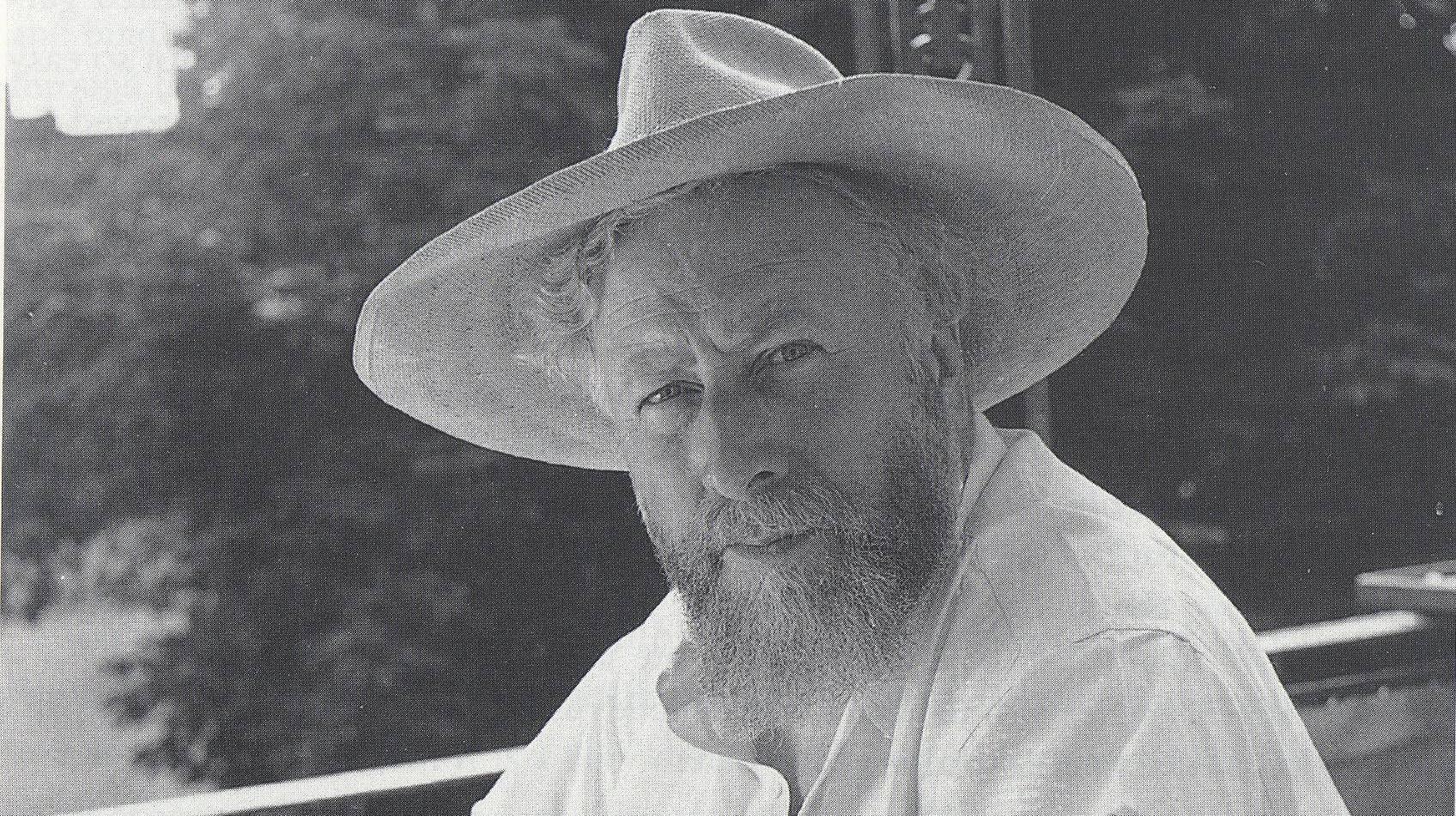
Robert Gibbings described Gougane Barra as “a valley withdrawn, a garden enclosed, the holiest place I know”.
Robert Gibbings was already well established as an artist, author and adventurer when he arrived in Gougane Barra in West Cork in the summer of 1943, intending to write and sketch for a few weeks. Instead, he stayed for seven months, producing his first travel book about Ireland, entitled .
Gibbings had often spent holidays in Gougane Barra as a child, and he memorably described it as “a valley withdrawn, a garden enclosed, the holiest place I know.” Almost inevitably, his illustrations for include a study of St Finbarr’s Oratory on the little island on the lake, where he often slept in a boat, so he could sketch the birds that woke him at dawn.
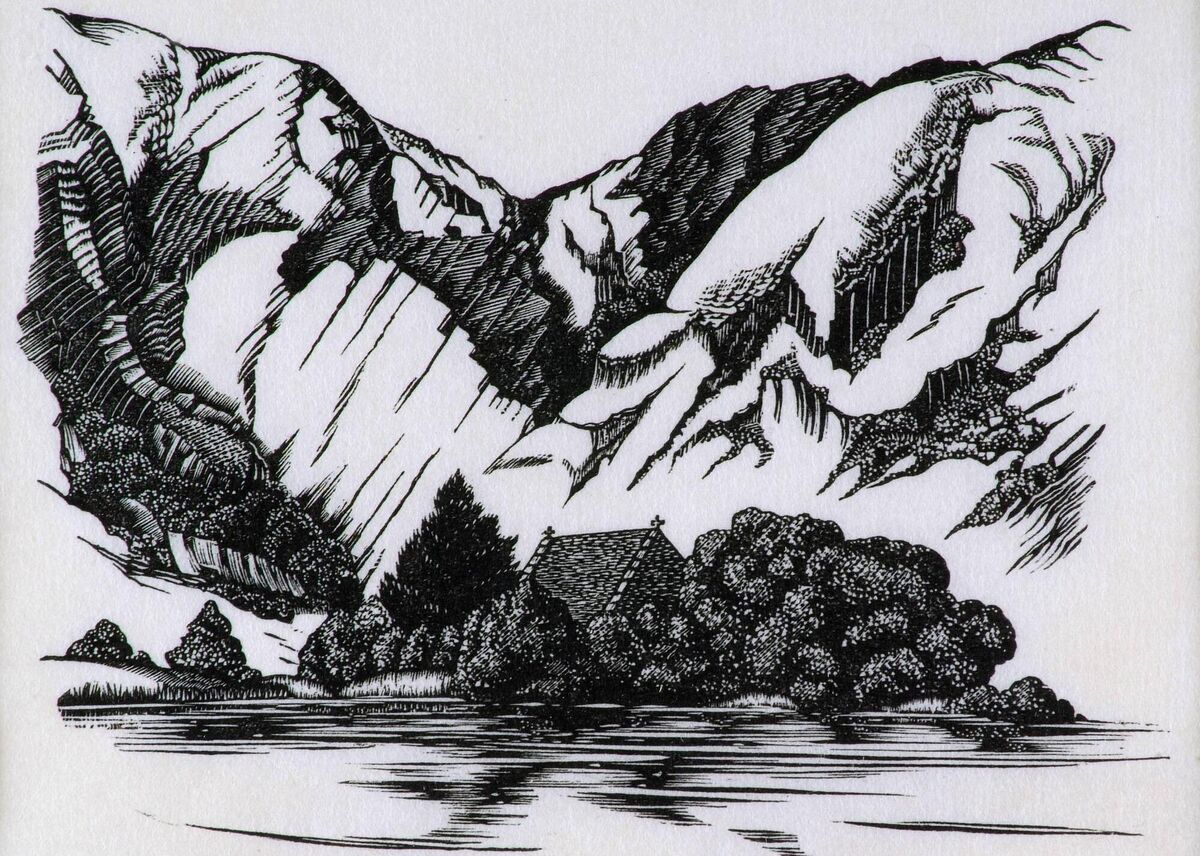
Gougane Barra had attracted artists for hundreds of years. “George Petrie painted a watercolour of a party of pilgrims approaching the Oratory in 1831,” says Michael Waldron, Assistant Curator of Collections at the Crawford Art Gallery in Cork. “And before that again, in the 18th century, Nathaniel Grogan painted a faction fight at the same location.”
Gibbings’ wood engraving is more focused on the landscape. “He’s looking upriver at the Oratory and the hills beyond,” says Waldron. “It’s a magnificent environment.”
Although he lived in England for most of his adult life and is often claimed as an English artist, Gibbings was actually born in Kinsale, where his father Edward was the Church of Ireland rector of St Multose.
In 1895, when he was seven, the family moved to Carrigrohane on the outskirts of Cork city. They were reasonably well off, and Gibbings was sent to study Medicine at UCC. His heart was never in it, however, and he later acknowledged that he’d spent most of his time on the lam, hunting and fishing.
It was only after he failed his exams in Third Year that he finally persuaded his parents to let him train as an artist. He’d always loved drawing, and his early interest in the natural world was encouraged by his mother Caroline’s father Robin Day, the President of Cork Historical and Archaeological Society.
Gibbings enrolled at the Slade School of Art and then the Central School of Art in London, but his education was interrupted by the outbreak of the First World War. He volunteered for service with the Royal Munster Fusiliers and was wounded during the Gallipoli landings in April 1915. Later, he served in Salonika and Palestine. By 1917 he was stationed in Bere Island, Co Cork, and the following year he was invalided out with the rank of captain.
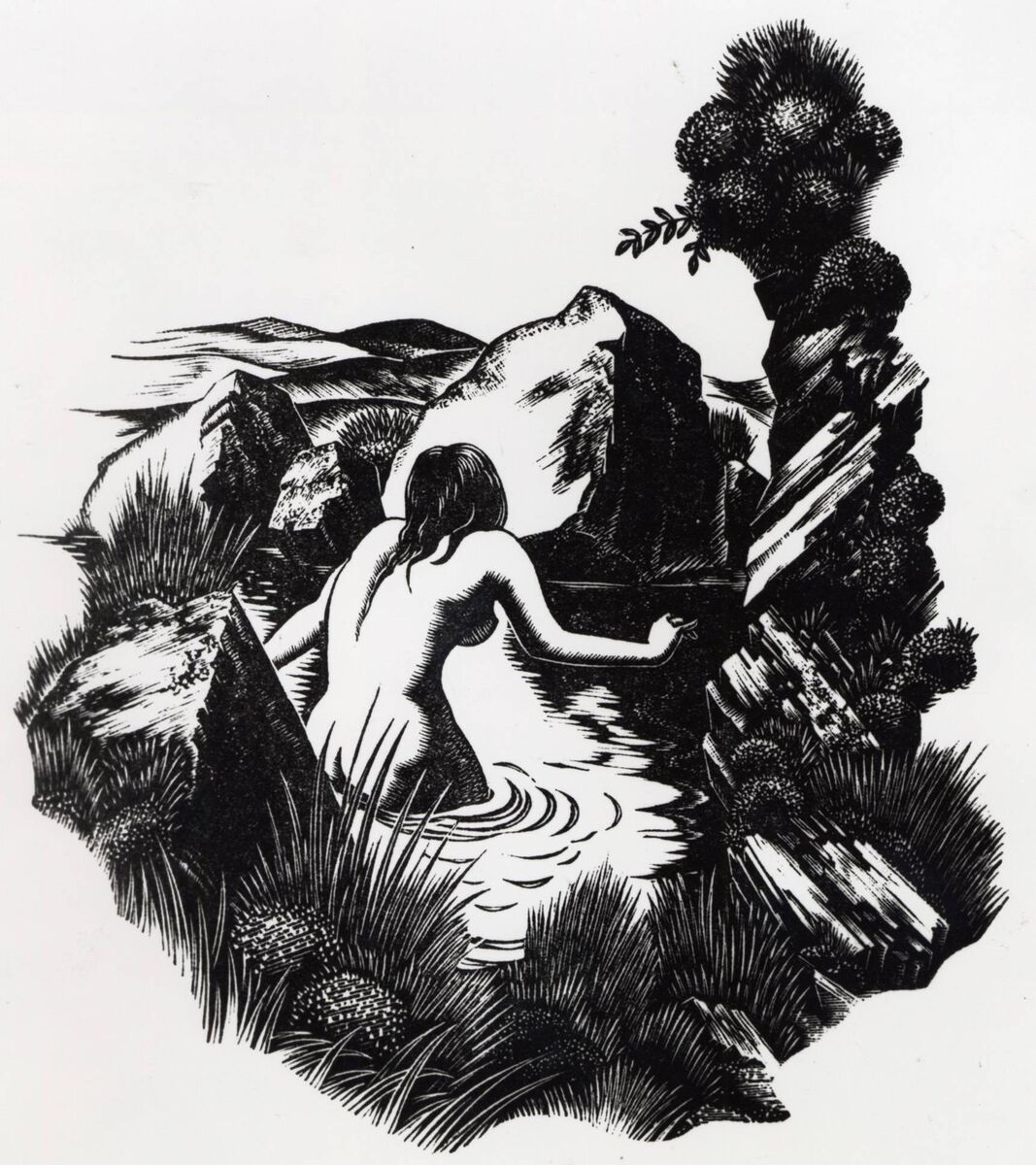
Gibbings returned to England to complete his studies and was soon in demand as an illustrator. “When he began working, in the 1920s, it was at the very end of a great revival in printmaking," says Waldron. "It was a fascinating time, when printmaking was absorbing all the influences of Art Deco. Wood engraving was his speciality, and book illustration was one way he could make a living. Harry Clarke was illustrating books at the same time; both of them enjoyed responding to literature, though their styles were very different. There’s all this tiny pencil and penwork in Clarke’s illustrations, whereas there’s much broader mark-making in Gibbings’ woodcuts.”
For a time, Gibbings worked to commission for a publishing company, the Cockerel Press. He bought out the business in 1924, continuing to illustrate books for other writers while writing and illustrating his own books on his travels in the South Seas.
“At that time, there were any number of small presses being operated by artists and writers," says Waldron. "Leonard and Virginia Woolf had the Hogarth Press in England, while the Cuala Press was run by the Yeats sisters in Dublin. Cockerel Press was a small artisan production house, catering to a particular market of book collectors. The books it published were often deluxe limited editions, the kind of thing that would have been conversation pieces in middle-class intellectual households.”
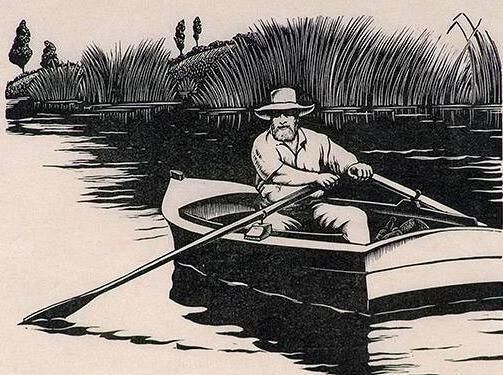
Gibbings never lost his love of the outdoors. He built a boat, the Willow, and took it on river trips, where he wrote and sketched. His illustrated books, and , were published in 1940 and 1941 respectively. These gently anecdotal descriptions of the English countryside were hugely popular, providing balm to a public bombarded with daily newspaper reports of the war unfolding in Europe.
Despite his success, Gibbings’ financial affairs were often unstable, and his personal life was as often a mess. He married for the first time in 1919, to Moira Pennefeather, with whom he had four children, three sons and a daughter. They divorced in 1936. By then, Gibbings had already fathered a daughter by Elisabeth Empson. They married in 1937 and had two more children, another daughter and a son. By the time Gibbings and Elisabeth divorced in 1951, he had already begun a relationship with her sister Patience.
Even when married, Gibbings liked to travel alone, and it seems he did not bring his wife or family with him while he worked at Gougane Barra. But he seldom lacked for company; in his book, he describes hunting and fishing expeditions, hiking in the hills and sessions in the bar, along with his attendances at dances and weddings and various other social outings.
“As an artist, there would have been a certain mystique about him,” says Waldron. “He was a sociable character anyway, and people must have been curious to know what he was doing.”
In the last pages of , Gibbings describes his great regret at leaving Gougane Barra. His friend Denny Cronin, the local hotelier, offered him a site to build a house on, so he could live there permanently. But it was not to be; he did return to Gougane Barra to produce a second travel book, , in 1951, but the next year he and Patience Empson settled into a small cottage in Long Wittingham, Oxfordshire, where they remained until his death from cancer in 1958.
Since his passing, Gibbings has come to be regarded as one of the greatest woodcut printmakers of the 20th century. Gougane Barra is one of 69 of his works in the Crawford Art Gallery collection; four were presented by the artist himself in 1920, with the rest being purchased in 1986 and 1999.
The Crawford held a centenary show called Wood Engravings of Robert Gibbings in 1989, and a major exhibition called Robert Gibbings: A True Tale of Love in Tonga in 2006. Another retrospective is surely overdue.
- Further information: crawfordartgallery.ie/online-collection