Book Review: Wild Shores should be in every school in the country

Among the stand-out pieces is the author’s visit to Mulroy Bay in Co Donegal
Book Review: Wild Shores should be in every school in the country

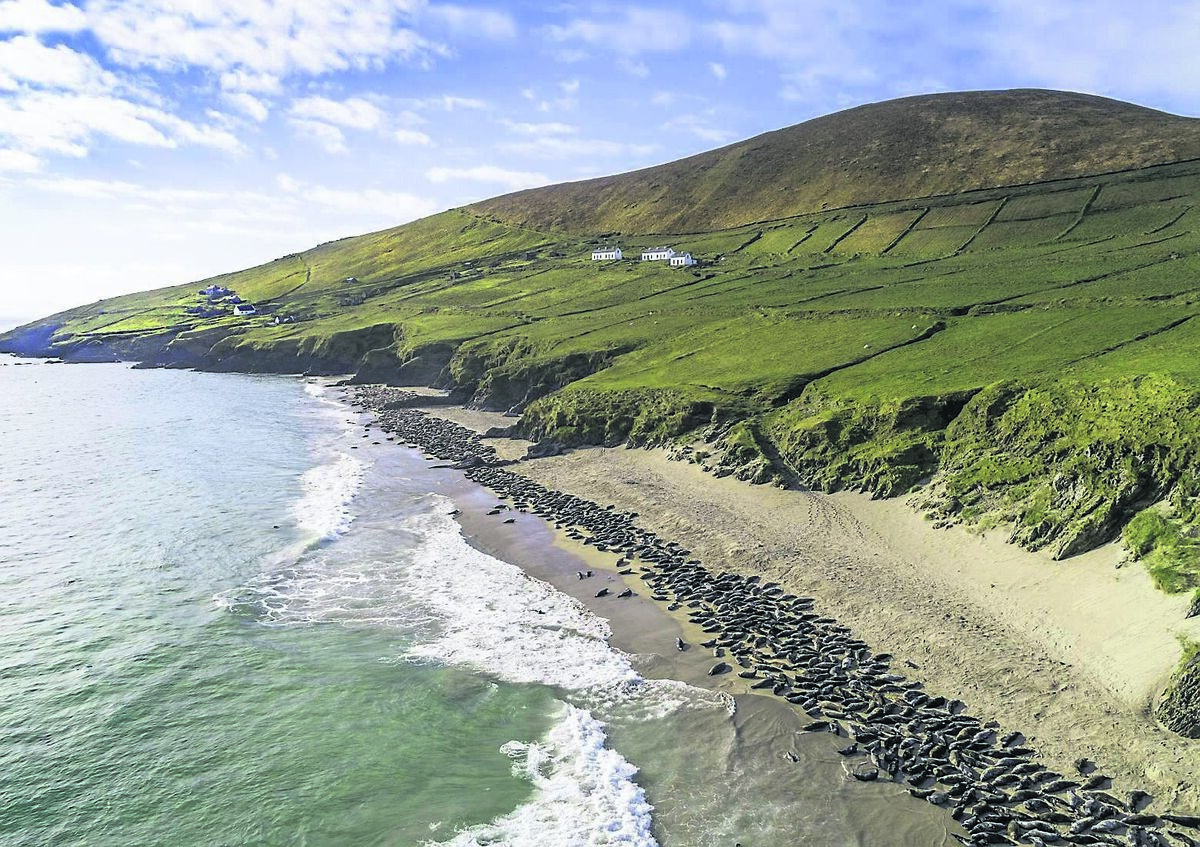
Seals lie at the water’s edge on the Great Blasket Island. Picture: Liam Blake
The landscape is the same, but different. 

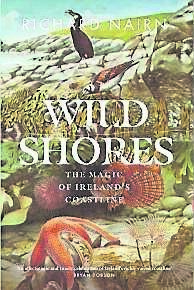
Richard Nairn’s impressions as he travels the coast of Ireland in the footsteps of the great naturalist Robert Lloyd Praeger over 100 years after the Belfast man studied the island’s flora and fauna and examined its rocks, is an urgent reminder of the fragility of the environment.

Nairn himself has documented nature in Ireland in a quintet of books that have sung the praises of, for instance, wild Wicklow or our spectacular avifauna. In this latest volume from this birder-cum-walker-cum-sailor he inserts himself into the text to reveal something of his long life as experienced through nature. And it is a mechanism that at once invigorates the argument: How better to evince what has happened and is happening to our coast than to listen to a nature writer who has himself witnessed over many decades the myriad forces to which it has been subject.

And Nairn didn’t just follow Praeger’s footsteps outdoors, he did so indoors. Nairn once worked for the Royal Irish Academy in Dublin where Praeger had been president 50 years before.

The writer admits to being continuously disappointed in the search for wild Ireland. Mechanised farming and forestry have destroyed much of the country’s wildness that existed in the early 19th and 20th centuries.

“In the near-century that separated us, Ireland changed almost beyond recognition. It seemed virtually impossible to find any places that were untouched by people and their use of the land,” writes Nairn.

Nairn begins his clockwise odyssey on the east coast before venturing to south, west, and north. His starting point is the Glens of Antrim near where Praeger was born in 1865 at Hollywood to a Dutch Presbyterian father and mother from a local linen merchant family.

Seals lie at the water’s edge on the Great Blasket Island. Picture: Liam Blake

Depending on how it is measured, and there are various methods, the coastline is 7,524km long. Unsurprisingly, the counties with the longest coastlines are Cork, Kerry, Galway, Mayo, and Donegal. As nowhere in the country is more than 100km from the sea, he argues that we are essentially a maritime people, though to look at the dearth of seafood on our menus that may be hard to swallow.

Nairn’s first job was a warden on a nature reserve in Murlough in the North where he cut his teeth on what it means to live “in nature”. In spartan accommodation, he would listen to the oystercatchers and curlew call at night. With the latter’s numbers in serious decline that was a rare opportunity in itself, and as time passed he came to realise much of our species were under threat. Centre stage among the growing threats is climate change which has serious implications for seawater and coastal habitats, he writes.

“Over-fishing is having increasing impacts on the marine ecosystem. Plastic pollution of the oceans has become a major issue.”

However, there are major successes along the way. In the last few years, Birdwatch Ireland has had outstanding success in protecting and expanding the population of tern species at Rockabill Island, Co Dublin. Its counterpart in Northern Ireland, the Royal Society for the Protection of Birds, similarly established a protected area at an artificial island near Larne, Co Antrim. The site attracted Ireland’s first recorded breeding Mediterranean gulls and by 2016 there were 4,300 breeding pairs on the island.

Seals lie at the water’s edge on the Great Blasket Island. Picture: Liam Blake

A fascinating stopover at the Wicklow Head Reef provides time for the author to riff on the mind-bending array of creatures that inhabit the ecosystem. The reef is made by the honeycomb worm Sabellaria alveloata which live in coarse sand and shell fragments. However, within the tubes live hydroids, polychaete worms, molluscs, bryzoans, barnacles, amphipods, crabs, starfish, brittlestar, and sea squirts. The entire complex is of high conservation value and the only place in Ireland where a shallow-water reef has been built entirely by marine animals.

A further sign of recovery, this time ordered by the European Court of Justice, occurred in Tramore, Co Waterford, where the council used the Backstrand as a dump. The council was instructed to build a wetland as remediation and so the Tramore Wetland Restoration Project was born. In a technique bureaucratically referred to as “managed realignment”, 7.5 hectares of fields were inundated with seawater to produce a mudflat, transitional saltmarsh, upper saltmarsh, and pioneer marsh. The results were sensational with 21 bird species recorded one winter including brent geese, wigeon, little egret, dunlin, and curlew.

As Nairn continued his journey around the coast he recalled projects he worked on — this man himself has made no little contribution to preserving our natural heritage over 50 years — and calls into old many organisations whose raison d’etre is the preservation and study of species, Sherkin Island Marine Station, being one such, run by the indefatigable Matt Murphy.

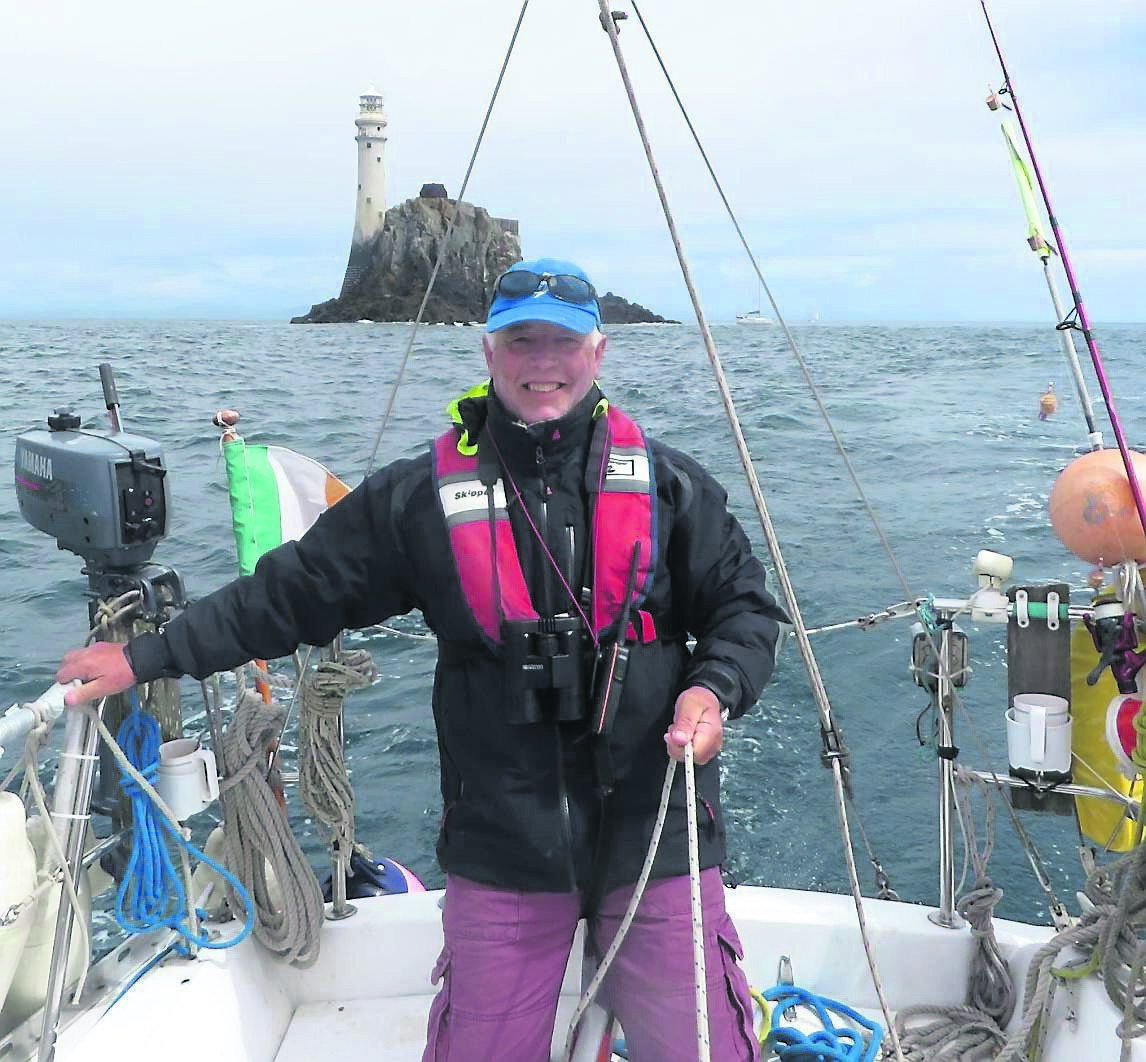
Richard Nairn sailing past Fastnet Rock. Nairn’s book features several pictures of him along the Irish coast as well as an abundance of maps.

The entry on the salt-water Lough Hyne near Skibbereen deserves more than four pages as it is one of the most fascinating jewels in our crown. Praeger visited too of course, writing: “It resembles a gigantic marine aquarium and the peculiar conditions of life have remarkable repercussions on the flora and fauna.”

On and on Nairn travels around the coast with each stopover providing a subject for his rich reports. A pity that there were no more space to carry expanded analysis. In Connemara he references the Cladaigh Chonamara (The Shores of Connemara) by Séamus Mac an Iomaire where the fisherman naturalist gave a profound and moving account of lobster fishing. Nairn writes that his deep knowledge of the natural world was essential to maintaining a balance. Whither that knowledge today?

Among the stand-out pieces is the author’s visit to Mulroy Bay in Co Donegal. Again, Prager preceded him to the “extensive, land-locked, most complicated piece of water”.

As Lough Hyne is unique to the south, so Mulroy Bay is unique to the north. Complicated currents provide beds of various sediments and habitats for rich marine life including the rare fish known as Couch’s goby, anthozoans, hydroids, and red seaweeds. There are dense forests of kelp providing home for sponges and sea squirts. However, even here, nature is under threat despite the area being protected under the EU’s Habitats Directive. The main culprits are aquaculture, scallop dredging, and seaweed harvesting.

Nairn is not too hopeful that things are about to change any time soon and this is as sombre a note that you can get: “I firmly believe that until there are disasters affecting the whole population such as complete collapse of fish and shellfish stocks due to temperature rise in seawater, flooding of coastal cities and the disappearance of whole beach-dune systems national governments will continue to prevaricate and the problems will continue.”

Though there are some superb colour photographs of the author on his boat and various coastal scenes the book could have done with several maps and perhaps some tables indicating species decline.

Like the recent Shannon Country: A River Journey Through Time by Paul Clements where the author evokes the 1930’s journey of travel writer Richard Hayward to form a framework of his own journey, Nairn grafts on his own experience to the great naturalist that went before him.

Praeger’s is the hidden voice in the text and Nairn his devoted follower. This book should be in every school in the country.

  • Wild Shores: The Magic of Ireland’s Shoreline
  • Richard Nairn
  • Gill Books, €14.99

More in this section

Scene & Heard

Newsletter

Music, film art, culture, books and more from Munster and beyond.......curated weekly by the Irish Examiner Arts Editor.

Cookie Policy Privacy Policy Brand Safety FAQ Help Contact Us Terms and Conditions

© Examiner Echo Group Limited