Book review: Archipelago is a glorious compendium of nature writing
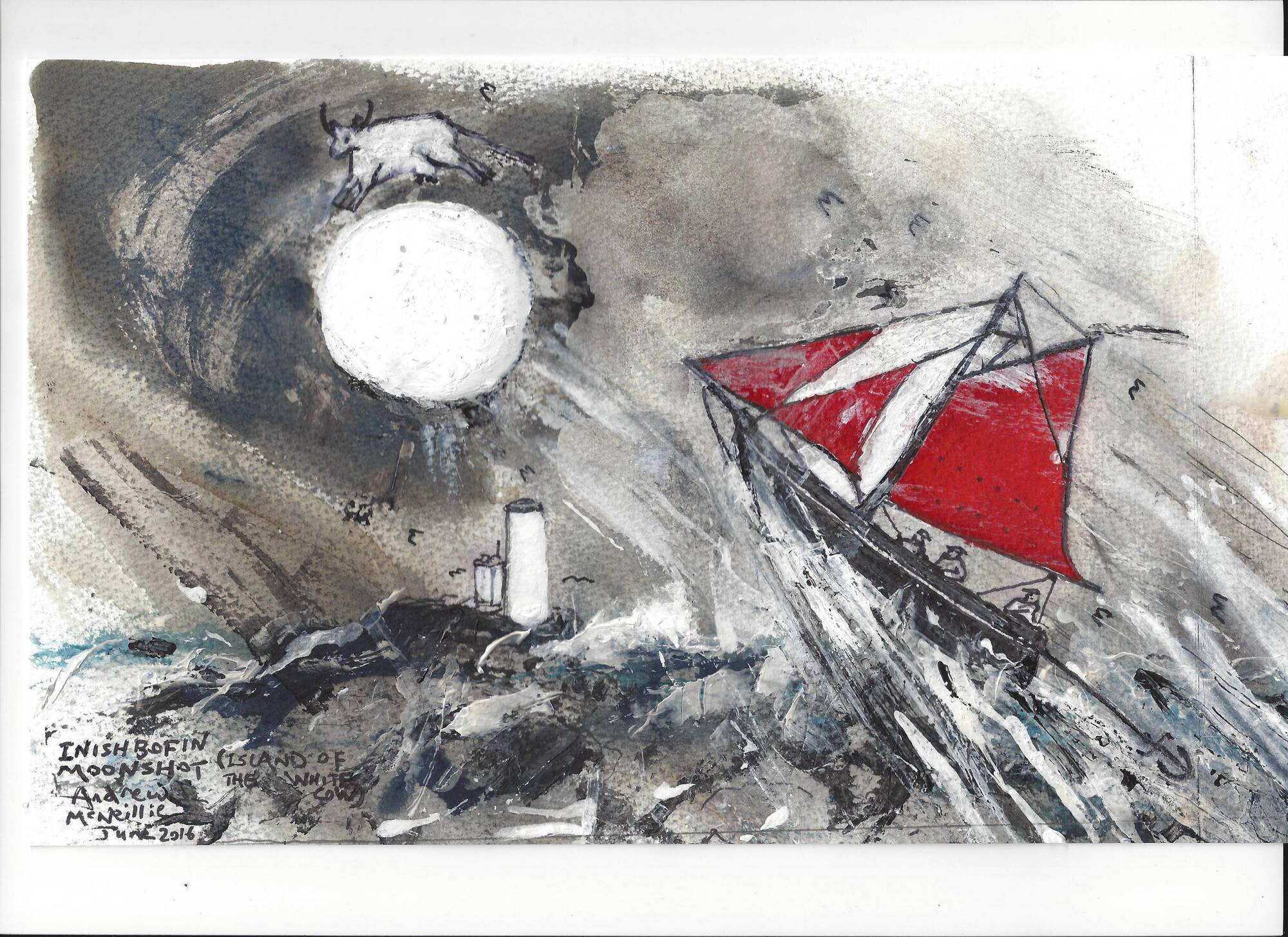
A detail of ‘Inishbofin Moonshot’, a painting by Andrew McNeillie which appears with an essay by James Macdonald Lockhart in ‘Archipelago: A Reader’.
Metaphor is the only way we really have of understanding the world, to paraphrase the great Russian American novelist Vladimir Nabokov. Something is like this or it is like that. A good metaphor instantly conveys an image of the true essence of a thing. Archipelago has a cabinet full of such metaphors relating to landscape and nature and some are right out of the top drawer.
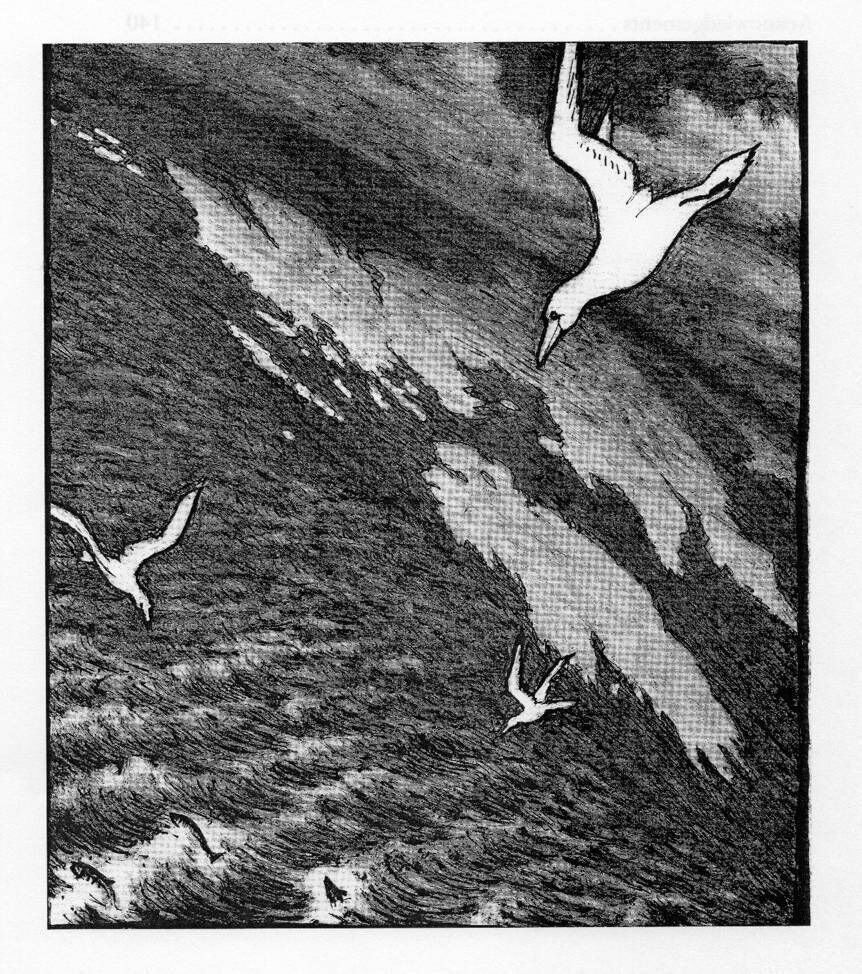
Perched on the clifftops of the Shetlands observing the serenade of the arctic terns and the harangue of the blackbirds, the naturalist and radio producer Tim Dee spies gannets plunging into the turbulent sea: “Every time it is like viewing a fresh marvel in a new world: their visible-decision making, with its corrective twisting and corkscrewing, the rapid origami of themselves, and then the brilliant white match strikes, fizzing into the water at 60mph to leave puffs of lit sea spray”.
This description of gannets as origami is delicious and recalls Martin Amis’s description of Nabokov’s prose as “the nearest thing to pure sensual pleasure that prose can achieve”.
And another to tickle the senses is James MacDonald Lockhart writing on the oystercatcher which “run lassoes of noise around you”. Or Tim Dee again in Latrabjarg, northwestern Iceland observing nature, again from the clifftops. “An arctic fox working the auk ledges, like a feather-duster hurried along the mantel-piece, beat me by ten yards to be the westernmost land mammal in Europe.”
These descriptions make you look and look again at possibilities and metaphors of animals for which you may have thought every description had been exhausted. These references are included in the dozens of essays, poems and paintings in this glorious compendium of nature writing. The book is divided into generous segments on Ireland, Scotland, England, Wales (the eponymous archipelago) and Other Worlds, by some of the keenest blades writing on nature today.
The archipelago wasn’t always an archipelago and the now sea-covered area between East Anglia and the Netherlands once teemed with human life. Jos Smith and Rose Ferraby explore its past and its nuanced history. The coast at Holderness is the fastest to erode in Europe we are told and around 30 villages have been lost to the sea since Roman times. A salutary warning. It is “time boiled down to space”, they write.
Robert Macfarlane (he of Underland and Mountains of the Mind repute) writes a lovely contribution on the Welsh island of Ynys Enlli (Island of the Currents) with which we have an affinity as it, like, many Irish islands, was settled by monks seeking solitude and a place to worship in the early medieval period.
“Their travels to these wild places reflected their longing to achieve correspondence between belief and place, between inner and outer landscapes.” He finishes with a memorable experience of swimming in the the phosphorescent sea: “Every movement I made provoked a brilliant swirl and everywhere it lapped against a floating body it was struck into colour so that the few boats moored in the bay were outlined with luminescence.”
Another MacFarlane entry is on our most distant island: Tory. He visited the island in the company of the artist Norman Ackroyd whose images are a prevailing motif in this book: inexpressible; profound; foreboding. As far as MacFarlane is concerned, Ackroyd’s etchings, influenced by William Daniell [correct] and Turner, are the most important interpretations of these landscapes since the latter two artists worked in the early 1800s. Ackroyd’s etching of the seething sea at the Broch of Mousa and the Noup of Noss immortalise these forlorn places.
This book primarily takes a writerly approach to conceiving the coasts but the painterly is just as valid. In a moving essay entitled ‘The Latitudes of Twilight’ Peter Davidson evokes the spirit of the northern Romantic painters of the early 19th century. He is inspired by the English painter Samuel Palmer who wrote of the late evening light bathing a June landscape that these things “shed a mild a grateful, an unearthly lustre into the inmost spirits and seem the inter-changing twilight of that peaceful country where there is no sorrow and no night”.
In the Scottish section, Sally Huband [correct] writes of the medieval habit of executing witches in the remote Shetlands and its culturally proximate counterpart Finnmark in Norway. The Black Stane is the name of the rock to which the unfortunate witches were lashed: if the woman was found alive in the morning it was proof of her guilt,
and retribution would follow as sure as night follows day. Huband had been surveying the shore for purple sandpipers but is left chilled by the stories of the Black Stane.
And a poetic interpretation for this archipelago is more than valid, of course. In ‘Hallaig’ the ubiquitous Seamus Heaney evokes an ancestral connection with the Scottish world in a version of the poem written by Sorley MacLean: “Hallaig is where they survive/ All the Macleans and McLeods/ Who were there in the time of MacCallum/ The dead have been seen alive”.
In the ‘Other Side of Sorrow’ a riveting account of Maclean’s life is given by Roger Hutchinson. He was born on the Norse-named Isle of Raasay where his family’s roots extended deeply. Many of the his themes read like a checklist for the concomitant fate that befell Irish islands: isolation; lack of education; honour.
The book is so full of gems it is unjust to select one over another, but select we must! In ‘Blackwater: Commonplace Things’ Mark Cocker writes charmingly of the southern hawker dragonfly which have a lineage of 200 million years. In observing the insect, Cocker realises the futile attempt: The hawker “turned faster than the human eye could follow. I saw the insect less as a whole organism more as a momentary blur, an occasional pattern, a glittering indifference.”
Literary critic Terry Eagleton writes in ‘West is South’ from the perspective of Lough Foyle and across the water from the late playwright Brian Friel. It is a place where geography and politics collide in a contradictory display. That part of Co Donegal where Friel lived is called ‘southern Ireland’ though it is in fact north of his location which is known as ‘the North’. Definitions to confound Solomon.
Another standout piece of writing is John Elder’s ‘Catchments’ about another contributor, the incomparable mathematician-artist-cartographer writer, Tim Robinson. Elder, evokes a close affinity with Robinson from his home in Vermont and traces comparable land-shapes and word-shapes in what the nature writer Gary Snyder called “”the lineaments of the land”.
A prevailing current in the volume is the prose and poetry of the Welsh writer Andrew McNeillie whose timeless observations course through these pages like a lost river. A particularly fine essay in this collection recalls the life and times of the poet Richard Murphy around Cleggan and High Island in Connemara. In fact, this book is derived from a magazine of the same name edited by McNeillie.
This book is thrilling: it leaves the reader scrambling for ground: Is every possible interpretation or nuance about archipelagoes contained here? The possibility enthrals. Within the compendium individual writers reveal their own sources so the effect is like a Russian doll of mysteries within mysteries. The editors are to be praised for uniting these threads into a rare and colourful garment.
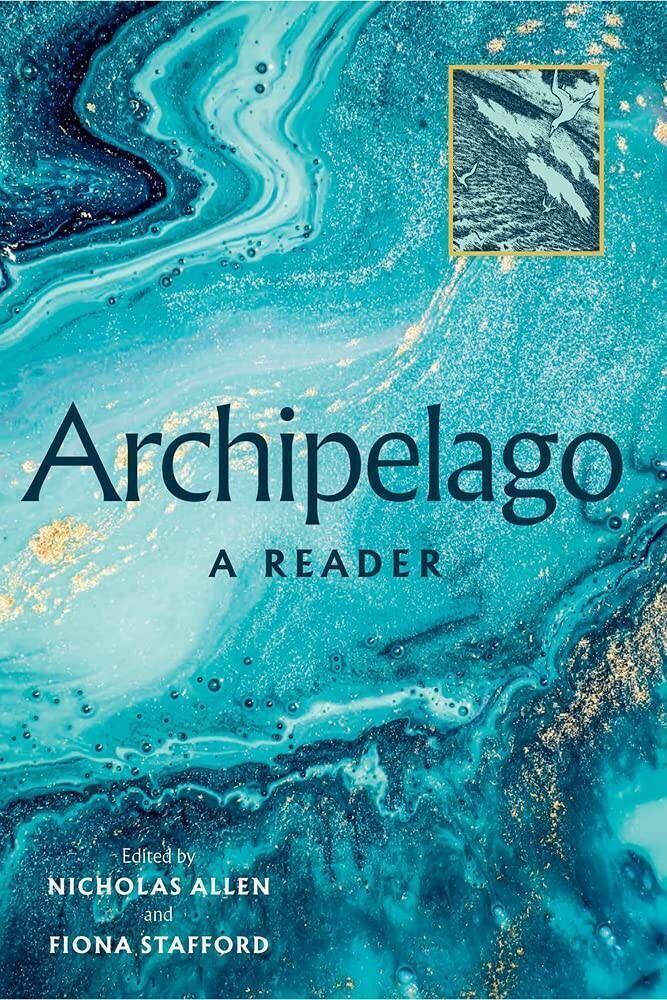
- Archipelago: A Reader. Edited by Nicholas Allen and Fiona Stafford
- Lilliput, €25