Book interview: Henry Kissinger and the art of international diplomacy
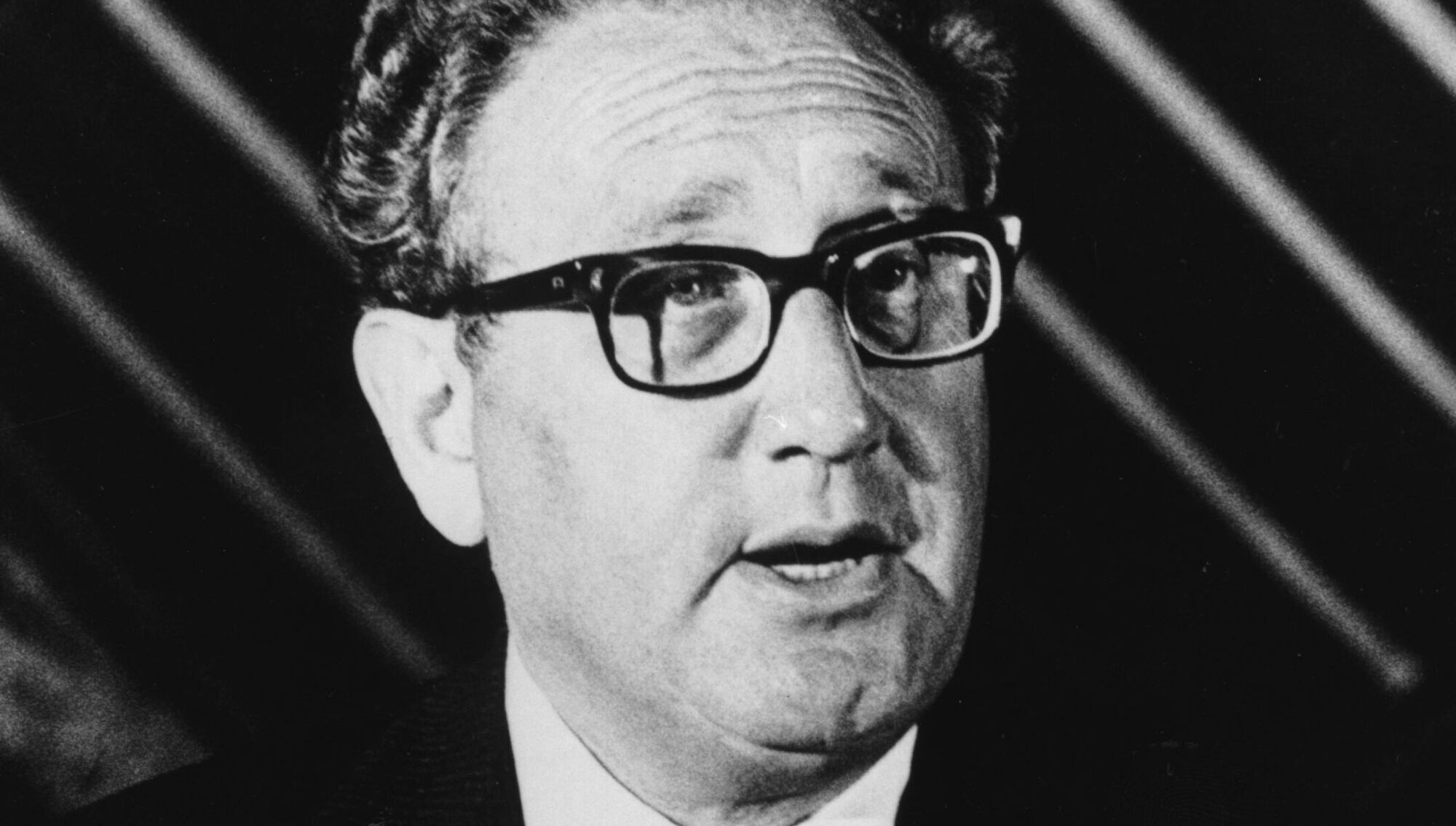
Henry Kissinger, the US secretary of state addressing a United Nations meeting in Nairobi about the new world economic order in May 1976. Picture: Keystone/Getty Images
Martin Indyk is recalling a private conversation he had in Washington in the early 1990s with president Bill Clinton. “In our first discussion about the Middle East I said to him: ‘We can end the Arab-Israeli conflict’,” the 70-year-old seasoned diplomat and foreign relations analyst says with a self deprecating chuckle, from his home in New York.
“Clinton then looked at me and said: I want to do that,” says Indyk. “We had considerable success until the end, when it all blew up in our faces.” During president Clinton’s two terms Indyk played a key role in diplomatic negotiations between Israel and the United States: first as Clinton’s Middle East adviser at the National Security Council, and then later as the United States ambassador to Israel. During president Obama’s second term Indyk served as Washington’s special Middle East envoy for the resumption of Israel-Palestinian negotiations.
In that latter role Indyk resigned after nine frustrating months of intransigent negotiations that went nowhere fast.
Initially, those early efforts for a peaceful reconciliation between Israelis and Palestinians looked hopeful. In September 1993 the Oslo Accords led to a monumental historical moment. Then Israeli prime minister, Yitzhak Rabin, shook the hand of Yasser Arafat, who was the chairman of the Palestine Liberation Organization, on the South Lawn of the White House, while Clinton stood between them as the neutral blessed peacemaker. Then two years later, Arafat and Rabin returned to Washington to sign Oslo II, another peace-building agreement that attempted to revolve the Israeli-Palestinian conflict.
Indyk worked behind the scenes as the president’s trusted advisor and negotiator on both occasions. He was also present at the White House in October 1998 to witness the signing of an agreement that strengthened Israeli security, while also expanding the area of Palestinian control in the West Bank. On that occasion Indyk was Madeleine Albright’s assistant secretary of state for Near Eastern affairs. But Yasser Arafat, and Benjamin Netanyahu (the more hawkish and less compromising Israeli leader) were two unlikely peacemakers during this uncertain period, where the peace process was on shaky ground following the assassination of Yitzhak Rabin in November 1995.
Even after Rabin’s death some hope appeared to be on the horizon for a lasting peace settlement to arise from Oslo. But when the second Palestinian intifada erupted in Gaza and the West Bank in 2000, the Israeli-Palestinian peace process was once again in tatters. “It all [dissolved] at the intifada,” Indyk recalls. “And we’ve never been able to put it back together again, despite four [American] presidents trying. After Rabin and Arafat, we didn’t have leaders capable of bringing their people around to supporting the kinds of concessions that both sides had to make.”
And yet, blaming both sides still doesn’t produce a sufficient enough explanation for went wrong, says Indyk. He claims US diplomats and politicians must take some share of the blame too.
Every American president since Jimmy Carter has viewed the Arab-Israeli conflict in messianic terms, he says “where the main objective is to bring peace back to the Holy Land”. Indyk believes Washington diplomats (including keys players in the current Biden administration) need to take a more nuanced and realistic approach to the politics of the Middle East. He says they could learn a thing or two by studying the diplomacy implemented in the region during the mid-1970s
by the Machiavellian master of realpolitik, Henry Kissinger.
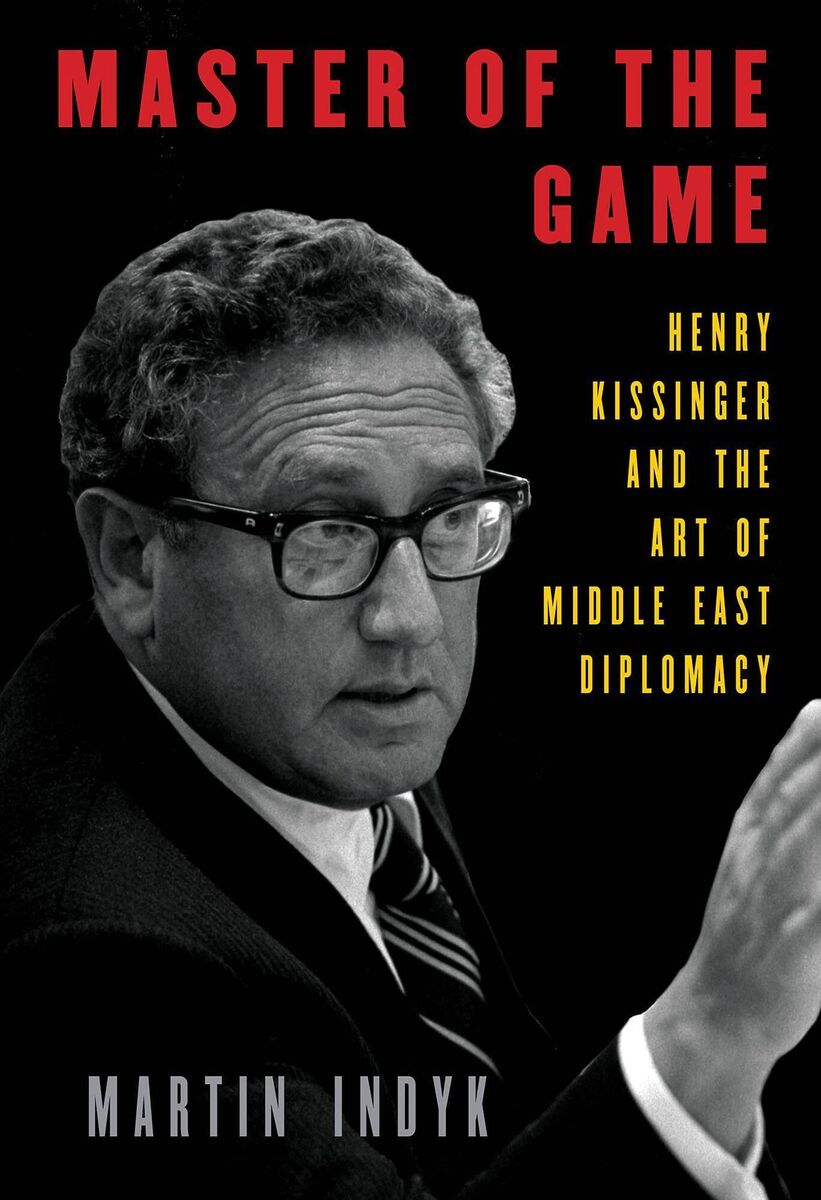
“If diplomacy is the art of moving political leaders to places they are reluctant to go, then Kissinger was the master of the game”, Indyk writes in the opening pages of his aptly titled book, Master of the Game: Henry Kissinger and the Art of Middle East Diplomacy.
It begins when Kissinger was only two weeks sworn in as secretary of state. his first major diplomatic test came on October 6, 1973 — when Egyptian and Syrian forces launched a co-ordinated attack against Israel on Yom Kippur, the holiest day in the Jewish calendar. The two Arab nations were hoping to win back territory lost to Israel during the Six Day War in June 1967. Then on October 19, 1973, with Yom Kippur still raging, and Israeli forces threatening Damascus and Cairo, Kissinger embarked on a mission to Moscow and Tel Aviv to negotiate the ceasefire that would end that war and launch a new role for the US as the broker of Arab-Israeli peace.
Kissinger’s suave presentation of US foreign policy serving under the Nixon and Ford administrations respectively turned him into a global celebrity, and he was credited with a multitude of diplomatic achievements. Kissinger was instrumental in advocating the policy of détente, which saw the US developing cordial relations with the Soviet Union and with China, during a particularly hostile period of the Cold War. From 1961 to 1968, while still teaching at Harvard, Kissinger served as a special adviser to presidents John F Kennedy and Lyndon Johnson on matters pertaining to foreign policy.
In 1969 Kissinger left Harvard and went to Washington full-time after president Richard Nixon appointed him national security advisor. Under Nixon, Kissinger kept that job title while also taking on the position of secretary of state. Kissinger then continued as secretary of state under Nixon’s successor, president Gerald Ford.
“For the four years that he was secretary of state, Kissinger pretty much did nothing else but promote peace and order in the Middle East,” says Indyk. “So the book’s purpose is to really look at how he did it: not only as a historical study, but also to look at the lessons we can learn from how to make peace, and how to establish order in a region that is as troubled today — in different ways — as it was back then.” In his own career as a diplomat Indyk also walked in Kissinger’s footsteps, participating in National Security Council meetings in the White House Situation Room where he convened the Washington Special Action Group, and Oval Office appointments with Israeli and Arab leaders. The book was also written with the extensive co-operation of its subject matter, Henry Kissinger. As part of his research for the book Indyk discussed numerous diplomatic case studies at length with Kissinger himself, in many long interviews. Kissinger even granted Indyk access to his own personal papers.
“One of the main things I learned when I was talking to Kissinger is that he obfuscates, and keeps things close to his chest. Kissinger’s focus was on order, not peace. He is deeply sceptical that peace can be achieved, and more interested in buying time to introduce a step-by-step process to achieve a balance of power, because he believes in a hierarchy of power.” Indyk says Kissinger skillfully manoeuvred to secure four ambitious and somewhat contradictory objectives simultaneously in negotiations to end the Yom Kippur War in October 1973: to ensure the victory of America’s ally, Israel, over the Soviet-backed Egyptian and Syrian forces; to prevent a humiliating defeat of the Egyptian army so that its leader, president Anwar Sadat, would be able to enter peace negotiations with Israel with his dignity intact; to prove to the Arabs that only the US could deliver results for them at the negotiating table; and to maintain the détente with Moscow, even as Kissinger worked to undermine the Soviet position of influence in the Middle East.
Indyk notes that Kissinger’s diplomacy was not always a perfect performance. He says Kissinger often became blinkered by his pursuit of order and stability, missing both warning signs of war and openings for peace. These errors came with a high human cost and others with strategic consequences that continue to impact peacemaking to this day. Indyk says that if Kissinger had taken president Anwar Sadat’s threats much more seriously at the outset, in the autumn of 1973, he might have averted the Yom Kippur War altogether. And had Kissinger enabled King Hussein of Jordan to regain a foothold in the West Bank, when he had the opportunity to do so, the outcome of the most intractable dimension of the conflict —the Palestinian issue — could have turned out to be dramatically different.
Indyk then points to the diplomatic results Kissinger produced during the period the book covers: between 1973 and 1977. The exhausting and frantic political negotiations was regularly dubbed “shuttle diplomacy” because of the seemingly endless flights the secretary of state made between Cairo, Jerusalem, Damascus, and other Arab capitals. Crucially, the negotiations Kissinger embarked on resulted in three agreements: two in the Sinai between Israel and Egypt, and a Golan Heights disengagement agreement between Israel and Syria. In all cases, Israel ceded territory in return for stable, interim borders.
Indyk notes that Kissinger succeeded in laying the foundations for a US-led effort to resolve the Arab-Israeli conflict. Specifically, the Israeli-Egyptian peace treaty, negotiated by president Carter, which was instrumental in leading to the Israeli-Palestinian Oslo Accords and the Israeli-Jordanian Peace Treaty, consummated under President Clinton.
“Kissinger’s purpose was not so much to make peace as it was to establish a new American led order in the Middle East, which had a profound impact on the Arab Israeli conflict,” says Indyk. “And it was this scepticism that led him to be very careful, conservative, and cautious.”
- Master of the Game by Martin Indyk
- Knopf, €25.99