Book review: Account of Robert Fisk’s journalistic exploits a saga of love, courage, and heartache
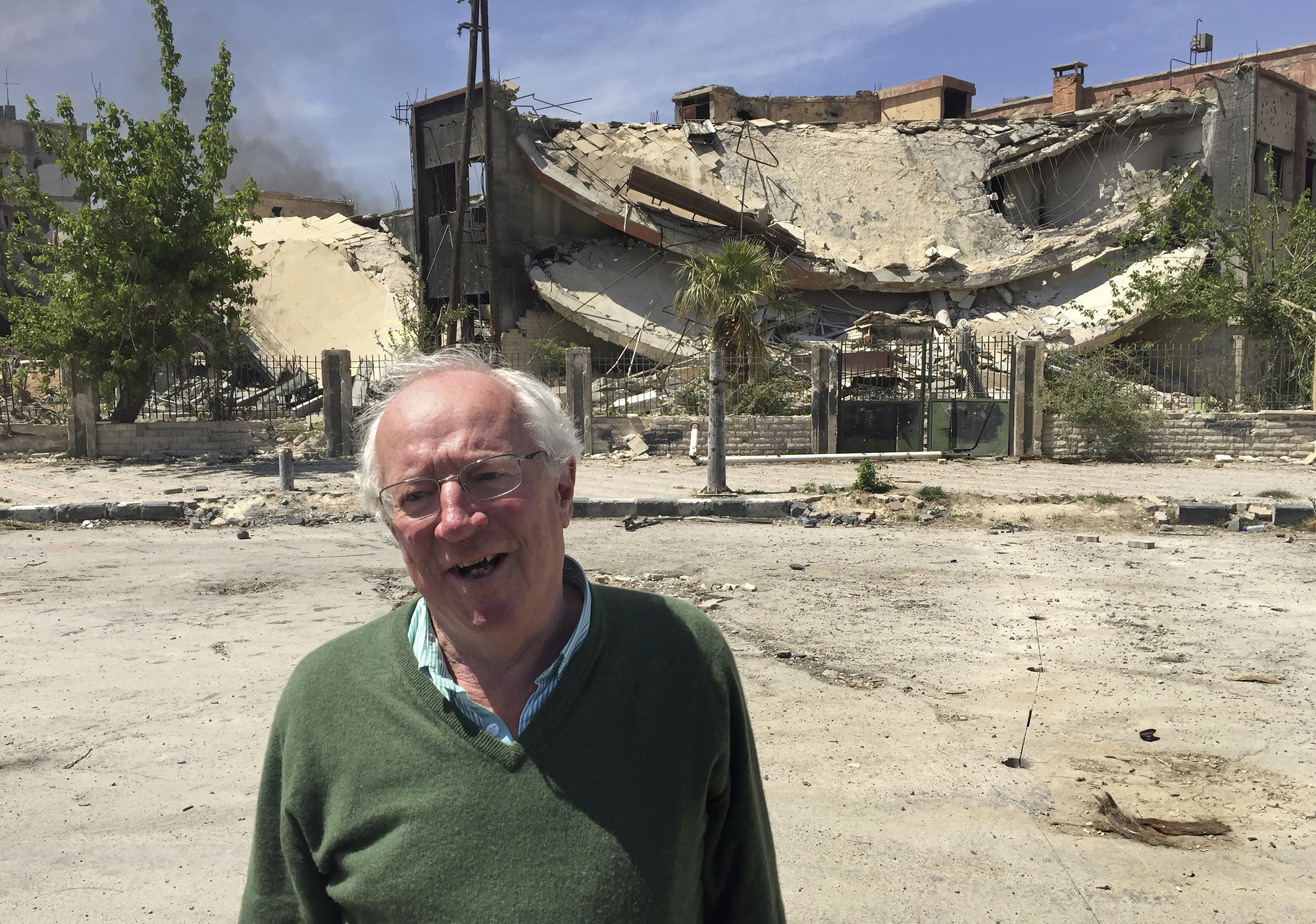
Veteran journalist Robert Fisk stands in front of a damaged building in the Damascus suburb of Douma, during a tour by Syria’s Information Ministry to the town days after it was captured from rebels by Syrian government forces, April 16, 2018. Picture: Bassem Mroue/AP
IN June 1985, after the Air India crash off the coast of Cork, the BBC international correspondent Kate Adie was one of the first British journalists to arrive at the airport. The RAF had sent over two Chinook helicopters to help in the search for bodies.
One had just come back from the search area and had landed on the tarmac. “Come on,” Kate said to me. A British officer stopped us.
“You can’t go over there,” he said, pointing to the Chinook. “Fuck off,” Kate said and kept walking. I timidly followed.
As I read Lara Marlowe’s saga of love, adventure, courage, and heartache, that scene came back to me. It’s just what Bob Fisk would have done, I said to myself. I never met him, but he was a journalist I much admired. Fearless and highly principled.
“Robert was part Tintin boy reporter and part James Bond,” Lara writes in the prologue.
“As the years passed, a third Robert superseded them: an unrelenting crusader for wronged and oppressed peoples, who catalogued atrocities and injustice with frightening intensity. The job of a journalist was ‘to be neutral and unbiased on the side of those who suffer’, he said.”
Robert Fisk died of a stroke in St Vincent’s Hospital in Dublin on October 30, 2020. He was 75. He and Lara had been divorced for 11 years and separated much longer. But they remained on good terms and wrote and spoke to each other affectionately.
She has not written, as she explained, a biography — instead it is a chronicle of the two decades between their first meeting and the 2003 invasion of Iraq, the last war they covered together.
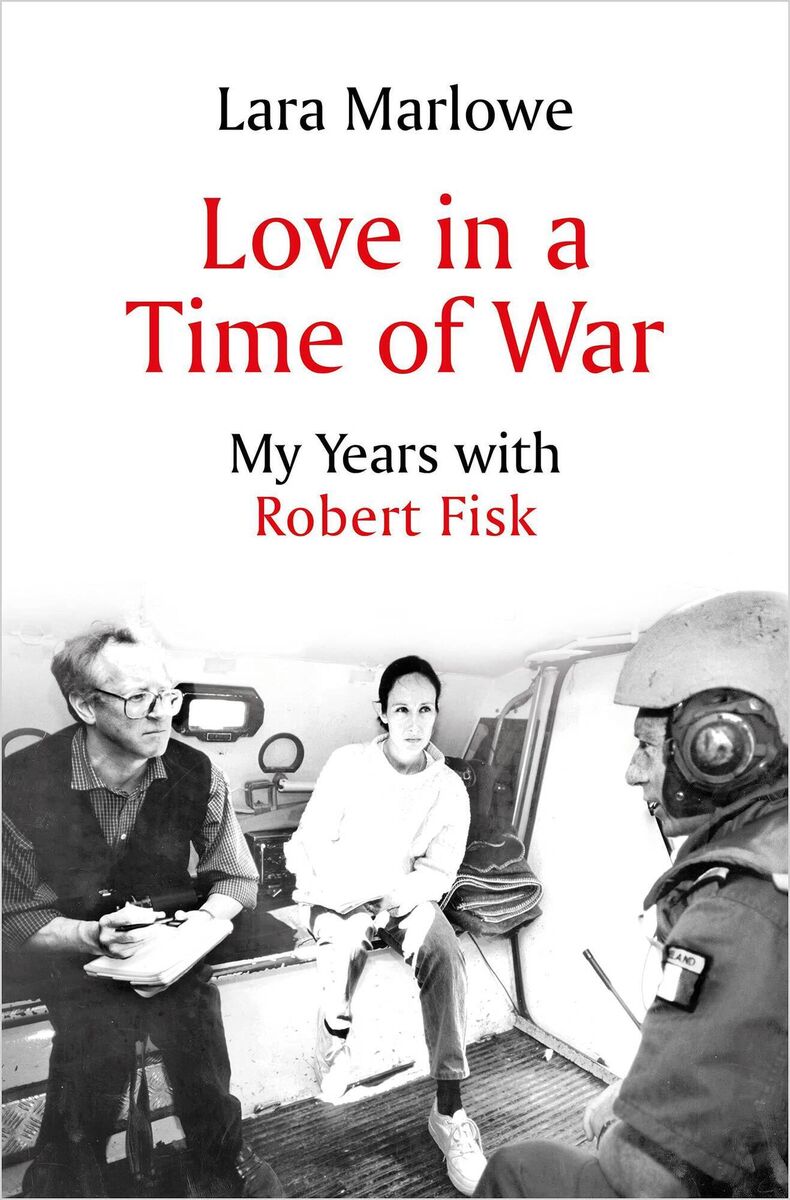
And there was much to chronicle ever since their first meeting in Damascus in 1983. In 1987 he would convince her to leave Manhattan, where she worked as an associate producer with CBS, and her first husband, to join him. Along the way, she became “an earnest pupil in what I jokingly call the Fisk School of Journalism”. But what a school. In the words of Noam Chomsky, Fisk was “a truly great journalist”.
Lara’s account is a kaleidoscope of bombed cities, bullet-ridden cars, mutilated bodies and vicious tyrants. And love. When they first met she describes his “irrepressible energy”, and then adds: “The Irish would say he is full of devilment”. He pursues her tirelessly, writing letters from Beirut (a city he loved), and including romantic verses from Shakespeare to Marvell (author of ‘To His Coy Mistress’).
“I had read Robert’s articles in The Times almost every day since Israel had invaded Lebanon in June 1982. I remember his horrifying accounts of the Sabra and Chatila massacres. I am also surprised to find that the famous, intrepid war correspondent exists in real life, even more surprised when he shows an interest in me.”
She tells readers that Fisk’s first big story (the first of many) was a series of reports about the Second World War record of Austrian president Kurt Waldheim, who was secretary general of the United Nations from 1972 to 1982. “The Waldheim affair combines several of Robert’s obsessions: the world war, arrogance and authority, lies and impunity in high places.”
Waldheim served in German army intelligence, with “brutal units that executed thousands of Yugoslav civilians and partisans, and deported thousands of Greek Jews to Nazi death camps”.
I hope to meet Lara Marlowe on my next visit to Paris. I’ll tell her how much I admire her insightful writing on French politics for The Irish Times. Then I’ll tell her I’m cross with her. When she asks why, I will say that her account of Bob Fisk’s journalistic exploits was a painful reminder of how poorly I have performed.
- Love in a Time of War: My Years with Robert Fisk by Lara Marlowe
- Head of Zeus, €24