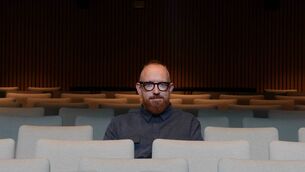
Doireann Ní Ghlacáin on delving into the life of her grandfather Seán Ó Riada

Doireann Ní Ghlacáin presents Seán Ó Riada - Mo Sheanathair on TG4, St Stephen’s Day.
“If it doesn’t hurt, it’s not worth making,” was filmmaker Jim Sheridan’s advice to Doireann Ní Ghlacáin as she embarked on a documentary exploring the legacy of her grandfather Seán Ó Riada and her own relationship to the composer, 50 years after his death.
Sheridan, executive producer of Seán Ó Riada - Mo Sheanathair, may be assured that after a rollercoaster ride through reawakened family memories, a requisite amount of pain has gone into the making of the feature-length TG4 programme, airing on St Stephen’s Day.
Born more than two decades after Ó Riada’s death, musician and TG4 presenter Doireann admits that “to grow empathy and affection towards somebody who is dead 50 years is so strange”. Yet through interviews, family letters, and archival research, developing a bond with the grandfather she never met involved a discovery both of the man behind the public persona and her own grief at his loss.
It also saw a laying-bare of the emotions of her mother, RTÉ/TG4 political correspondent Sorcha Ní Riada, who lost her father when she was seven. Doireann’s determination to better acquaint herself with her maternal grandfather, however, has its roots in the influence of her father Kevin Glackin, who passed on his fiddle skills to Doireann and her siblings.
“My whole perspective on traditional music really does come from my dad and wouldn’t have been centred around the Ó Riada thing at all,” she says, adding that as a teenager, her gods were the likes of Tommy Potts and Willie Clancy. “I’d spent my whole life hearing about [Seán] but I never really understood that he was as important a figure as he was. I thought it was just kind of a family thing. I didn’t realise that there was a much wider understanding of what he had achieved.
“So many people were influenced by him; the likes of Seamus Heaney and Thomas Kinsella, who were struck by his death, and Willie Clancy and Tony Mac Mahon playing at his funeral. If these people were so enamoured by him, there’s definitely something there,” she reasoned.
Strikingly, among her earliest clues as to her grandfather’s significance as composer and arranger of classical, traditional, and liturgical music came when his work appeared on her Leaving Certificate syllabus. Alongside his Mise Éire film score and reimagining of Irish traditional music with Ceoltóirí Chualann, she recalls learning that his premature death, aged 40, was attributable to alcohol abuse.
“I remember learning about him in school and that being a thing, and [thinking] ‘this is really weird’,” said Doireann, who addresses the subject of his early demise in Seán Ó Riada - Mo Sheanathair. “Did he drink himself to death? Was it genetic liver disease? That is discussed in the programme and is something that would have coloured my perception of him, certainly.”
The circumstances of his death are among several contentious aspects explored by Doireann, who co-wrote the documentary with director Feilimí O’Connor, collaborating with producer Dónal O’Connor and executive producers Neil Martin and Jim Sheridan.
Sheridan, director of My Left Foot and In the Name of the Father, was intrigued by the polarising nature of Ó Riada’s story.
“He said he thought Seán was one of the most divisive cultural figures and was on the same level as the likes of Beckett,” says Doireann. “I thought maybe it was an exaggeration. I really did not think it was going to be such an emotional rollercoaster.”
Sheridan said to her at the start, ‘if it doesn’t hurt it’s not worth making". Doireann says she has kept that in the back of her mind while making the show. Doireann, raised in Clontarf, Dublin, and currently concluding PhD research on the oral literature of the Múscraí Gaeltacht, examined Seán’s perceived failure to fulfil his potential as a classical composer.
“There was a lot of resentment from the classical music community. They really thought he was going to elevate the Irish voice in the European canon to the next level, but ultimately no, he didn’t manage to achieve that,” said Doireann.
“Some people in the classical music world would think his influence is inflated. [Professor and musicologist] Harry White, who is a big fan of Seán’s, did come out and say that he thought Sean was overrated in some senses as a European composer,” she added. “I had a big chat with him about that and we came to a middle-ground of understanding.
“Then there was the whole thing about Ceoltóirí Chualann and the Chieftains that’s been a bone of contention for the last 50 years, and questions about compositional rights and who composed what.”
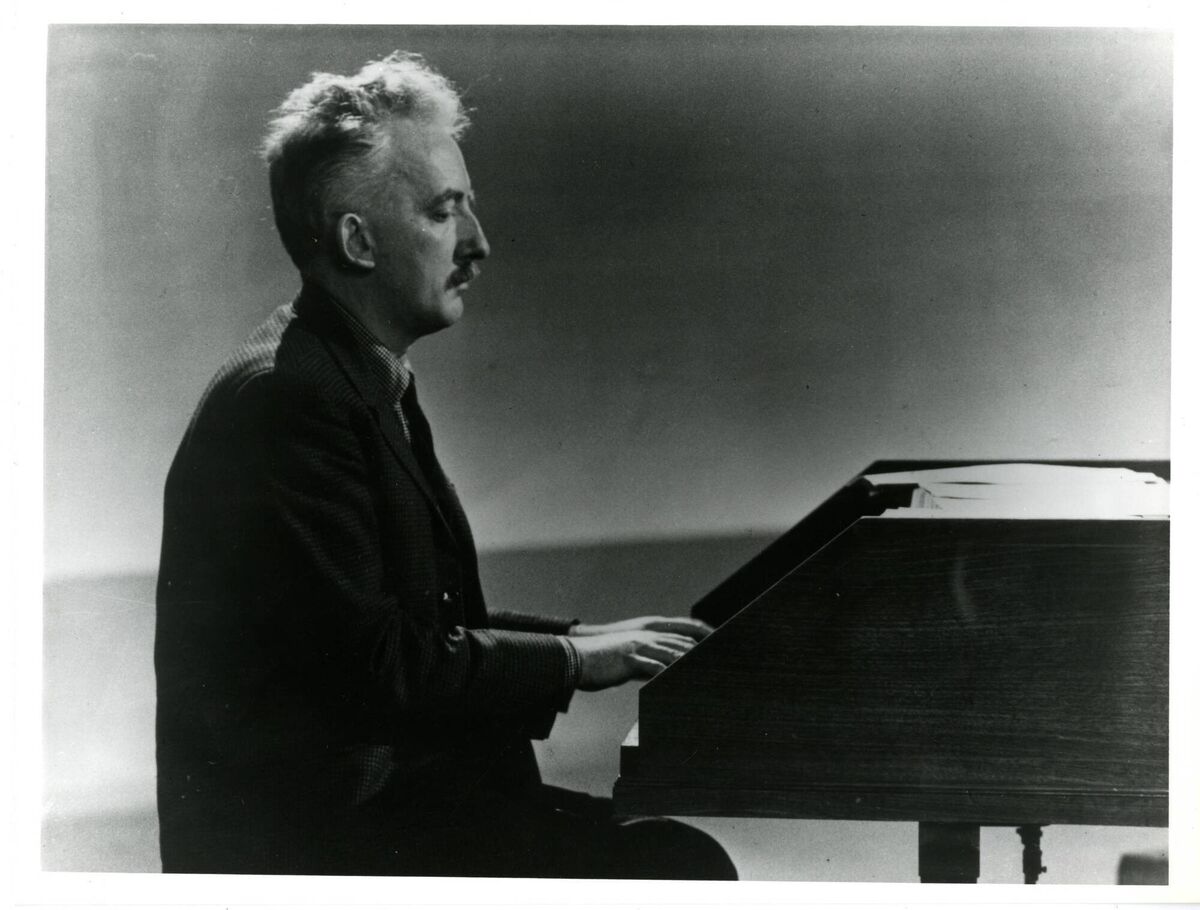
If Seán was controversial as a composer, he was enigmatic on a personal level, and Doireann set about breaking down a “kind of wall between myself and the past” to discover what kind of a man her grandfather was.
“He was always this mysterious, historical character,” she said. “There was no daonnacht [humanity]. Then I started doing this research on him and the fact that he was actually a living, breathing human, as ridiculous as it sounds, was like a revelation. Reading his letters, getting a sense of the man, his sense of humour, how he thought about things.
“He used to make films himself on 16mm film and we found snippets of these films. He’s grinning and laughing and there’s a real sense of personality.” Her research also provided poignant insights into the life of her grandmother Ruth, who having developed cancer, died just six years after her husband. It gave Doireann fresh perspective, too, on her bond with her mother Sorcha.
“I’m actually the first woman in about 100 years in that female line in my family that has a relationship with my own mother,” she said. “Ruth’s mother died when she was 16; Ruth died when my mother was 13; my great-grandmother, Ruth’s mother, left Italy when she was a teenager, so there’s a lot of women there that grew up without their mothers. I’m acutely aware of how lucky I am that I have a great relationship with my own mother.”
Until making the documentary, however, mother and daughter had not shared their feelings about Seán’s absence. “The first time that we actually ever sat down to have a proper conversation about the whole thing was in front of the cameras this summer. I was so emotional going into that,” says Doireann. “For her there are a lot of private memories that she obviously cherishes and there’s obviously a lot of vulnerability there as well.
“My mother was seven [when Seán died] and it’s the small things – she remembers a poem she was learning in junior infants. Seán was in charge of the homework that night and he made sure she learnt it well. She can still remember that poem off by heart 50 years later.”
After two years’ work on the documentary on Seán, she feels her own relationship with him has changed. “I feel like I’ve gone through a grieving process myself. It’s a weird thing, when somebody dies. His relationship with his children and the people that love him still keeps going on. For my aunts and uncles, their relationship with him has changed a lot as they get older and understand things better as their own perspective on life changes.
“I’m very grateful to my mother and my aunts and uncles because I would imagine that someone diving into the story is like someone rooting through your underwear drawer when you’re not at home – it’s very personal and very uncomfortable. They were so forthcoming and honest with me and I really appreciate that it was something that was quite traumatic.”
Ó Riada’s musical legacy resonates through the documentary in performances by the likes of pianist Barry Douglas, Peadar Ó Riada, Doireann, and singers Seán Ó Sé, Iarla Ó Lionáird, and Nell Ní Chróinín.
“I think the most important legacy that Seán left behind him, though, is that there were seven kids left there and they’re so close; it’s such a strong family unit and the next generation, myself and my cousins, have really benefitted from that,” says Doireann. “The big question for this documentary was what kind of man was Seán Ó Riada and I think I was able to answer that satisfactorily for myself.
"Ultimately, I’ve come to a stage where I’m very proud of everything he achieved. I have a sense of admiration for him but I’ve also come to realise that we’re all human and 'níl saoi gan locht' [there’s no wise person without fault] so I’m a lot more empathetic. Fifty years later I could really feel there was still a lot of love for Seán. When I interviewed people I could feel them emanating so much affection towards him and I think that’s the measure of any man, achievements aside.”
- Seán Ó Riada - Mo Sheanathair , TG4, St Stephen’s Day 9.20pm
- Peter O’Toole - Réalta agus Rógaire, Christmas Day, 9.25pm: The life and career of the hell-raising star of Lawrence of Arabia explored through interviews with his daughter Kate and co-stars Brian Blessed, Twiggy, and Mary Coughlan.
- Joe Burke – Ceiliúradh, Christmas Day, 10.20pm: A special gathering of musicians, friends, and family, including Ann Conroy Burke, Mary Conroy, Frankie Gavin, Eileen O’Brien, Máire Ní Chathasaigh, and Jackie Daly, celebrate the life of Galway accordion legend Joe Burke, who passed away in February.
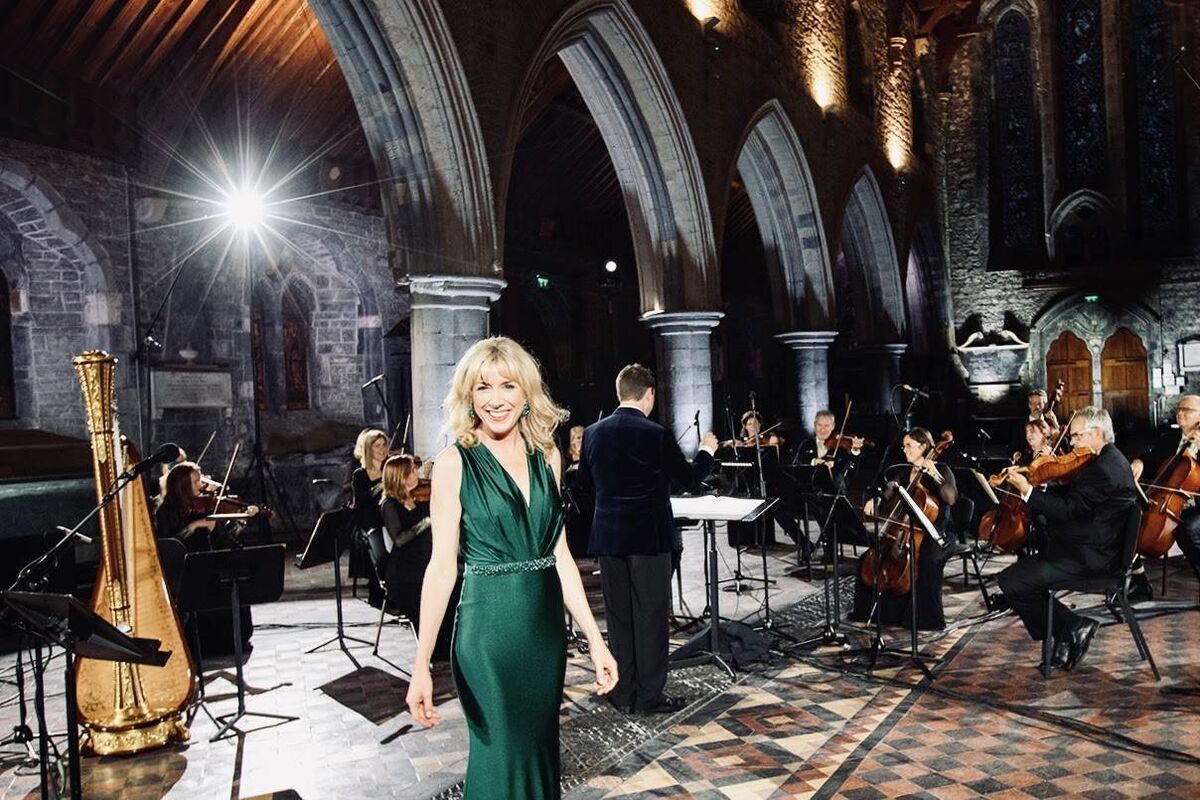
- Róisín ReImagined, Monday, December 27, 8.15pm: Kerry’s Muireann Nic Amhlaoibh and the Irish Chamber Orchestra, with soloists including Dónal O’Connor, Cormac McCarthy, and Mick O’Brien, perform new arrangements of sean-nós songs such as Róisín Dubh and An Chúilfhionn.
- Éamonn Ryan - An Máistir, Thursday, December 30, 9.20pm: The manager of the Cork ladies’ football team that won 10 All-Irelands inspired those who played under him but was humble about his playing and managerial success. Cork’s Juliet Murphy, Rena Buckley, and Briege Corkery share recollections, along with Billy Morgan, Dinny Allen, and Ryan’s family.
- Fáilte 2022, New Year’s Eve, 11.30pm: Dáithí Ó Sé and Orla Ní Fhinneadha ring in the new year with traditional music and entertainment from Matt Molloy, Dan Delaney, Cathy Jordan, The Bonny Men, and more.