David Bowie and Toy: The inside story of the 'lost' album about to be released
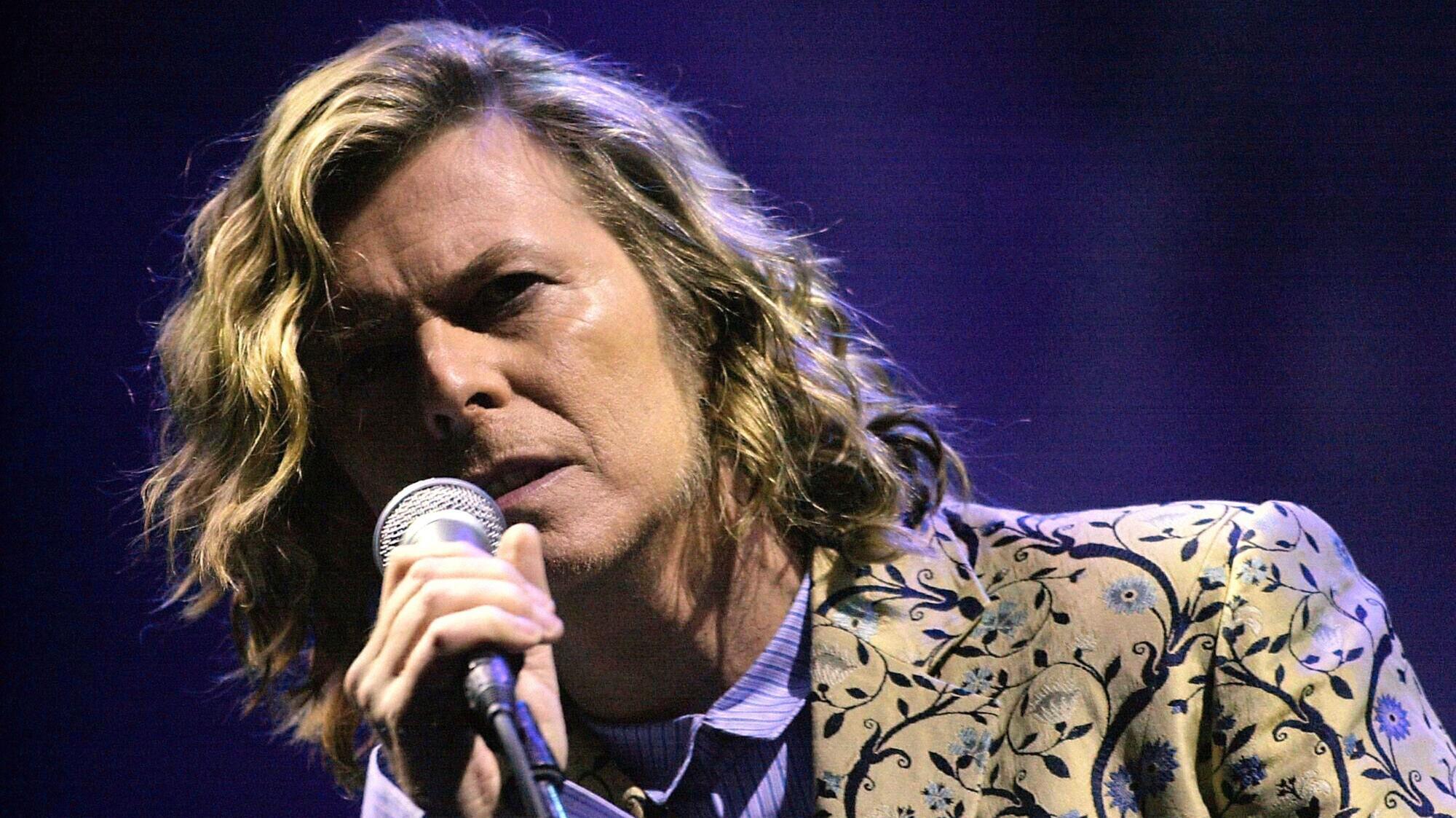
David Bowie performing at Glastonbury Festival in 2000. Picture: Toby Melville/PA Wire
“Those sessions were joyous, he was really enjoying himself”
David Bowie quickly developed an affinity with producer and multi-instrumentalist Mark Plati who began work on Earthling in the summer of 1996. Although Plati’s initial involvement was thought to be minimal, he would play an essential role with Bowie for the next seven years, both live and in the studio. “I was only meant to do a little recording with David but like anyone he’d meet, if he found a connection he’d bring you along for the ride.”
In particular, Plati would play a central role on Toy, Bowie’s first planned album of the new century. Although slated for release 20 years ago, it was shelved after some record company wrangles. Selected tracks would appear as B-sides after Bowie moved on quickly, perhaps to save face releasing the critically acclaimed Heathen album in 2002.
Although a rough version of the album was leaked online in 2011, an official release will finally see the presentation and attention Bowie desired. An initial release appears on the box-set Brilliant Adventure (1992–2001) and finally, a stand-alone version is granted the day before what would have been Bowie’s 75th birthday on January 8.
The idea behind Toy developed when curating a set-list for VH1’s Storytellers, the Mod-era single Can’t Help Thinking About Me (recorded with the Lower Third in 1965) was chosen to represent his pre-fame output. The track turned out to be a crowd-pleasing banger, encouraging Bowie to rethink earlier work.
“That was my first live gig with David, it was momentous,” says Plati. “He was pulling songs from different eras and the whole project started from that. His pre-Space Oddity period is not very well-known to lots of fans, and so he pulled out that song, told the story and had a great time doing it, so much so that we continued to play it.”
With the departure at the end of the 1990s of Reeves Gabrels, the guitarist who had been at Bowie’s side for a decade, it was time to move on with “creative tensions” manifesting during the recording for Hours (1999). Gabrels' exit created space for other musicians.
“It was my first full-on co-production with David and that was my baby to a large extent,” explains Plati, “that record was also the first appearance of (Irish guitarist) Gerry Leonard in the Bowie world. After tracking the album we got in a couple of other people to add some additional colour and among them was Gerry and Lisa Germano, they brought things that no one else did.”
Bowie also brought back some key creative forces from his past. Mike Garson, the pianist who had helped define the sound of Aladdin Sane, had returned to the fold in 1993, having not worked with Bowie since Young Americans in 1975. Earl Slick also joined Bowie for the first time in 17 years.
“Slick was perfect musically, personally and everything else”, says Plati, “he just fitted in like he had just stopped playing the week before.” Added to this crack team of musicians was Tony Visconti – who had last worked with Bowie on Scary Monsters in 1980 - and his famous string arrangements. These trusted lieutenants were summoned, as Plati suggests, to help him reclaim earlier work.
“When first doing those songs he didn't have nearly the same degree of artistic control and was subject to other producers, time frames and tight budgets. As a result, it was different musicians and studios, he was taking control in a way that he couldn’t during that period.”
After initial rehearsals Bowie played a triumphant set at Glastonbury, performing there for the first time since 1971. Plati was assigned the role of musical director despite difficult circumstances.
“For me, that was quite an intense time,” says Plati. “I had a bike accident fracturing both of my elbows and spent an agonising few weeks in physical therapy to get my act together. I was in quite a bit of pain during the Glastonbury process but he stuck by me and I lead the band through it.
“For the set, we played a lot of the material that Slicky [Earl Slick] was involved with, we brought in Station to Station, Stay, Golden Years and Wild Is The Wind, and he was the perfect call for those songs. I would stand in the middle of this triangle between David Bowie, Earl Slick and Mike Garson - little old me who grew up listening to these guys and the three of them are looking at me to start the song.
"I would have to kick myself and say: ‘shut up and do your job’. That was incredible on every level because everyone involved was in such a good place, it was a wonderful period and one of the great performances of David’s later career.”
The buoyant atmosphere of Glastonbury carried over into the Toy sessions. It came with the realisation that this was one of Bowie’s most exceptional bands combining a range of new players, musicians who had worked with him over the last decade and those who had been indispensable during the 1970s.
“The band were up for these songs and the spirit was high, I can’t tell you enough how productive and happy it was for everyone involved. David took a break because his daughter Lexi was about to be born around that time. Those sessions were joyous, he was really enjoying himself.”
The dichotomy between Bowie’s past and present hit upon a creative alchemy that would assist the remaining years. Among the tracks selected for Toy was Shadow Man, a piece that had circulated on bootleg among fans and collectors for decades. Originally laid down during the Ziggy Stardust sessions in November 1971, the version on Toy finally realised one of Bowie’s finest lost songs.
“Some of these tracks were just fragments,” says Plati, “they had seen the light of day in really strange ways. Shadow Man was like that, we kept it in this very evocative place, as far as I know, that song was the first appearance of Gerry Leonard in the Bowie world.” While new songs would be recorded during the Toy sessions such as Uncle Floyd (later Slip Away) and Afraid, different versions would find their place on Heathen.
“When Toy didn’t see the light of day David took Uncle Floyd and worked that into Slip Away which is a fantastic track”, explains Plati. “I loved playing that on tour”. Toy (Your Turn To Dive) which appeared on the 2014 compilation Nothing Has Changed, is the only cut written after 1971 to make the new tracklist.”
As our interview finishes Plati informs me he is speaking from the same studio in New York where Bowie worked on overdubs for Toy back in October 2020.
“This is my studio now because David worked here; it was my old flat. When David suggested we record here I thought: ‘This is not a studio’ but he loved this place; it’s a small flat with a terrace in the East Village. We’d work then take a walk around the neighbourhood and eat in the local restaurants. You’d see people looking out from the kitchen but it was just so normal, we weren't acting like international rock stars. I thought: ‘If David likes this place then there’s something to it.’
"I’ve done countless records here since but it was him who pointed it out to me without me seeing it.”
- David Bowie Brilliant Adventure (1992–2001) is released on Friday, Nov 26