Ruth Negga: 'I’m aware certain people don’t want me to identify as this or that'
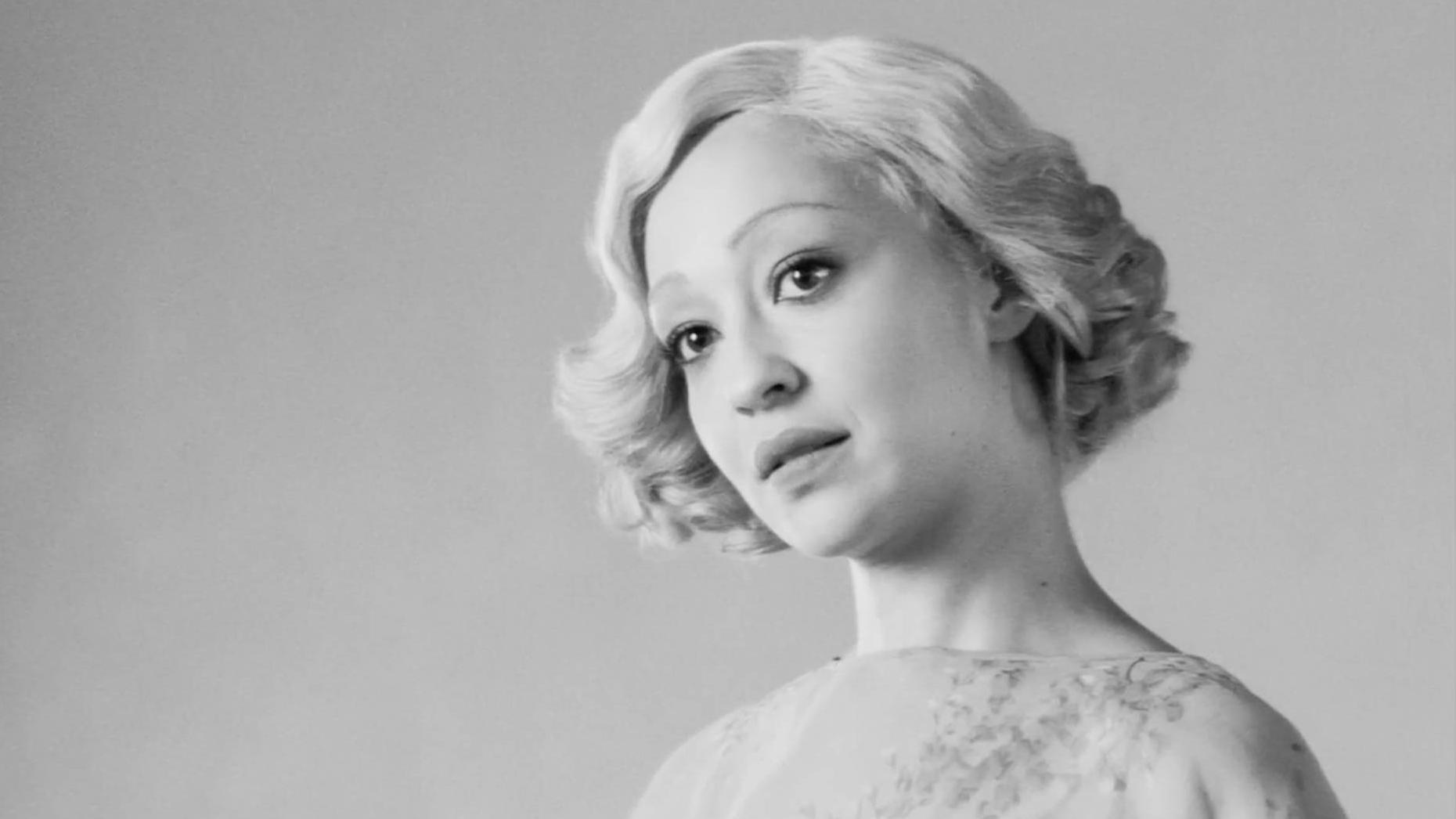
Ruth Negga in Passing, a film that opens in cinemas and will be available on Netflix.
Ruth Negga has spent her life and her career exploring different versions of herself. The daughter of an Ethiopian father and Irish mother, she grew up just outside Limerick city and later attended secondary school in London. Today, aged 39, she is based in Hollywood. This has left her with an accent that pivots from rural to 'posh', depending on the situation. And with a nuanced understanding of where she comes from and where she’s going.
“My identity is always under scrutiny,” she says. “I’m very much aware certain people don’t want me to identify as this or that. I know that. It’s always been a thing since I was a child. Can’t be Irish, can’t be English, can’t be Ethiopian. Because I’m not fully either or any of them. So I knew as a child that I would have to take responsibility for carving out my own space, my own identity.”
As she says, she learned early in life that she would have to actively choose who she wanted to be – and not let others make that decision for her. These complexities have been a gift to her as an actress, she feels. They have certainly given her lots to draw on in her starring role Rebecca Hall’s adaptation of Nella Larsen’s 1929 novel Passing, which comes to cinemas October 29 and is released on Netflix November 10.
Negga plays Clare, an African-American masquerading as upper-class white in Jazz Age New York. Clare is living a glamorous, Gatsby-esque existed. And yet she feels compelled to risk her status by reconnecting with her black roots.
“To think that this novel was nearly 100 years old. And yet I felt seen and witnessed by the contradictions,” Negga says over tea in Dublin’s Merrion Hotel. “I mean it’s obviously a study in passing. But even more so in identity.”
Negga is delicate and animated with large expressive eyes. Her accent, as she says, is a little all over the place. You can tell she’s Irish. But also that she has spent time in the UK. And she has little patience with people who try to put her in a box and say she has to be one thing or the other. She is lots of things.
“My accent changes constantly. When I’m talking to my mother it gets more [Irish]. If I am intimidated or I’m doing an interview where I’m conscious of that being understood I go kind of ‘posh’,” she says. “I try to reserve judgement. Other people will do that for me anyway.That’s the full gamut of who I am. And to deny that is to deny myself… It’s this thing about society moralising on who you are. It irritates me all the time. There’s badness in me that goes, ‘well, f*** you – I’ll be who I want to be’.
"I feel more comfortable being the outsider. That’s my own particular issues I have to deal with.”
Her wounds have become her motivation, she continues: “I feel very much that my insecurities around that have compelled me to really, fully identify however I choose.”
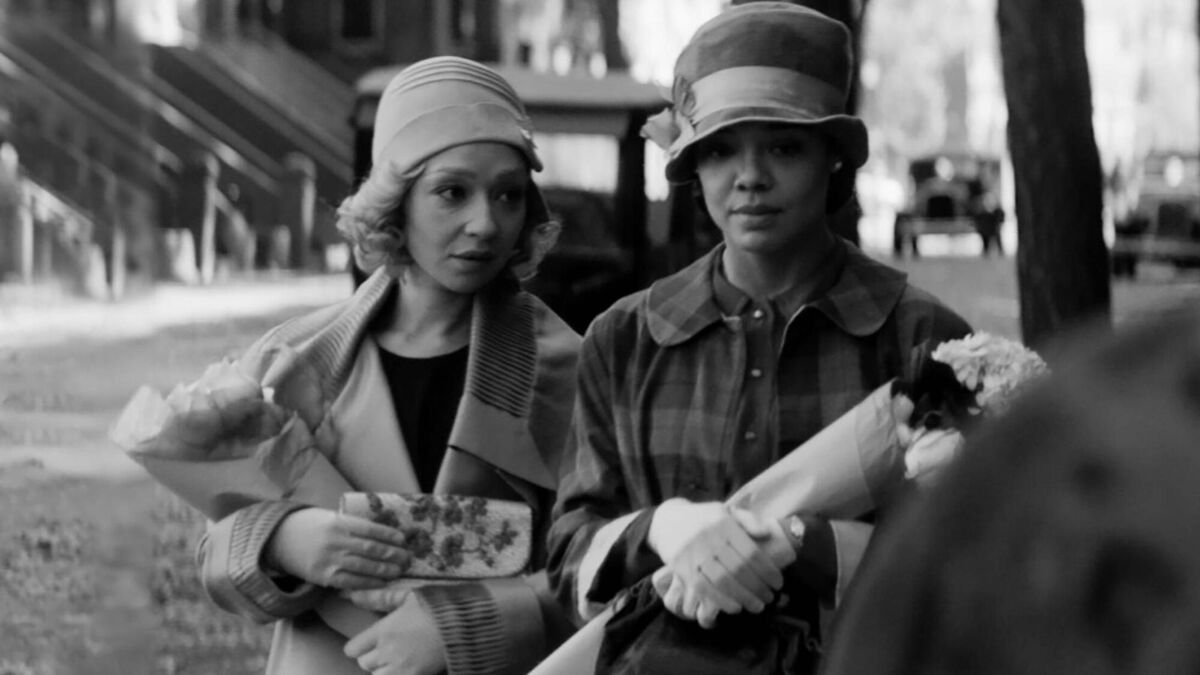
In Passing, Clare likewise contains multitudes. She is a human firecracker, lighting up whatever room into which she walks. Yet she is slightly lost, too, as she negotiates whiteness as a black woman. And she seems to go out of her way to court danger by marrying a vicious racist (a mesmerisingly obnoxious Alexander Skarsgård).
Clare has conflicting emotions about leaving behind her African-American upbringing in Harlem. And when she bumps into old school friend, Reenie (Tessa Thompson) she feels compelled to reconnect with the very background she has spent her entire adult life denying. As many of us are, Clare is full of contradictions. Negga brings that contrast scintillatingly to life.
“I read the novel and was immediately struck by her,” says Negga of her character. “She’s kind of terrifying. People who are not afraid to fully inhabit their entire self…[we] are taken aback by people like that. People who aren’t afraid to integrate all of themselves and be fully themselves.”
Negga was born in Addis Ababa in 1982. Her Ethiopian father was a doctor, her mother a nurse. In 1986 the family moved to Limerick where she partly grew up (Negga’s father died in a crash crash when she was seven, shortly before he was due to join the family in Ireland). As a teenager she spent time in London where she attended secondary school (she also studied at the now-shuttered Scoil Carmel on O’Connell Avenue, Limerick). Later, she took a degree in acting at the Samuel Beckett Centre in Trinity.
Her first major role was in Neil Jordan’s Breakfast On Pluto in 2005. She went on to be cast in TV shows such as Doctors, Criminal Justice and Love is the Drug. Moving to Hollywood, one of her big early parts was in Marvel spin-off Agents of Shield as Raina.
A second cult comic part came her way as she starred as violent hillbilly Tulip O’Hare in an adaptation of Irishman Garth Ennis’s Preacher series (making her one of the few to have appeared in both the Marvel and DC universes). But it was in 2016 that the spotlight fell on her in earnest when she was nominated for a Best Actress Oscar for Jeff Nichols’s Loving, based on the true story of an interracial couple in a pre-Civil Rights American South.
“A revelation,” said the New York Times of her performance opposite Joel Edgerton. Empire said she was “astounding in her subtlety” and “showed immense strength” through “exquisite tenderness”. A new talent had arrived.
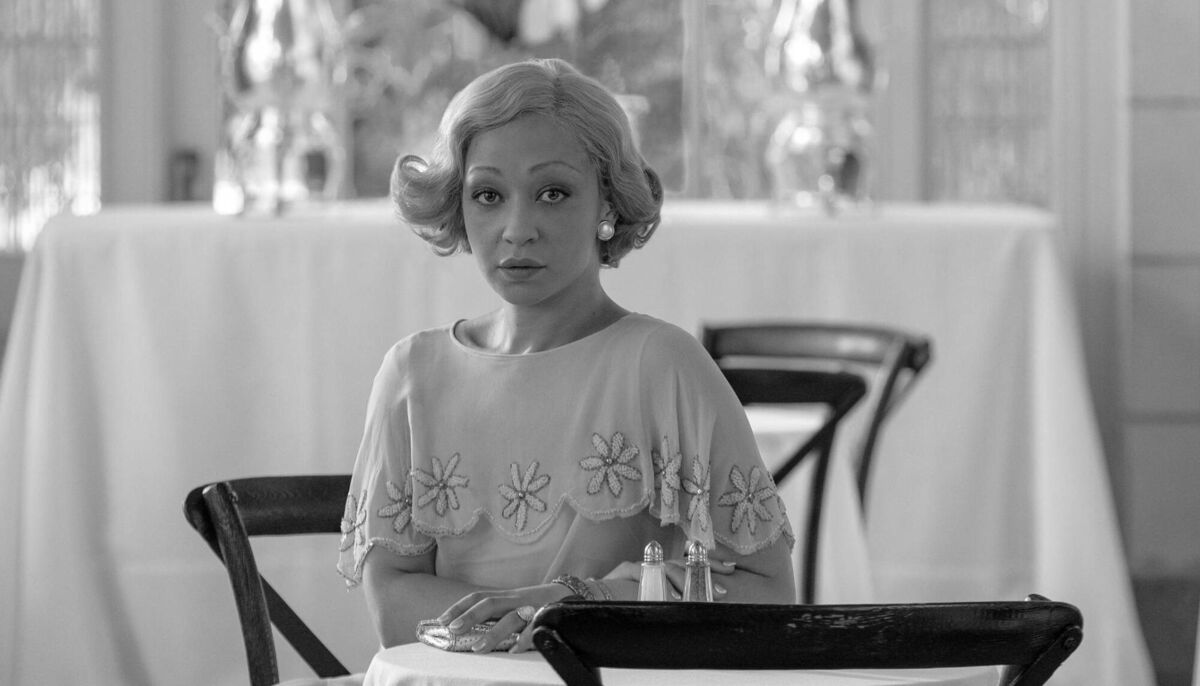
While Negga lost out on the night to Emma Stone for La La Land, it isn’t unthinkable that she will receive a second nomination for Passing. Without ever coming across as show-boating or scenery-chewing, she dominates every scene she’s in.
Race is obviously the subject that connects Loving and Passing. As an actress of colour how does it feel to have made a number of films on the topic? A white actress could go through her entire career without ever having to think about the invisible schism running through the American psyche. They can simply get on with playing cops or superheroes or businesswomen…or whatever. But if you are black there seems to be an expectation that it is a topic with which you will grapple.
She nods in agreement. “For me, I loved history. I’m was always interested in American history. And my access to that was through black writing: Baldwin, Du Bois, Morrison – the big ones. So that was my way into being intrigued about race in America. It is endlessly fascinating. And it doesn’t just affect black Americans. American is a superpower culturally.”
Hollywood is a long way from Dooradoyle, where she grew up. She gets back every now and then and always carries a sense when abroad of being from Limerick. She was for instance delighted when Limerick won the All-Ireland this year.
“I was thrilled …thrilled absolutely,” she says. “I don’t get home enough. When I do get home, I’m just holed up in my auntie’s house, drinking tea and coffee and chatting. It’s my happy place.”
Passing is an extraordinary film in that it doesn’t hold the viewer’s hands or tell them how they should fell. Nor does it stand in judgement over Clare for wanting to live simultaneously in the white and black worlds. It’s messy and complex, as real life often is.
“Ambiguity is the lost art,” she says. “I don’t know why. We hate being spoon-fed things. And yet there is this weird insistence that art needs to do that. ‘Tell me what’s wrong, tell me what’s right’. I’ve always been resistant to that. And the book is resistant to that. By the end you’re thinking : what is race? What is this weird abstract?”
- Passing comes to cinemas on Friday, October 29, and is released on Netflix November 10