Movie review: Dune is one of the most visually ravishing sci-fi epics in years
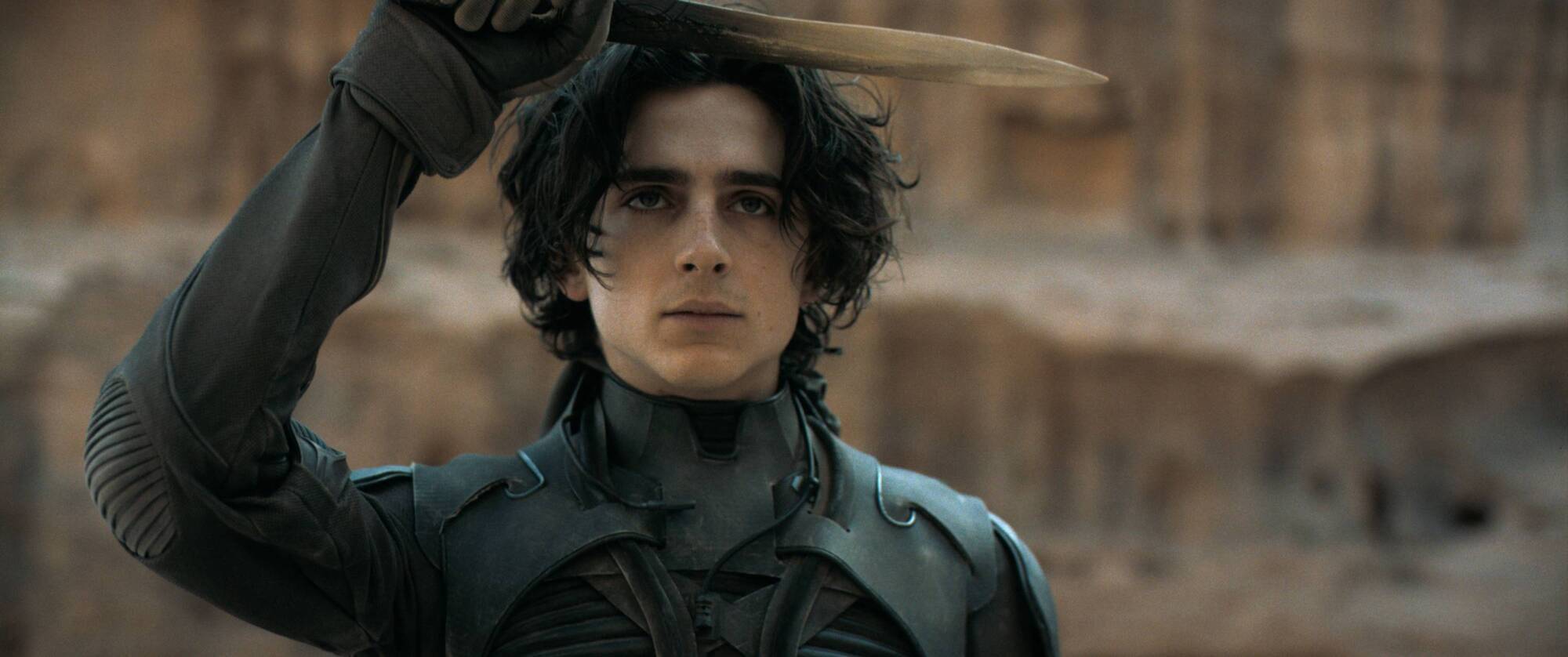
Timothée Chalamet in Dune.
★★★★★
Published in 1965, Frank Herbert’s Dune was a visionary sci-fi novel that explored timeless themes of colonialism, the plundering of natural resources and the rise of religious fanaticism.
(12A) opens with Duke Leto Atreides (Oscar Isaac) exiled from the lush ocean planet of Caladan and transplanted to the sandy wastes of Arrakis, where he is handed a poisoned chalice by the Emperor: subdue the native Fremen people, who have been brutalised by the planet’s previous ruler, the Baron Harkonnen (Stellan Skarsgård), and ensure that the planet’s ‘spice’, the most valuable substance in the universe, continues to flow.
Into this febrile world of intrigue and betrayal steps Paul Atreides (Timothée Chalamet), a naive young man who has been secretly trained in ‘the Way’ by his mother, Lady Jessica (Rebecca Ferguson), a Bene Gesserit priestess possessed of superhuman abilities.

David Lynch’s adaptation of (1984) is by no means universally beloved, but Denis Villeneuve, who has previously directed and , here delivers a visual feast that will likely satisfy even the most ardent fan of Frank Herbert’s work (this with the caveat that the film should really be titled , given that its story concludes roughly halfway through that of the original novel, and that is currently in pre-production).
Timothée Chalamet is superbly cast as the callow Paul Atreides, who is haunted by visions of apocalyptic futures, and he leads a strong ensemble cast that includes Josh Brolin, Zendaya, Javier Bardem, Charlotte Rampling, and a scene-stealing Jason Momoa.
The true stars here, however, are the production designer Patrice Vermette and the cinematographer Greig Fraser, who combine with Denis Villeneuve to deliver one of the most visually ravishing sci-fi epics in years.
(cinema release)