Book review: Imperialism has not been buried amidst the ‘blood and ruins’ of World War II
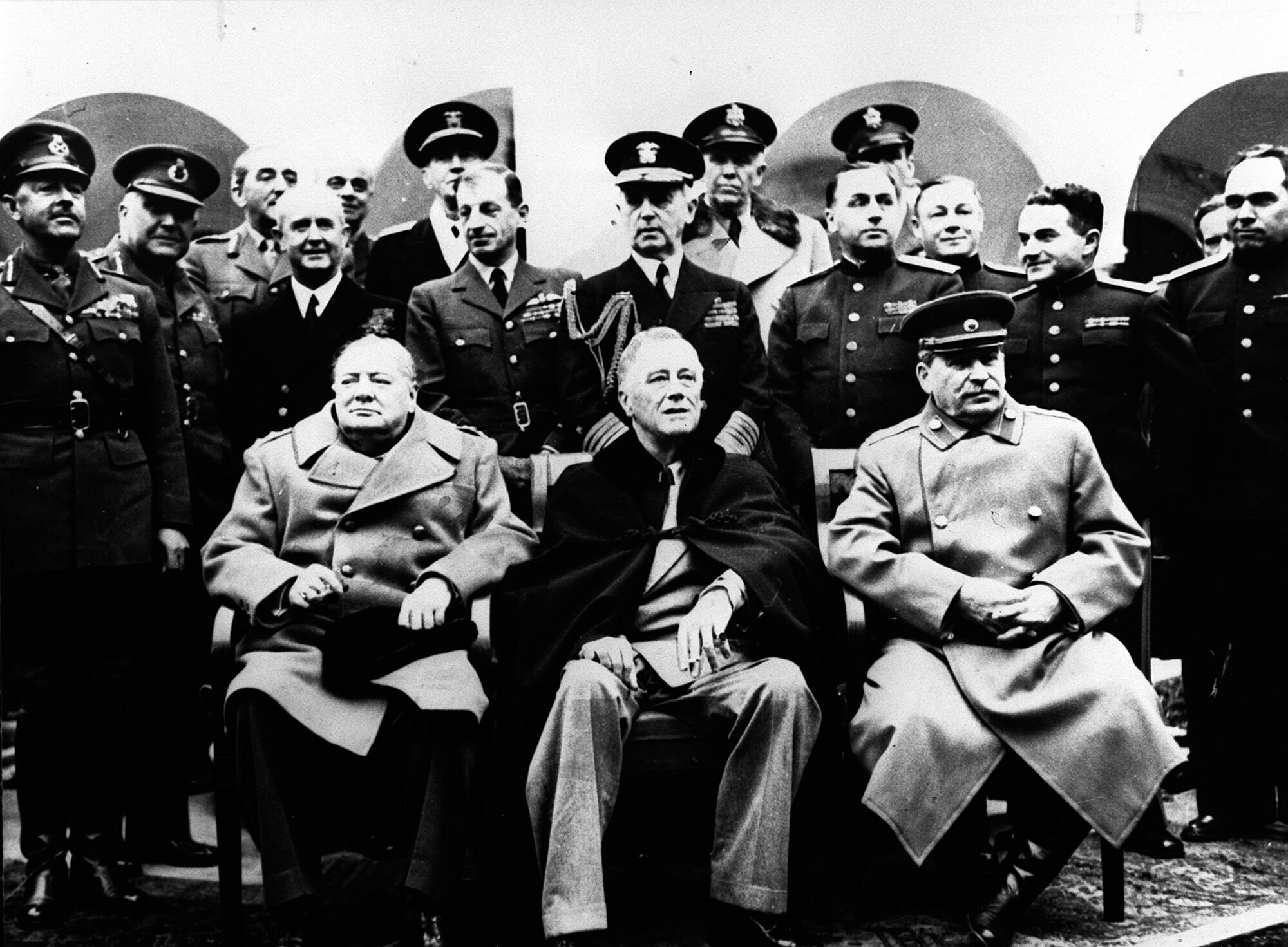
Behind the smiles of Churchill, Roosevelt, and Stalin at Yalta in February 1945, their deteriorating relations found expression in a political race to be the first in reaching Berlin. Picture: PA
Richard Overy’s new and thought-provoking book, Blood and Ruins, confirms his stature as an outstanding historian writing about World War II. His thesis is that the modernising states of Germany, Italy and Japan grew resentful of the way well-established empires, principally those of Britain and France, were enjoying the advantages of imperial rule: access to raw materials and new markets; national prestige; a perception of racial superiority that cemented a sense of identity and helped justify the exploitation of other nations. When their colonies called for self-determination, revolts were ruthlessly crushed and only in Ireland was a rebellion against the British empire successful.
At the end of the 1920s, Hitler was electioneering with the claim that Germany’s national honour was being undermined by the ‘lying and monstrous assertion that the German people lack the ability to administer colonies’. The collapse of the world economy that began at this time strengthened the conviction in Germany, Italy and Japan that territorial expansion was essential for national survival. They acted opportunistically and did not work together but their combined imperial projects had a destabilizing effect that fuelled and then ignited a global war in 1939-41.
The context that Overy provides, what he calls ‘the paradigm of empire’, was laid down by Britain and France in the 40 years before the 1930s and it inspired the fantasy that a nation’s virility, its economic prosperity and racial superiority required territorial aggrandizement. Overy finds similarities in the ways Germany, Italy and Japan succumbed to the vanity of this delusion and he begins his account with Japan’s expansion into Manchuria in 1931 and its escalation into the Sino-Japanese war. The brutality of this theatre of war, which has received relatively little attention in the West, is emblemized by Chiang Kai-shek’s order to open the dykes of the Yellow River to keep the Japanese away from Wuhan, killing at least half a million people.
In 1935, Mussolini invaded Ethiopia and the following year prematurely declared to an adoring crowd in Rome’s Piazza Venezia that ‘Italy finally has its empire’. In 1939, Albania was invaded and exploited along colonial lines. By this time, Hitler had embarked on acquiring Austria and Czechoslovakia, with Poland to follow.
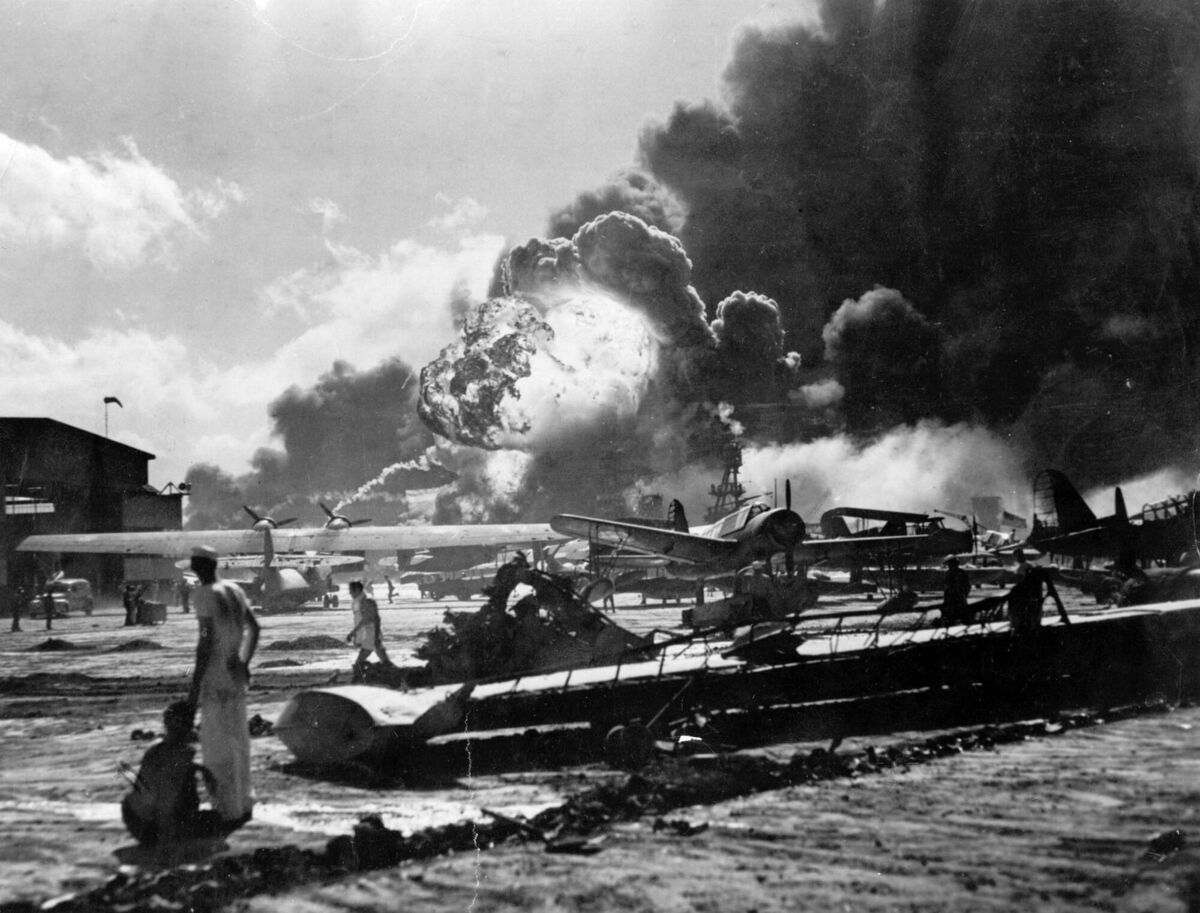
An international war over the fate of Poland was not sought by Hitler and Britain accepted it with reluctance. ‘We have got most of the world already, or the best parts of it,’ claimed Britain’s first sea lord in 1934, ‘and we only want to keep what we have got and prevent others from taking it away from us.’ Overy writes with authority and fluency, avoids overwhelming the reader with the minutiae of military campaigns while pinpointing details to focus on the larger pictures that emerge from the various theatres of war. The 100 pages of the ‘Imperial Fantasies, Imperial Realities, 1940-43’ chapter is a masterpiece of concision covering Hitler’s fatal mistake to invade Russia, in the expectation of instituting a Eurasian empire ruled from Berlin, and Japan’s attack on Pearl Harbor.
The colonial nature of running the territorial empires created by the Axis powers – costing the lives of 35 million people – is made clear, as is the racism underlying the Axis projects. Surprisingly, Overy does not draw attention to the imperial nature of the US’s own determination to assert its hegemony in the Pacific region and keep Japan out of China. The crippling trade embargo imposed in 1941 which would cut three-quarters of Japan’s oil imports was an existential threat to the country and it precipitated Pearl Harbor.
The titanic battle for Stalingrad and US landings on Guadalcanal, both beginning in August 1942, signified the beginning of the end and Overy’s narrative gathers pace as he shifts between events in North Africa, Italy, Burma, China, Russia, and the Pacific. Behind the smiles of Roosevelt, Stalin, and Churchill at Yalta in February 1945, their deteriorating relations found expression in a political race to be the first in reaching Berlin. On the contested issue of whether the nuclear attacks on Hiroshima and Nagasaki decisively account for Japan’s surrender, Overy tends to think not. He points out that the deaths, although devastating for two single bombs, were comparable with the incendiary attacks on the country’s urban areas. Russia’s declaration of war, with the threat of an invasion of Korea or the home islands, was not insignificant. The Japanese emperor’s intervention was decisive but not entirely affected by the nuclear bombings.
Given the author’s concern with the unique and multifaceted nature of the war, less than half the book is devoted to its military course. World War II was an act of total war, involving a mass mobilization of economies and people (well over 100 million men and women were put in uniform) that Overy sees as unrepeatable. In Japan in 1944, the war claimed 76% of the entire national income (70% in Germany) and in the Pacific there were eighteen Americans in uniform for every man in actual combat. Overy looks at how women were mobilized, on battlefields and out of uniform, and at the machinery of war on the ground, under the sea and in the air.
Every combatant state, Overy says, thought the war they fought was justified and he makes clear that the conflict was not fought to end genocide. This raises the uncomfortable question – one he doesn’t confront – as to what extent World War 11 was only a just war in retrospect, after the event. What is not in doubt is the obscenity of the violence it unleashed and there are enough examples of this in the book to raise qualms about the notion of a just war. How the fighting affected combatants, why they continued in their tasks under extreme conditions, and how those on the home fronts were affected is explored in a grim chapter called ‘The Emotional Geography of War’.
Crimes and atrocities occurred from the start to the end of what was an atrocious conflict and the chapter examining this makes difficult reading. The scale of barbarity varied between different theatres of war, with Western Europe and the Mediterranean comparing well with the ‘crescendo of atrocity’ in Eastern Europe and Asia. The Nazis’ genocidal policy towards Jews began with the campaign against Russia while in Asia and the Pacific the perception of the enemy in racial terms was prevalent at all levels of combat and on both sides. Mass rapes by Japanese and Soviet troops are well recorded but an estimate based on the number of illegitimate children in Germany, suggesting that there were 190,000 rapes by Americans during the period of occupation, indicates that male violence towards women occurred on all sides and was rarely treated as a crime.
Blood and Ruins concludes by looking at the dismembering of the empires that had been created by the defeated powers and the pressure exerted on the old ones of Britain and France by nationalist and anti-colonial movements. The United States and the Soviet Union emerged as superpowers and the resulting Cold War, creating and/or intensifying a host of smaller wars around the world, conflicted with their anti-colonial positions during the world war. The empires of the US and the Soviet Union were different from each other and both were different in nature to the older territorial model involving direct rule. The geopolitics have changed but it would be premature to think that imperialism has been buried amidst the ‘blood and ruins’ (the words are Leonard Woolf’s) of World War II.
- Blood and Ruins: The Great Imperial War 1931-45, by Richard Overy
- Allen Lane £40