Culture That Made Me: Tolu Makay on Beyoncé, gospel singing, and Dolores O'Riordan
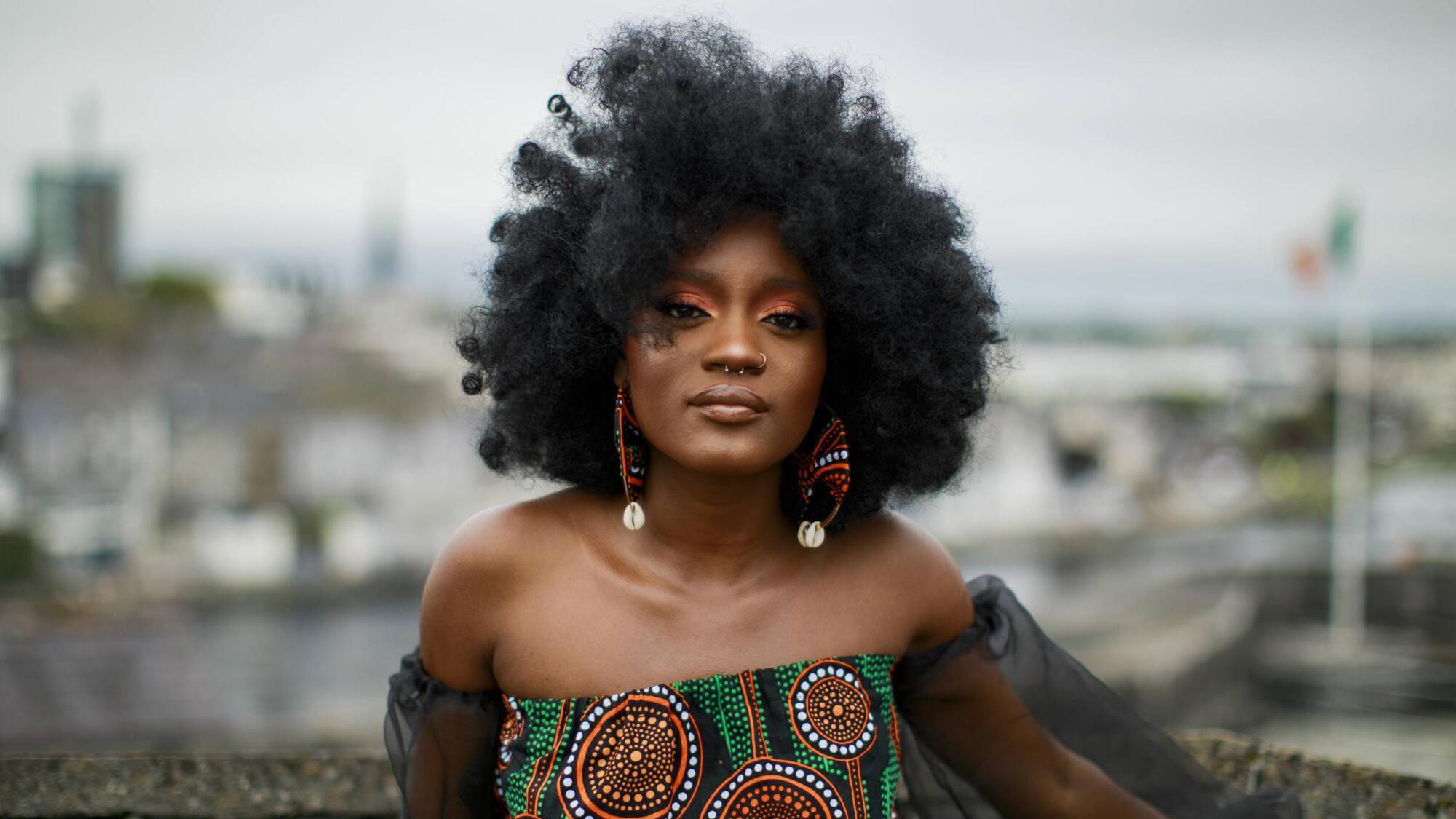
Tolu Makay hosts an episode of the Tolü & Feli Show from Bantry House. Picture: Donal Murphy
Singer Tolü Makay, 24, was born in Nigeria. She moved to Ireland aged five, being raised in Tullamore, Co Offaly. Her rendition of the Saw Doctors’ N17 – which she recorded with the RTÉ Concert Orchestra as part of the broadcaster’s New Year’s Eve schedule during the winter – became a viral hit. An episode of the Tolü & Feli Show - recorded at Bantry House - will stream as part of the West Cork Literary Festival from July 10. See: westcorkliteraryfestival.ie
The Cranberries were a huge influence on me. They got played so much when I was growing up. Even before I knew their name, I knew their songs. Zombie is probably one of my favourite all-time songs. It’s so good. Dolores O’Riordan had this unique sound. I couldn't place it anywhere else. I'm intrigued by different types of sounds. I suppose that's why with my type of work, I think my voice suits and fits into any type of genre, so it's quite hard for me to be like, “Oh, I'm this type of singer.”
Alicia Keys is awesome. She's been writing songs about her experiences since, like, the age of nine. She's amazing at creating melodies. She has so much classical training so she writes with that influence. I wish I could play the keys the way she does. Maybe I could write more bangers that way! I’m fascinated by how pure she sounds and how integral she's been in the music industry. If I had someone I'd like to be like, it’d be her cool.
Before Michael Jackson passed, I was like, “Please, I need to see this guy live.” Everything about him. His persona. How he was on stage – the performer in him. You can feel every beat. Everything you hear, you can see and feel from him, which is mesmerising and breath-taking to see. In terms of a performer, that kind of attitude he brought onto the stage, I wan to be able to do that one day. There's like a magical element that he had that I don't think anyone ever had before. The only other person that I would put on the same pedestal would be Beyoncé.
Beyoncé didn't need a space to be created for her, she created her own space. It’s a testament to how strong she is. I mean like who wears heels and dances the way she does? Who is business savvy the way she is? When she headlined the Coachella Festival, they started calling it the BeyChella because she just shut it down. How many Grammys has she won? But it’s not only about the accolades: to be consistent in this music industry and to also provide new ways to how you can create and being so authentic with how you do it, is magical to see. She’s an inspiration.
I love Amy Winehouse’s voice. It was so mesmerising. Her life was quite difficult. There was a truth in how she wrote her songs. You could understand what she was going through. A song like Back to Black, the way it's created, the meaning in the lyrics, the playfulness. It’s like storytelling. You can almost understand and feel exactly what she's going through in those moments. I just love her.
My local Pentecostal church definitely facilitated a space where I could grow my skill in singing and also have a practice space without me even realising it. Later, I started leading the choir, arranging songs that we would do each Sunday. The set-up is quite formal. You have to sing about particular things – like God! But you can be very adventurous with it. Sometimes you're not even told that you're going to be singing on the day. You don't have a set list ready, so then when you're on stage where are you gonna run to? If you mess up, keep going, and even if you mess up there’s a way to do it without other people copping onto the fact!
The adventurous side of church singing is that you can mix. I learned how one song can lead into another song and how to arrange with musicians and how to keep an eye on backing vocalists. I could be experimental. I could play around, especially when you know a lot of songs that people sing in church. Then it's just about picking the ones that fit the right key and finding the next song that will fit whatever it is that you're performing.
Gospel singing has this infectious feeling. In my church, it had a lot of Nigerian and African rhythms. People would be playing the conga drums and the talking drum. You would always get a dance in the worship or in the thanksgiving section. Music is a huge, important, celebratory and moving section of the programme of church. A lot of people would just come for the music. That's the way you can connect to a higher power. That's where I got to understand the importance of connecting with a song so that other people can feel the connection that you're feeling.
Every day, I’m trying to figure out who I am, where my place is. Being both Nigerian and Irish sometimes you feel like you belong, sometimes you don't. There's a song I wrote not too long ago and certain things I was mentioning were very Irish, like talking about the canal. Come on! Who talks about the canal? Or the way I pronounce certain words in my songs, like, for example, when I was singing N17, you could clearly hear the pronunciation of certain words like “Tuam” or talking about “the aul fella”. The accents, the banter I have, who I am, it all connects. You can see the Irish as well as the Nigerian influences. When I speak to some Nigerians, they think I’m too Irish and when I speak to Irish, they think I'm too Nigerian. It’s all a big mix!
In the book The Man Who Mistook his Wife for a Hat, the neurologist Oliver Sacks talks about his patients and the journeys they go through. For example, he spoke about a woman he saw in New York that had severe tics. She could hear and pick up conversations from everyone walking around her all at once, which was overwhelming. She would repeat what people were saying, as she was walking so people thought she was crazy, but it was just the tick she had. That book got me interested in how other people view and live their lives. It blew my mind.