Mind over Mater: The oncologist who writes novels on his way home from hospital
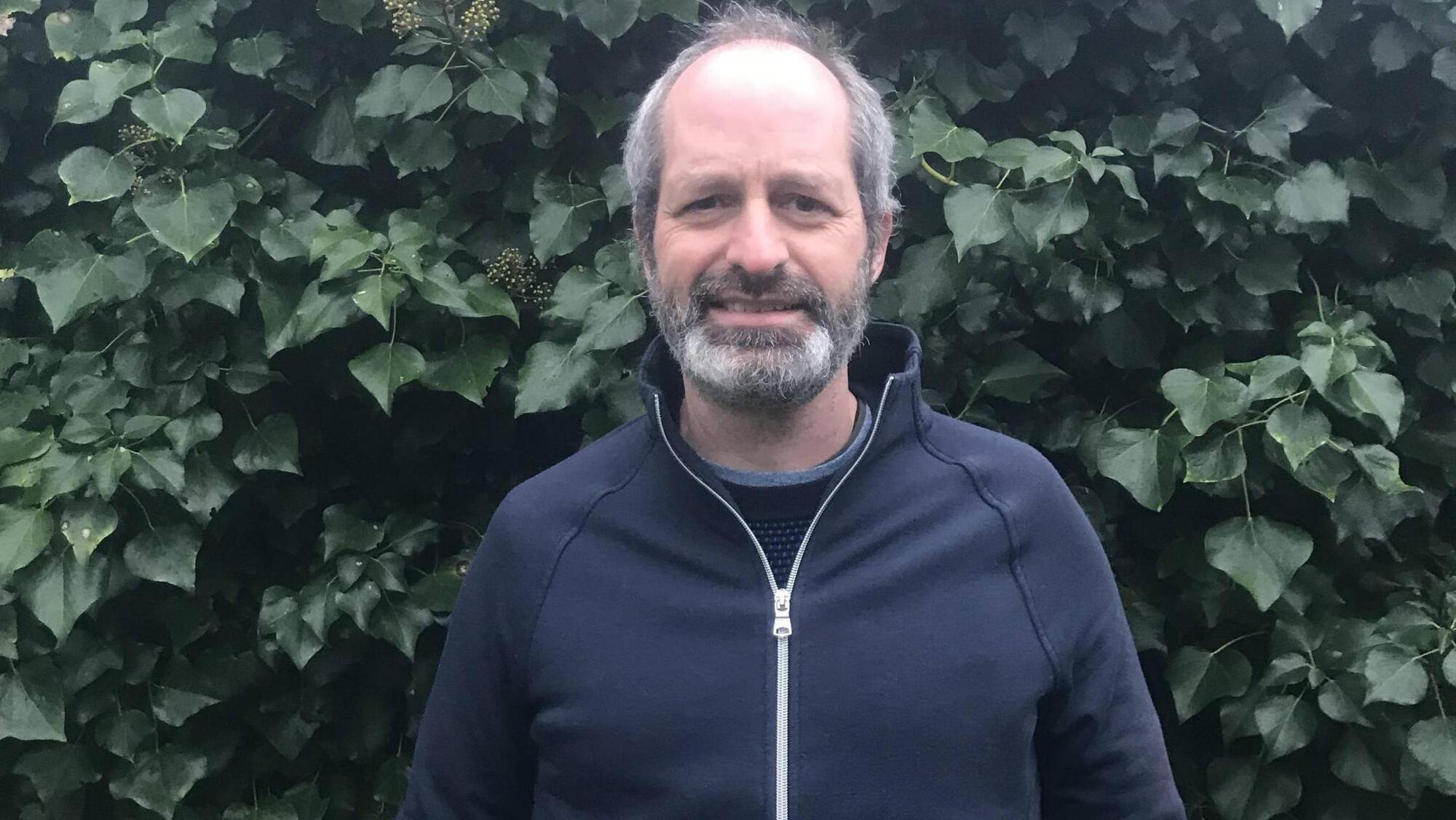
Austin Duffy, consultant oncologist at the Mater Hospital in Dublin.
In a recent glowing review for his second novel, Ten Days, Austin Duffy was described as “the kind of author it would be easy to miss”.
His online presence is low-key to say the least and, as the reviewer pointed out, he doesn’t seem to give interviews. “I know, it was kind of cool,” he laughs. “It made me sound like a total hermit. The truth is no-one ever asks to interview me.”
He is too humble to say one of the reasons he operates somewhat under the radar is that he has a full-time job as a consultant oncologist in the Mater Hospital in Dublin. Out of necessity, he writes whenever he can snatch some time, whether that’s before breakfast or on the Dart into work from his home in Howth, which he shares with his wife Naomi, an artist, and their two young children.
He says the one of the first questions people usually ask him about his writing is where on earth does he find the time?
“Literally everyone says that to me. Obviously I don’t have as much time as you would want. But having loads of time is a paradoxical thing. If you have all day to do something, you probably won’t do it. I work slowly, I like chipping away at it, that’s my personality. I’m more of a long-distance runner than a sprinter.”
Duffy’s debut book This Living and Immortal Thing was shortlisted for the Kerry Group Irish Novel of the Year in 2016, when he was still living and working in Washington DC.
“I don’t know anything about the literary scene, I don’t even know what it is. When my first book came out, I was living in America, so I was automatically divorced from the whole thing. I was lucky enough to be shortlisted for the Kerry prize and I timed the award ceremony with a trip home and I went to Listowel.
"I met loads of writers, it was the best weekend, I had such a great time. I met all these people I had just read about and they were all really sound, the likes of Kevin Barry and Anne Enright. I didn’t win it but I didn’t care, I just had a blast.”
Duffy had taken creative writing classes at the prestigious Writers Studio in New York while on a training programme at the city’s Memorial Sloan Kettering hospital in 2007, and he went on to win the Francis McManus short story prize in 2011. However, his interest in writing had been sparked many years previously when he was at secondary school in the Christian Brothers in his native Dundalk.
“My English teacher Sydney Peck was Canadian, he was a bit of a personality, entertaining and irreverent. He got the whole class into English, we were all energised by him. It is a very clear memory for me. Before that, I found writing an English essay a real chore. With Sydney, it was like someone giving you licence to have fun with it and to use your imagination. I really don’t think I would have written anything if it wasn’t for him.” It sounds like something straight from Dead Poet’s Society, I say.
“I was about to say that and I stopped myself,” says Duffy. “But it is kind of true. He was cool, he was just great. Teachers are so important. I put him in the acknowledgements of this book and the last one, and I will do the same in any other book I come out with.”

Duffy’s second novel Ten Days is a beautifully rendered and compelling meditation on family, forgiveness, memory and mortality. At its centre is Irish-born photographer Wolf, who is trying to repair his relationship with daughter Ruth after the death of his estranged wife, Miriam. Wolf is struggling with his own health issues and it becomes clear that he is in the early throes of dementia. While Duffy has seen the impact of the disease at first-hand in his work as a doctor, he says this book is not informed by his work in the same way as his first one was.
“I consider this a non-medical book, certainly compared to the first one. I guess in medicine and science, when you are writing about things, there is a specificity that has to be there. There were certain cardinal features of Wolf’s condition that I wanted to bring out a bit but it is not my particular area of expertise. That whole aspect seeped into the book, it was very much secondary to whatever was propelling the story initially. It made sense as a device.”
The book’s title refers to the 10-day period of introspection and repentance that culminates in the Jewish holiday of Yom Kippur, also known as the Day of Atonement. This is when Miriam has requested that her ashes be scattered in the Hudson river in New York, where she grew up. Duffy’s wife Naomi is also a Jewish New Yorker, but the similarities end there, he says. Unlike Wolf, who is at odds with Miriam’s family, he says he has only ever been made feel welcome by his in-laws. Naomi’s input was also valuable when it came to fact-checking.
“She definitely corrected things and made sure it was kosher,” he says. “My own experience was radically different from Wolf’s in the book, obviously. It has been very positive. My in-laws are great and there have never been any issues. They love coming to Ireland. Obviously, that wouldn’t make for good fiction.”
Duffy paints a vivid and affectionate portrait of New York in the book, reminiscent of the great city’s depiction in the books Netherland and Let the Great World Spin, by fellow Irish authors Joseph O’Neill and Colum McCann.
“I love New York, and we go back there every summer,” says Duffy. “It is the one city I am drawn to write about because it is probably the city I know best apart from Dublin. It also lends itself to writing about it — the skyscape, the water, it is a fabulous city, full of romance.”
Being on home ground for the publication of his second book might have been a different experience for Duffy if the pandemic hadn’t intervened — although he admits to being relieved at not having to do a book launch.
“Not having a book launch took the pressure off, to be honest. I am a little bit uncomfortable with all that publicity stuff, I get a bit embarrassed. I’m trying to be a bit better this time, to enjoy it. There are so many books out there, I feel privileged to get any attention.”
In the meantime, his family recently got a new dog and he says the trials of training a puppy are worth it, especially when he gets to take his canine companion for a stroll along the scenic cliff walk in Howth.
Duffy has been indulging in his other creative pursuit —playing the saxophone. “I’ve been doing that for years, I love it. I play in a little ensemble in Walton’s School of Music, although not since Covid, obviously. It’s great, I get such a kick out of it.”
- Ten Days, by Austin Duffy, published by Granta, is out now