Book review: The thread of neutrality between US and Irish diplomats in the 1930s
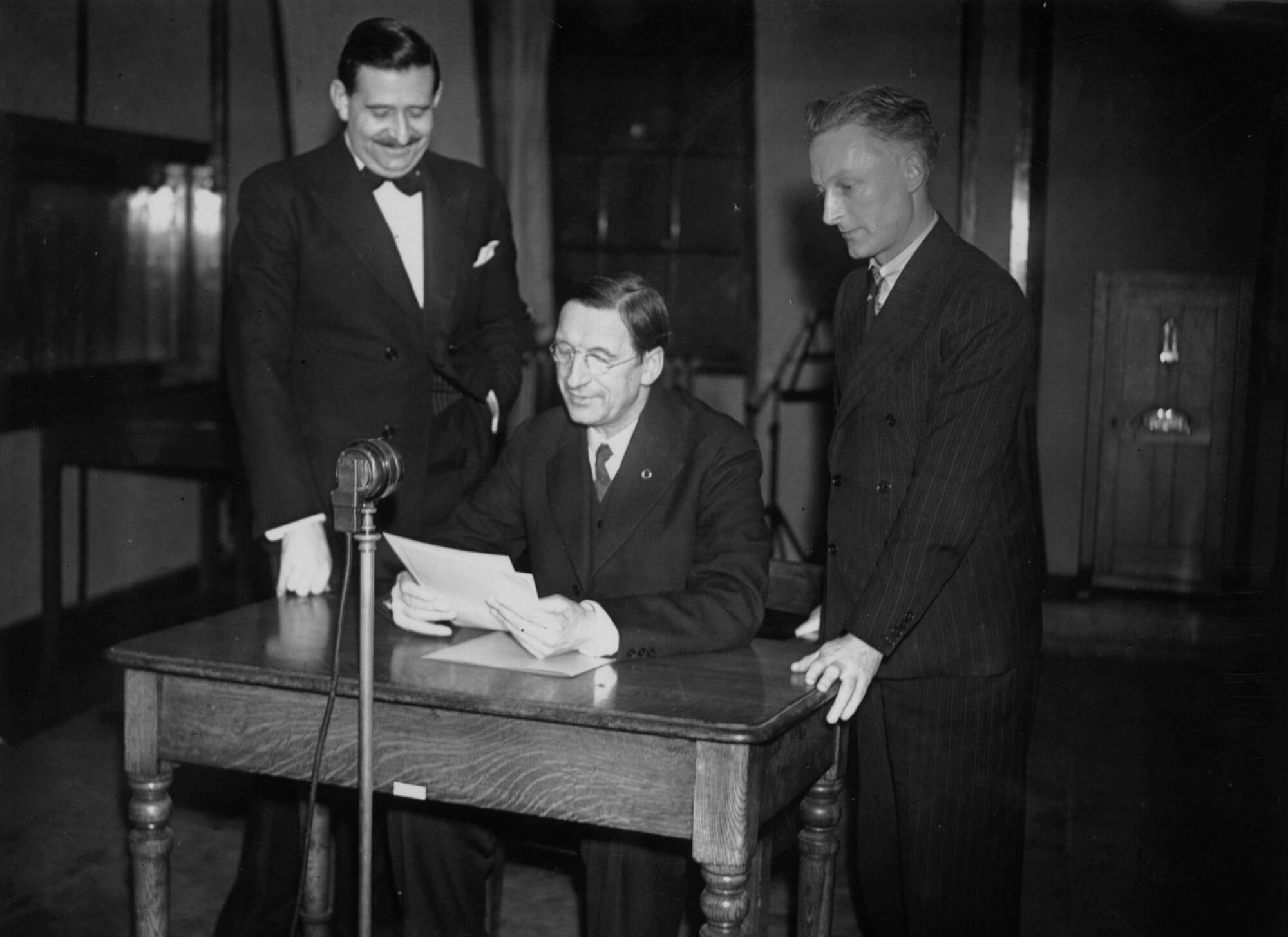
Éamon de Valera making a radio broadcast to America as part of the ‘Salute Of The Nations’ programme on January 9, 1939. Picture: Keystone/Getty Images
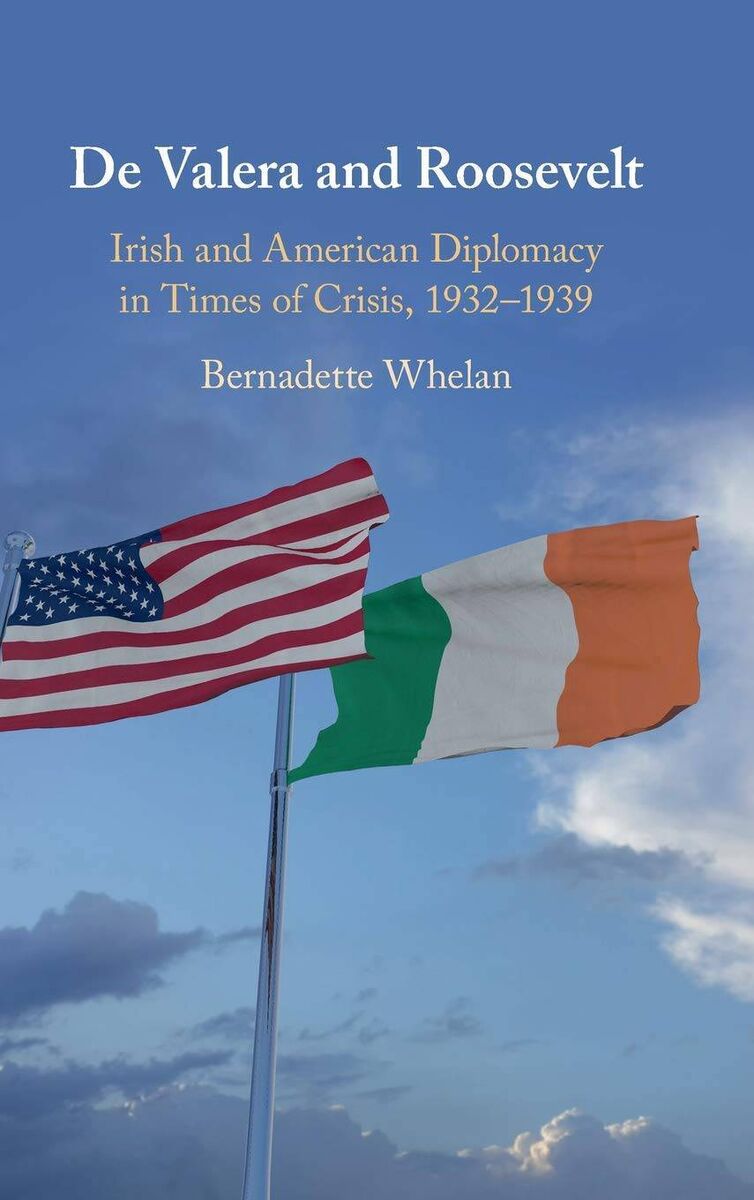
- De Valera and Roosevelt - Irish and American Diplomacy in Times of Crisis, 1932 - 1939
- Bernadette Whelan
- Cambridge University Press
- £75.00
AT first glance Éamon de Valera and Franklin Delano Roosevelt (FDR) make odd bedfellows in the title of a book. However, during the time period concerned, the 1930s, there is a thread connecting them, but a thread that will become so threadbare that it will eventually all but snap. That thread is neutrality. In de Valera's eyes, it was a principle, especially once he realised that collective security under the League of Nations was no more than an empty phrase once Mussolini's Italy invaded Abyssinia in 1935 with impunity. In FDR's eyes, it was a tactic forced by American public opinion into an ill-fitting straitjacket that, little by little, he began to wriggle out of by the end of the decade.
The author, Bernadette Whelan, is professor emeritus in history at the University of Limerick, and no stranger to Irish foreign policy, having written a number of well-received books on the subject and having been joint editor of the Royal Irish Academy's Documents on Irish Foreign Policy. This book is meticulously researched with over 2,000 references and will be a bible for those seeking relevant information about that decade. The book considers the workaday life of the US diplomat in Ireland and, conversely, that of the Irish diplomat in the US.
Soft diplomacy, or soft power, means using the carrot and not the stick. In Ireland's case, that meant diplomats using persuasion. Prior to the declaration of the Republic in 1949 Ireland had no ambassadors, but envoys called Ministers Plenipotentiary and in cities where there was a large Irish or Irish-descended population, a consul. Diplomats, especially in the US, were instructed to publicise Irish policies and, not surprisingly, counter British propaganda. Whelan points out the huge imbalance in resources in Britain's favour in the propaganda war - in prestige, power, money, staffing and contacts.
The author has mined the many and diverse archives of both Ireland and the US, as well as that of Britain. Perhaps the most interesting aspect of the book is the author's triangulation where she takes the reader behind the scenes to watch the three countries giving their contemporaneous view of the same issue. The British envoy was dutifully monitoring de Valera's every move that could be interpreted as departing from the Anglo-Irish Treaty of 1921. In the American context, FDR's initial policy of neutrality during the 1930s was intimately wound up with isolationism. US Senator Gerald Nye is mentioned, but not his committee, which sensationally exposed many a warmongering banker and "Daddy Warbucks" who inveigled the US into entering the Great War and made fortunes off it.
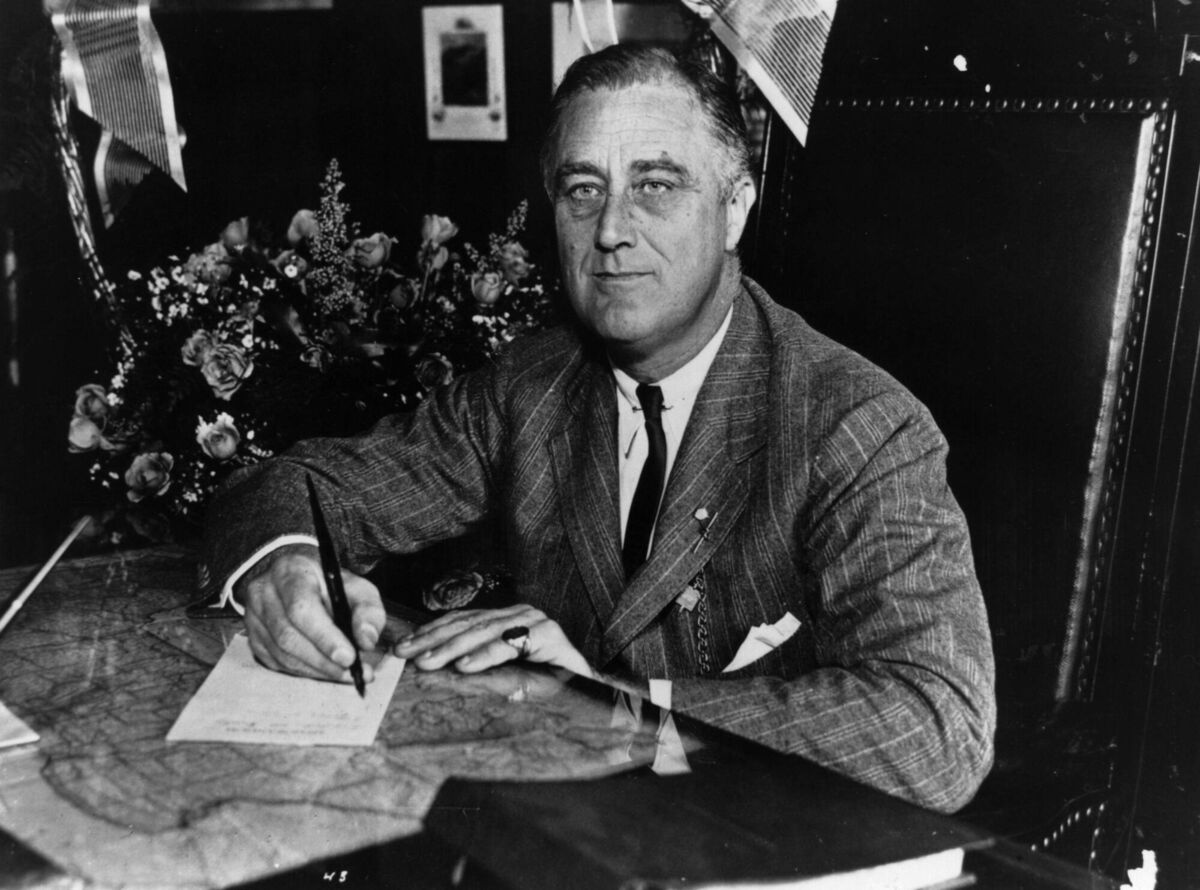
This committee had a huge effect on American public opinion during the mid- thirties. The records show that US diplomats were continually trying to dampen down repeated Irish hopes and entreaties of American involvement in the issue of the partition of Ireland. Whelan also refers to de Valera's related, but mistaken belief ("myth" may well be too strong) in the "special relationship" between the US and Ireland. Churchill also believed in Britain's special relationship with the US. Neither was correct, in this reviewer's opinion. Geopolitics, as Prof Stephen Kotkin of Princeton University has pointed out, rules in the US corridors of power, then and now. To paraphrase Palmerston, the US has no special relationships, only allies for the time being.
It seems strange at this remove to read that the Irish Hospital Sweepstakes was up there with issues like partition, the oath, the annuities, the economic war, entry quotas to the US, the new Constitution, neutrality, the abdication crisis, and the handing back of the Treaty ports as issues that Irish diplomats had to deal with. However, the illegality of the Sweepstakes in the US was still being commented on as late as the 1960s when photos of the lucky winners were featured on the front pages of local US newspapers. Perhaps this US officialdom turning a blind eye to Irish illegality demonstrates that there was a special relationship, after all.
Whelan's research makes it clear that de Valera on more than one occasion instructed his envoys to steer clear of internal Irish-American politics due, in the author's eyes, to the "bitterness he experienced [in America] in 1919 - 1921". Many would say that de Valera was mostly responsible for the bitterness caused there. Perhaps it was because of his American experience as well as his decade in the political wilderness that he listened to his advisors, including John Hearne (a rabid Redmondite in his young days), Maurice Moynihan and Michael McDunphy, all of whom he kept on from the Cosgrave era and had been supporters of the Treaty.
In late 1938 FDR extended an invitation to de Valera to visit the US and stay at the White House. However, the choreography had to be finely tuned as the British monarch would at the same time be on a visit to Canada, but with a US detour. To complicate things further, Seán Russell, Chief of Staff of the IRA, would be making a return visit to the US around that time, with rumours that there would be an attempt by the IRA on the life of the British monarch.
The records reveal considerable angst at the possibility of these people being anywhere near each other. In the event, de Valera was unable to go and Russell was served with a deportation order. In 1939 de Valera himself took particular exception to the US president using the expression, "Great Britain and Ireland", on a list of countries. The Irish government registered a formal protest to the American government and naturally, Irish-Americans made their own noise about it. They wanted "Ireland" to be on the list, but separated from and not joined with the listing of "Great Britain".
Apart from the political activities of Irish officials in the US, there was, of course, the humdrum activities of consuls everywhere. However, one item demonstrates the ingenuity of Irish girls attempting to enter the US. Whelan tells us how by 1938 it became evident that a proportion of the girls entering the convent via the US route or, perhaps more accurately, entering the US via the convent route, were leaving the convent before taking their final vows. Evidently, there was more posing more than postulating.
When Whelan, citing no authority or source, writes that "de Valera [announced] on 22 March [1932] that the oath of allegiance [actually an oath of fidelity to the British monarch] taken by members of the Oireachtas would be removed from the constitution under the Statute of Westminster", she is incorrect. Firstly, de Valera made no such announcement on that date. de Valera did address the Seanad on that date and informed the Senators, to their unionist fury, that not only would the oath be abolished, but so would the annuities paid to the British Government by Irish farmers. More importantly, de Valera placed no reliance on the Statute of Westminster at all in that address.
When the bill to remove the oath was given its second reading in Dáil Éireann on 27 April, de Valera made clear that he was relying primarily on the mandate given by the Irish people and on the legal premise that the oath was not mandatory under the Free State Constitution. This book will be an indispensable addition to the bookshelf of any historian of Irish foreign policy during this period. However, the author's criticism of de Valera and Robert Brennan, his Minister to the US, for their "persistent rhetoric on ending partition" is akin to criticising a leopard for not changing its spots.
To expect the Fianna Fáil of that decade not to protest about partition wherever it could is to misunderstand the meaning of the drawing of that irregular line across the map of Ireland by the colonial ruler the decade before and indeed, colonialism itself. Finally, for a book with so much interesting detail for researchers to delve into, the index will greatly disappoint.