Cork's Greatest Records: Conal Ó Gráda and his influential 1990 album, The Top of Coom
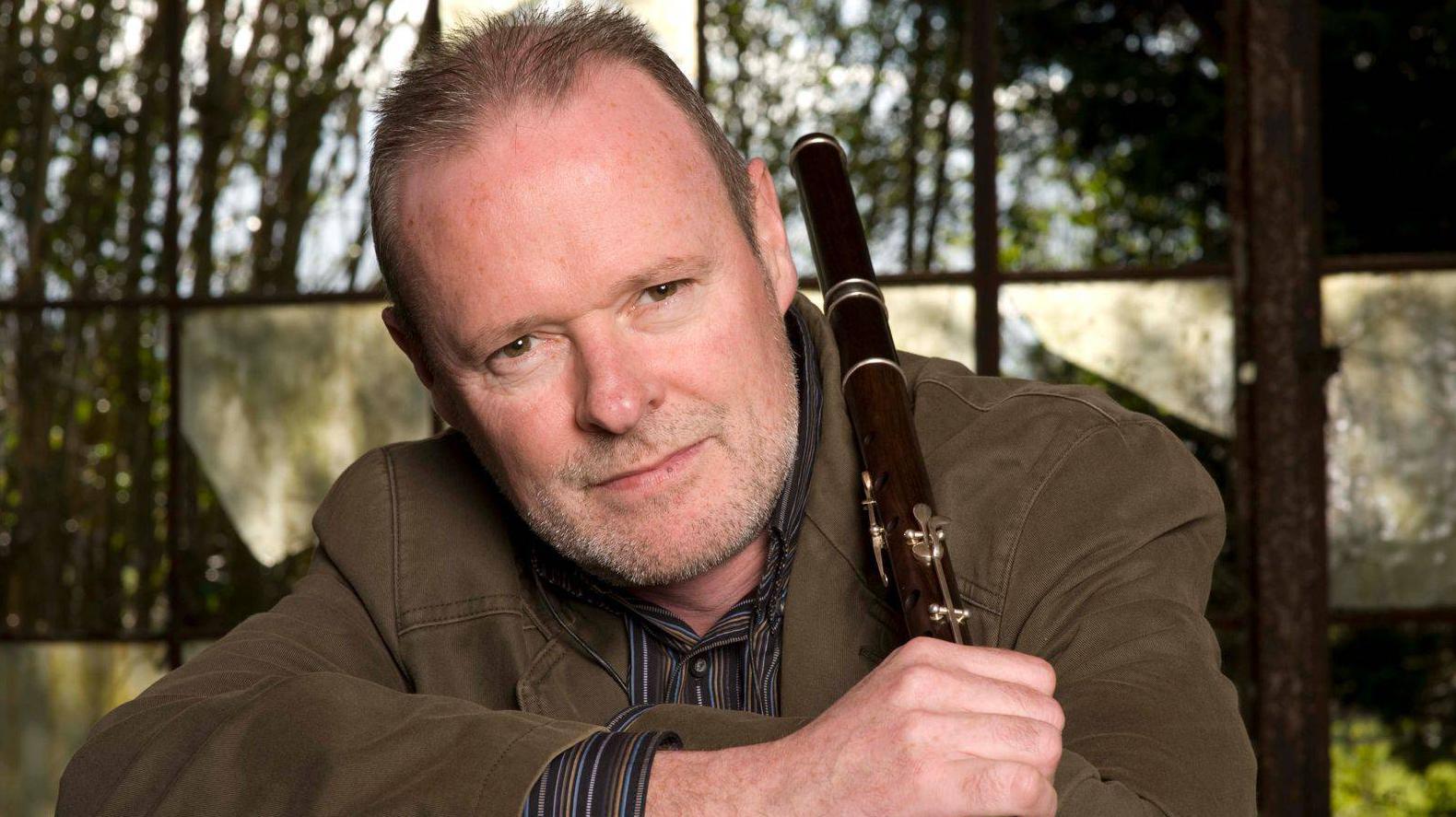
Conal Ó Gráda recorded The Top of Coom over five days at Tadhg Kelleher’s Sulán Studios in Baile Mhúirne.
Irish traditional musicians take many winding roads to learning, but picking up tunes from a whistle-player who is steering a car with his elbows is a route less travelled now than it might have been in the 1970s.
To what extent the multi-tasking Clare musician Séamus Mac Mathúna influenced the percussive, driving rhythms that characterise Conal Ó Gráda’s high-octane flute-playing is a subject for debate. But the tune he taught the 14-year-old while driving to Cúil Aodha would later make an appearance on Ó Gráda’s 1990 album The Top of Coom.
“The roads were slower then and they weren’t as busy,” Ó Gráda points out. Mac Mathúna, who had become something of a mentor to the younger musician, “was always very enthusiastic, and on the road west to Cúil Aodha he said ‘here’s a tune for you’. He actually steered the car with his elbows and played this tune on the whistle for me – ‘The Castlebar Races’ – I remember it clearly.”
The tune is among several on Ó Gráda’s first album that bear testament to Mac Mathúna’s guidance. Mac Mathúna, having moved to Cork as a Conradh na Gaeilge organiser, provided not only encouragement and a supply of new tunes, but the transport that took Ó Gráda west from his Ballincollig home to music sessions in Cúil Aodha.
Ó Gráda was just 12 when Mac Mathúna, one of the founders of the Willie Clancy Summer School and later timire ceoil for Comhaltas Ceoltóirí Éireann, first brought him to the Gaeltacht village in pursuit of music.
Having learned tin whistle at school in Bishopstown, Ó Gráda had taken up the uilleann pipes under the tutelage of Mícheál Ó Riabhaigh at Cork Pipers’ Club, but it was Mac Mathúna who suggested he take up the flute.
“There was no music in my family, but once I started going to the Pipers’ Club, my sisters started as well,” says Ó Gráda, the brother of noted piper Máire Ní Ghráda.
“I was playing at a Munster Fleadh Cheoil and Séamus Mac Mathúna was the adjudicator,” says Ó Gráda, who went on to win multiple all-Ireland titles.
“He came up to me afterwards and he asked me had I ever thought of taking up the flute.
“He was living in Cork at the time so I started calling up to his house and he really encouraged me. He introduced me to a lot of flute-playing and at fleadh cheoils he used to introduce me to a lot of people. I was very fortunate in that I got straight in at the top end in terms of introductions.”
Mac Mathúna also introduced Ó Gráda to a Cúil Aodha shebeen whose existence was a badly-kept secret among a wide circle of musicians, singers, and dancers.
“He was good friends with the Maidhcís [Ó Súilleabháin family of singers] and Ó Riadas, so we used to come out to a kind of a shebeen, the Bodhrán. It was a little club - a late-night house that people used to go to after the pub and we used to come out to it from Cork; there used to be singing and music. There was a bar there but I was too young for all of that – I was only about 12 or 13 at the time.” Ó Gráda’s attraction to the area was an enduring one, strengthened in the years to come by visits to the highest pub in Ireland, which lent its name to his debut album.
At the Top of Coom, perched on the Cork-Kerry border, there was a “huge welcome and appreciation of music and a big cohort of singers and dancers - it was kind of lively,” he recalls. “I got to know people in this Gaeltacht area, with a rich tradition of singing in Irish and English. Culturally it was very attractive. I started coming when I was 12 or 13 but I never stopped and I eventually ended up living here,” says Cúil Aodha-based Ó Gráda.

Also gravitating towards the area was Kanturk accordion player Jackie Daly, who was to become another important musical influence on Ó Gráda.
Though the two played different instruments, Daly’s Sliabh Luachra mastery left a mark on Ó Gráda’s distinctive style as indelible as that of flute-players Mac Mathúna and Patsy Hanly, and the recordings of John McKenna, Tom Morrison, Matt Molloy, and Séamus Tansey that Ó Gráda eagerly devoured.
Daly, with fiddle player Séamus Creagh, was a “rock star” of 1970s trad “with a huge crowd of people following him around from place to place”, says Ó Gráda. “But he was very good to me and if I went into a session where Jackie was playing he’d look up, and nod down to his right-hand side, so he’d put me on his keyboard side.
“Jackie’s a very focused musician; he takes it very seriously. You’d learn a lot from him, and I’d be in the privileged position of being right in the middle of top-quality musicians.” Given the dominance of the fiddle and accordion in Sliabh Luachra music, Ó Gráda found a paucity of flute-playing role models in the regional style and “had to kind of figure it out myself”.
“I had to mimic people and listen to people but I took my influence not just from flute players but from fiddle players, pipers, and box players, and that’s how I developed my style,” he says.
“You’d be trying to get the same lift that they’re getting, though obviously they’re using entirely different techniques. In terms of a half-beat emphasis, a fiddle player will do it with a down bow, a box player can do it with their bellows hand, but you have to figure out how to do it yourself on a flute with glottal stops, to give you that rhythmic structure.”
The Daly connection also saw the teenage Ó Gráda make his first recording appearance. “When Jackie made his LP with Kevin Burke, which was called ‘The Eavesdropper’, I was only about 16 or 17 and they rang me and asked me to record on it, which was my first time ever in a studio and a big occasion for me,” he recalls.
It would be another 11 years before Ó Gráda ventured back to a studio to record his own album, accompanied by long-time friends Colm Murphy on bodhrán and Seán Ó Loingsigh on bouzouki, with Bernadette McCarthy on piano and Arty McGlynn on guitar.
Ó Gráda’s association with the latter had begun in a music session after a concert McGlynn played with Tommy Makem and Liam Clancy at Cork Opera House; was confirmed during a tour of the North; and cemented when Ó Gráda asked McGlynn to appear on ‘The Top of Coom’. “I was delighted that he did because he was a very experienced musician and recording artist, so in the studio he was just amazing and had a really cool head,” he says.
Recorded over five days at Tadhg Kelleher’s Sulán Studios in Baile Mhúirne, the album was produced by flute-maker Hammy Hamilton and released by Claddagh Records.
The tune choices are a salute to Ó Gráda’s musical influences, learned from Mac Mathúna and Ó Riabhaigh, recordings of Morrison and McKenna, and from accordion player Máirtín O’Connor, with whom Ó Gráda and Murphy played in ‘The Stone Mad Band’.
The album’s impact may be best evaluated by those who listened and learned technique from it, among them Kerry musician Aoife Granville, who recalls as a summer-school student, flute teacher Fintan Vallely advising his class to buy The Top of Coom.
“When I got it, it kind of blew my mind because I didn’t know how he was getting the sound,” she says. “It was the first time I heard someone with such a strong rhythm. You had people like Matt Molloy and the Connacht style, a more flowing, legato style of playing, but with Conal the emphasis was different.
“Conal took it up a level - the physical power he had on the flute I don’t think is matched. For me and a lot of flute players that was a standout album and it still is, because it was so different to everything else that was available.”
Conal Ó Gráda followed The Top of Coom with a second album, Cnoc Buí in 2008 and two CDs with the Raw Bar Collective, teaming up again with the group’s accordion-player Benny McCarthy plus puppet-maker Des Dillon for his current project ‘Nóta Stóta’.
Ó Gráda, who has been composing music for the past eight years, is now adapting to writing film scores to match the antics of fantastic birds, beasts, and other puppets.
Nóta Stóta, which started life as a stage show, has been awarded Arts Council funding to produce a dozen 10-minute films, based loosely on Irish traditional tales, or as Ó Gráda puts it, “folk stories with our own twist on them, and our own twist is usually fairly considerable”.