Marty Morrissey: 'In America, it’s all about positivity. There isn’t a begrudging attitude'
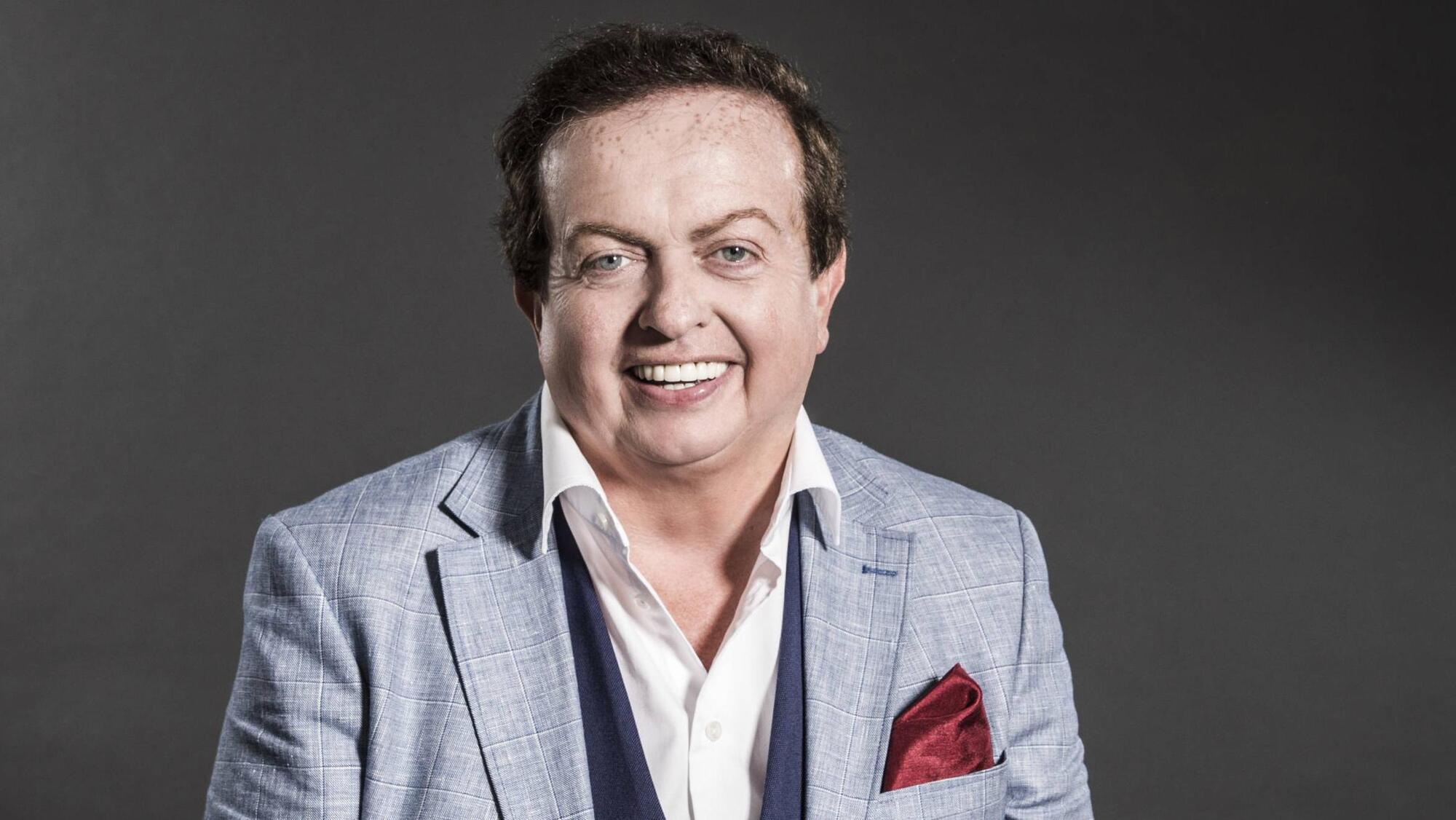
Marty Morrissey.
Marty Morrissey was born in Mallow, Co Cork. His family moved to the USA and he spent most of the first 11 years of his life in New York. Marty and family eventually moved home to Ireland where his father ran a pub in Quilty, Co Clare. He has been broadcasting for RTÉ for more than three decades.
I had a different upbringing because I spent the first 11 years of my life in New York. I went to St Ann’s School in Bainbridge Avenue, The Bronx. I was one of two Irish boys in it. I remember Germans, French, Native Americans, loads of Italians.
Every morning in the basketball court, even if it was snowing, you’d to swear your allegiance to the American flag with your hand across your chest. Yet on weekends, I’d be totally Irish because I’d be going to Gaelic Park playing hurling and football.
My American kid friends didn’t have a clue about it. Then I went back to Ireland to live when my father bought a pub in West Clare. So culturally by background is mixed up. It’s a cocktail of pure Irishness, Irish Americanism and flag-swearing American pride.
Moving between New York and Co Clare gave me a world perspective. During those 10, 11 years growing up in New York, I was inculcated with the American attitude. Their attitude is very simple – you can do anything you like. It’s all about positivity. There isn’t a begrudging attitude. Get out there and live your dream.
Working in my father’s pub was the best university I saw how good people were from working in a pub, how kind they were, how loyal. Sometimes they were a bit cranky and contrary when they had a couple of drinks taken.
So I learnt how to deal with people, to be kind, patient, which helps you go through life. Being in business and dealing with the public is not easy. Today, as a commentator, I look up Twitter to see the reaction to my broadcasts. Did I make a mess of it in the first half? Did I say something I shouldn’t have? You want people to be pleased about what you did, but there's always critics.
Criticism comes with the game I'm in because no matter what you say – and you try to be as fair as possible – somebody from, say, Galway, will think, “Ah, Marty is always against Galway”, which is clearly not true, but you have to call it as it is.
I didn’t fully get my can-do attitude until I was well into my twenties. I got that from playing football in Cork. When I went to UCC, I remember going into the Aula Maxima and meeting Mortimer Murphy – who is a great friend of mine to this day – and Don Goode during Freshers’ Week.
They were signing up players for Gaelic football. They said to me: “And who are you?” “Marty Morrissey.” “And where are you from?” “I’m from Clare.” There was a blank look. I knew immediately. They said, “Do you play?” “I do.” I hope I'm never boastful because it was drilled out of me, but I wanted to impress the boys so I added, “Well, I was Clare minor goalkeeper for the last three years so….” “Really.” “Yeah.”
And they said, “Well, I tell you now, Marty, if we’re really stuck we’ll call you.” I said to myself this is not good, but I got onto the Freshers’ team and we got to the intervarsity final and lost to Jordanstown by a point above in UCD. I learned from Cork and Kerry lads’ inherent self-belief.
I was interviewed recently on Mike Murphy’s podcast. Like any good interviewer, he had a list of questions lined up, but he'd be looking at you, and as he looked at you, he’d be listening. He wouldn't be confined to script, which is a great sign of a broadcaster because he’s interested in hearing something that he wants to know more about. It’s about having an interest – being interested in the person you’re speaking to.

The great thing I loved about Gay Byrne – and to me he was the master – was that he was an actor. His timing was always spot on. It might have sounded with his morning radio show introductions that everything was ad-libbed, but it wasn’t – it was scripted. Not everybody can do that.
He’d be able to be change the tone from sombre or sad to joyful or teasing with that beautiful voice he had. He did the same on TV. He had a twinkle in his eye. He was able to play the piano. He indulged without distracting from his guest. He could participate and bring the guest along and extract information that maybe the guest wasn’t planning to give.
I loved Gay Byrne’s versatility also. He was able to touch off any subject. Both himself and Mike Murphy inspired me to take different routes – to try other things. For the last 10 years, RTÉ have been good enough to give me opportunities. I’ve filled in on afternoon radio slots, I do bank holidays for two hours, and on CountryWide and other shows, which I love doing.
I never wanted to be a one-trick pony. You get a bug for this thing and you think, I’d like to try that. It's that versatility.
I love Neil Diamond. I've been at three or four of his concerts here in Ireland. It’s the beat. Songs like It’s A Beautiful Noise. I love that deep, rich Brooklyn voice he has allied to the beat and the music. I’m a huge Neil Diamond fan.
I’ve brought English and Dublin friends down to Miltown Malbay in West Clare for Willie Clancy Week in July. There’s set dancing in the Armada Hotel and traditional music in the town.
When you go in to the Armada, all you see is heads bopping from the set dancing. Unless you don’t have a beat in your whole DNA, you’d have to tap your foot when the speed is going and all you see are heads bopping. When they finish a set, the sweat would be pouring down off lads and they’d go into the loo.
In their front pocket they’d have a stick of deodorant and in their back pocket they’d have a tea towel. They’d go in and wash themselves. They’d stick their arm over the drying machine to dry off, stick on the deodorant and go back out for more. That’s passion.