Bridget Jones's Diary: How relevant is the popular singleton 25 years on from the book's publication?
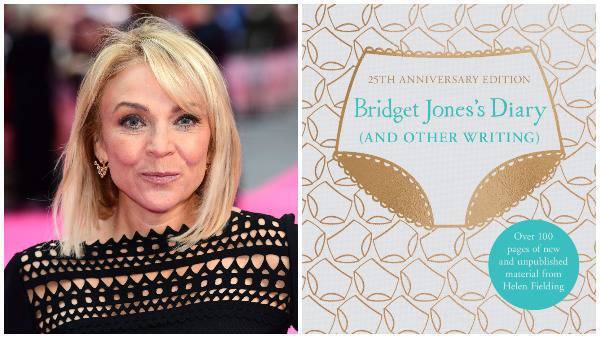
Helen Fielding has published a 25th anniversary edition of Bridget Jones's Diary.
Love her or loathe her, Bridget Jones is here to stay. Fans of, and newcomers to, the 30-something chardonnay-swilling singleton can shortly bag a 25th anniversary edition of Bridget Jonesâs Diary, with added extracts from author Helen Fieldingâs early journalism and musings about Bridget Jones in the 21st century.
Millions of copies of the original, based on Jane Austenâs novel Pride And Prejudice and evolved from Fieldingâs columns in The Independent newspaper, have been sold globally, spawning three further books and three film adaptations starring RenĂ©e Zellweger as Bridget and Colin Firth as Mark Darcy.
In the new book, Fielding explains: âSometimes people claim that Bridget was the godmother of chick lit. But the truth is it wasnât just Bridget or me, it was zeitgeist. The fictional representation of single women had not caught up with reality.â So, do other authors feel that Jones is still relevant 25 years on?
Author and broadcaster Mariella Frostrup reckons Bridget Jonesâs Diary is as relevant today as it was 25 years ago.
âIt was a revolutionary text when it first came out. For anyone who was a young woman in the Nineties, itâs like having a book equivalent of the soundtrack to your life, summing up the singleton lifestyle that so many of us were living,â says Frostrup, author of Desire: 100 of Literatureâs Sexiest Stories. âThereâs nothing in this book, including her many attempts at creating the perfect relationship, that isnât relevant today.
âMuch as we talk the talk, I donât think the world has changed dramatically on the romantic front, or in terms of people aspiring to find the right partner. And I think Daniel Cleavers are in great abundance. I donât really see what would be out of date in the book, apart from the smoking.
âItâs such a relief to read about someone real rather than a prototype of what we think humanity should be like. If every single book about a woman was some prototype feminist saying all the right things and behaving in an absolutely admirable and militantly feminist way, it would be a dreary world.â She continues: âIncreasingly, in these rather intolerant times, I think itâs very good for us to be familiar with human foibles rather than constantly seeking human perfection.
âBridget Jonesâs Diary is a totally timeless book. Itâs about all of the things that human beings will always aspire to: a connection with others, to find someone to love you, to find someone you can love back and to be the best person you can possibly be while at the same time recognising that we are all deeply flawed.â

Alexandra Heminsley was a junior press officer at Picador when a young woman called Bridget arrived for two weeksâ work experience in 2000. Little did she know it was actually RenĂ©e Zellweger who was there to research the part of her alter ego.
âA smiley blonde woman who had a very posh accent and was quite amenable about helping out seemed completely normal,â recalls Heminsley, bestselling author of Some Body To Love.
âOnly the publicity director knew who she was. Iâm sure she had quite a laugh watching me try to befriend RenĂ©e.
âWe sat on opposite sides of the partition, so if I stood up I could see her desk. The phones diverted to me and to her. There was no social media then, you had to answer the phone. After two or three days, I started to hear her say, âHello, publicity,â just like me, and I wondered if she was taking the mickey.
âAfter sheâd left, she wrote me a letter to thank me for looking after her, so I didnât feel like Iâd been taken for a fool â and I had a laugh with my boss about it.âÂ
Heminsley continues: âThe whole pressure around body image and counting and quantifying yourself the way those diary entries open with all the statistics, is definitely still relevant and is fuelled by social media.
âYou can get your digital calorie counter and your Apple watch counting your steps. She would be counting so much more in those diary entries now, the likes, the stepsâŠâ
Vogue columnist Nell Frizzell, whose new book The Panic Years explores womanhood and motherhood, recalls that when Bridget Jonesâs Diary was first published in 1996, she was 12 and her mother wouldnât let her read it.
âShe just wanted to protect me from the archetype of the neurotic self-hating woman. In a funny way that was a real feminist act on my mumâs part. She knew I had enough baggage about my weight and my looks and didnât want me to have that exacerbated by the book.
âBut I look back at Bridget Jones and the âSmug Marriedsâ and her feelings of being out of sync with so many people around her and of running out of time, and I completely understand. Bridget Jones is still really relatable because unfortunately, we have not changed the way men think about commitment and fertility, and therefore women are [often] still expected to do that heavy lifting on their own.âÂ
In terms of the workplace sexual harassment Jones puts up with, Frizzell says: âThe #MeToo movement has shown that stuff is still happening in quite a lot of industries which we think of as aspirational and glamorous â film, TV, theatre. The way itâs handled in the book and films, in a Carry On, bum-pinching, cleavage-ogling way, is now more uncomfortable with an audience.
âBut a lot of people are still sleeping with their bosses and massively regretting it.â
Bestselling novelist Fiona Gibson, whose new book The Dog Share is out in March, reflects: âRecently, I dipped back into the book which grew out of those columns, expecting it to be horribly dated. It is dated, of course; sexism abounds, Bridget tolerates it and believes her life is incomplete until she meets Mr Right.
âBut so much of Bridget still resonates today â like that feeling that she must better herself and be a proper grown up. Back then it seems almost quaint that, in her world, this amounted to calorie counting while trying â and failing catastrophically â to limit her consumption of cigarettes and booze.
âPre-Botox, fillers, Instagram and the Kardashian-influenced contouring make-up that grew from it, thereâs an innocence about Bridgetâs yearnings to be a better woman.
âMy daughter, whoâs 20, would find her terribly dated. But her peer group is familiar with loneliness and finding solace and joy in the company of friends. I think weâll always warm to the idea of a young woman bumbling through life, cocking up regularly, making us feel better about our own screw-ups.â âI wish we could laugh at ourselves moreâ Daisy Buchanan, host of Youâre Booked â a podcast dedicated to reading â whose debut novel Insatiable is published in February, read the books as a teenager. âI think itâs relevant today. Whatâs really sad is that weâve become a lot more earnest and I wish we could learn to laugh at ourselves a little more.
âI think in this day and age the single Bridget would have Tinder binges with diary entries like: âMust find sensible, functional man and not look at Tinder because itâs all a disasterâ and the next day would write: âHungover. Frantically swiping.ââÂ