Gael power: The Irish women heard by millions on BBC radio
Donie of CNN isn't the only Irish voice on international media. At the BBC alone there's an impressive cohort of Irish female presenters who reach huge audiences every week. We speak to Nuala McGovern and Sarah Mulkerrins, and profile some of the others
Gael power: The Irish women heard by millions on BBC radio

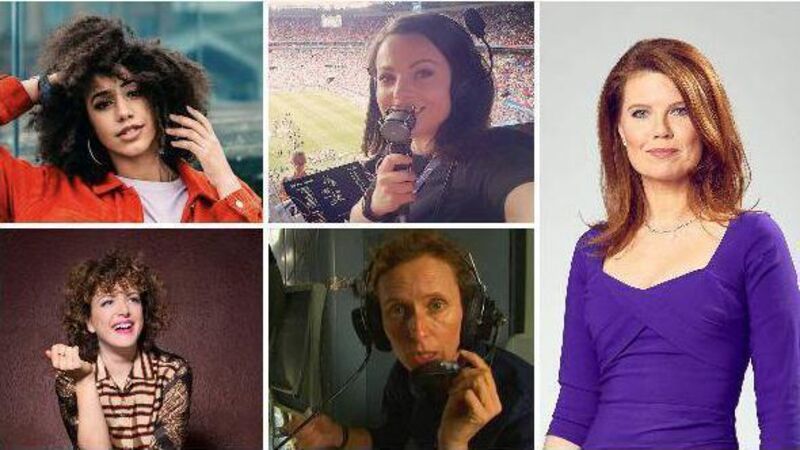
Among the Irish women working on BBC radio are, from left, Gemma Bradley, Annie Mac, Sarah Mulkerrins, Orla Guerin, and Nuala McGovern.

Long before Kerryman Donie O’Sullivan captured the hearts of the nation with his reporting from Washington during the extraordinary scenes at the US Capitol, there was Nuala McGovern.
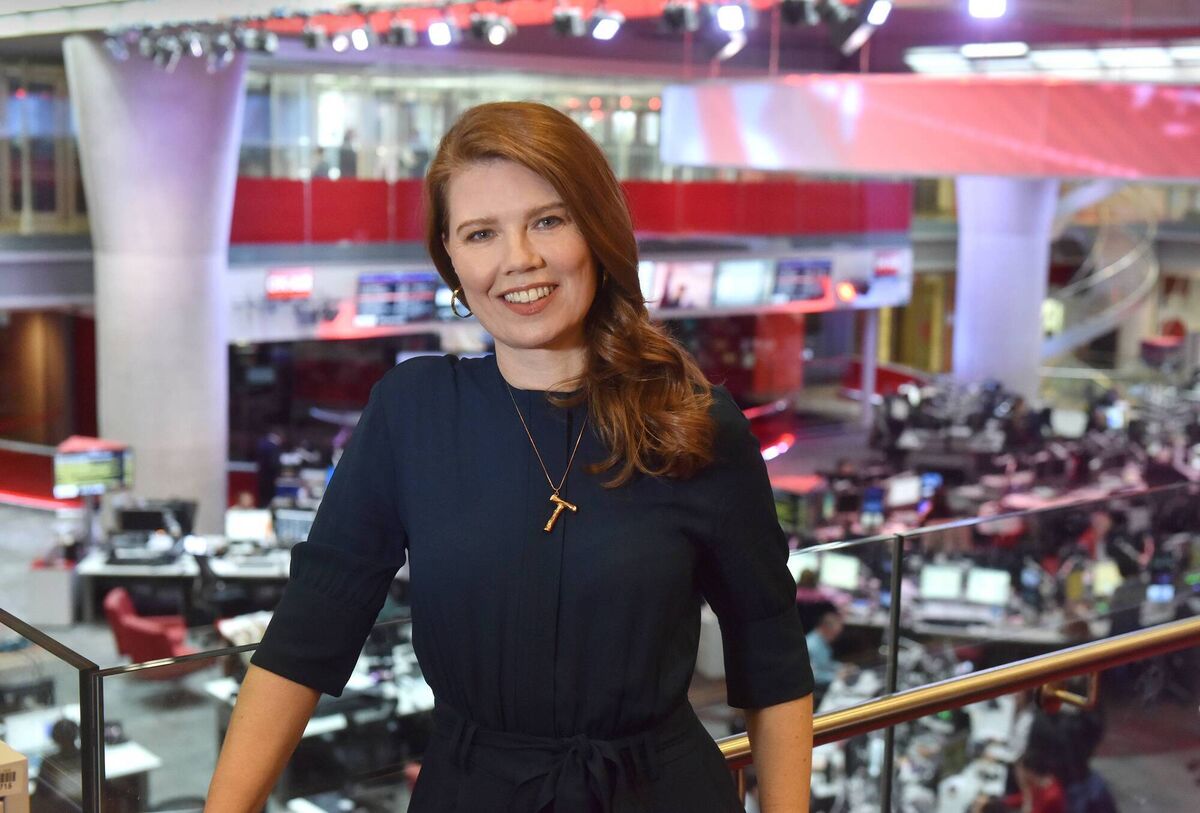
Nuala McGovern. 
Nuala McGovern. 

As presenter of the BBC World Service’s daily radio news show, BBC OS, McGovern covers an astounding array of global events for a worldwide listenership of millions. One of the biggest thrills of her job, she says, is bearing witness to “something you know will have wide-reaching consequences.” One such experience was covering Donald Trump’s inauguration in 2016. Having worked in US radio for 15 years, the Dubliner was a natural choice for the BBC to cover the divisive election campaign and ensuing inauguration, events whose wide-reaching consequences are even now being realised.

For McGovern, who made New York her home for many years, the recent storming of the Capitol building has the potential for rippling political shock-waves akin to the events of 911, which was a formative experience in her broadcast career.

“I think I’m still processing the Capitol building, to be honest,” she says. “I can’t quite believe it. I was speaking to an American colleague and he said there are credible threats of violence in the coming weeks. It’s horrific. I’ve interviewed Trump supporters who won’t believe that it was Trump supporters in the Capitol building; very little will turn them against him. So I think this is a cultural war that will continue, I don’t know how long for.” In hindsight, she says, the atmosphere and events of Trump’s successful 2016 election campaign were a first-hand prophetic glimpse of what was to come.

“I covered the last debate between Hilary Clinton and Trump, in Vegas, and he wouldn’t agree to accept the results of the election if he lost. He had an adviser, General Kellogg, who I managed to collar afterwards and I asked him how Trump could have said that, wasn’t it an affront to democracy.

“Kellogg said, ‘it was a joke. He didn’t mean it.’ Now when you look back, that was the beginning of it. It’s exactly the same line, four and a half years later.” McGovern was born and raised in North Dublin, one of five children raised by publican parents who owned The Goblet bar in Artane.

Nuala McGovern in Washington four years ago hosting the BBC World Service coverage of the inauguration of Donald Trump.

She hadn’t planned a career in broadcasting; she studied English and Italian in UCD and taught English in Italy before her sister applied for a Green Card for her. “It hadn’t occurred to me to go to the US, to be honest,” she says, “but I went for the summer because you have to validate the Green Card within a certain amount of time. And I loved it.” 

 She started working on The Adrian Flannelly Show, a radio programme aimed at Irish in New York, now on air for over 50 years. “Adrian is an amazing guy, the liaison with the Irish community for a lot of politicians,” McGovern says. “You’d have Hilary Clinton or Rudi Giuliani coming in, and I got to present and produce there.”

Gaining an internship at public radio station WNYC, McGovern moved up the ranks and ended up as editor of the station’s flagship phone-in show. “It was like doing a PhD in journalism and American politics,” she says. “It was two hours per day Monday to Friday; really great, but really intense.” She moved to the BBC in 2009, when her banker husband Tristan Agates was offered work in London. Firmly rooted in the Big Apple, McGovern was hesitant about the move at first, and had to “start all over again” at the BBC, moving from producing and editing into presenting.

Since 2015, she’s been the voice of BBC OS, a show with extraordinary reach: BBC World Service boasts a weekly listenership of 97 million people.

“You don’t think about the numbers when you’re presenting, but you do think about the global reach,” McGovern says. “There’s this range all across Africa down to Australia, parts of Asia as well. Americans who wake up early will be tuning in, but you have people settling in to listen in the evening in other places. That’s incredible. I will never tire of that. It’s a wonderful privilege.”

 In normal years, McGovern made monthly visits to Ireland to spend time with family and in nature. But in 2020, McGovern ended up broadcasting from her holiday home near Avoca in Co Wicklow for six months, before being recalled to London by the BBC in October: having come for a flying visit in early March, she developed a cough and ended up self-isolating in Wicklow, a stay extended by ever-evolving Covid-19 travel advisories.

“It’s been a very particular time in radio during the pandemic because people need something solid, an anchor, information and company,” McGovern says. “Listeners have been getting in touch more than ever, and I think it’s because people need to connect.” 

 Aside from stand-out moments like reporting from the infamous US naval base/prison at Guantanamo Bay in Cuba, McGovern says the coverage she’s proudest of was on home turf: Ireland’s historic abortion referendum in 2018.

“Sometimes you’re assigned stories and sometimes you’re pushing for stories, and I really wanted that one,” she says. “I don’t think even nearby countries realised what a big deal it was for Ireland. Growing up in the Seventies and Eighties, it was such a cultural touchstone, something every single person you met had an opinion on. The people we spoke to, the documentary we made in advance and the live coverage on the day. I think we told it really well.” 

 McGovern works with a diverse global team at the BBC World Service, but she says being Irish has its perks: charming accent aside, it’s a matter of attitude. “There’s just a natural inclination to have a conversation. We’re not reserved or formal and there’s generally a sense of humour. I think that all helps when it comes to broadcasting.

“There’s loads of Irish in the BBC, particularly women. There are of course the Fergal Keanes and Orla Guerins, but lots of younger journalists as well. And I have to say, all of them that spring to mind are incredibly talented. So you’re going to see loads more of them in the coming years, mark my words.”

There are people who say, ‘What is that woman doing on air?

Sarah Mulkerrins at the Women's World Cup final in 2015. 

BBC sports news presenter Sarah Mulkerrins, an Athenry native, is celebrating an important milestone. it’s ten years since she packed up her car and took the ferry to England on a six-month contract to co-present a football magazine show based in Manchester.

Mulkerrins, then 27, arrived at a serendipitous moment: “I just said to myself, I’ll see how it goes. But the timing was really good, because BBC sport were moving to Manchester from London the same year.” A decade on, and as well as regular slots presenting sports news on radio and TV for BBC World and 5 Live Radio, Mulkerrins has covered events that are a dream come true for a life-long sports fanatic. She covered the Rio Olympics, witnessing Usain Bolt win his record-breaking 100m gold medal, has popped up on Match of the Day,  and was on hand in Augusta in 2019 when Tiger Woods won his fifth US Masters.

The golf tournament had particular emotional resonance because, growing up in a “sports-mad” family, “the Masters would be something that me, Mam and Dad and my sisters would watch every year,” Mulkerrins says.

Her parents must be delighted, then, to be able to watch their daughter at some of their favourite sporting events? She laughs. “It’s actually really embarrassing, but they do,” she says. “Even last night, I was on at half six. I got in the door afterwards and called Mam and she was like, ‘Are you not on at half ten tonight?’ Then Dad came in and said, ‘Mam put the TV on for me earlier to watch you, but I pressed some button and I couldn’t get you back.’”

 Mulkerrins studied Journalism at DCU and became an assistant producer with Setanta Sports. “I loved PE in school and played camogie and did athletics,” she says. “Whatever it was, I wanted to do it, even though I wasn’t great. In my teens I had the same struggles that a lot of girls have in keeping up sports, around body image and stuff like that. But I was always obsessed with watching the Olympics, and my family would be off out to GAA games at the weekends.”

 Sports journalism is notoriously male-dominated; has Mulkerrins ever faced sexism? “Oh, yes,” she says. “I mean, it’s getting better; even my experiences in my early 20s were worse, things like not having anyone talk to me at sporting events, people making comments. I still get it on Twitter. There are people who say, ‘What is that woman doing on air? She’s awful.’”

 One thing that’s certainly not a disadvantage is the cliché of the Irish gift of the gab. Mulkerrins says her accent has been a massive help in her UK career.

“When you’re a broadcaster you’re looking for the things that make you different, so that when you come on air people know you and identify with you,” she says. “And it’s the easiest thing in the world to stand out here with the accent. I think people generally like the Irish accent and that it comes with a positive reinforcement. I get an awful lot of comments about it. I actually get worried about losing my accent.

“I don’t want to play up to stereotypes, but a lot of Irish people have this warmth that involves communication, listening, wanting to know peoples’ stories and being interested in them. For a presenter or broadcaster, that stuff really helps you.”

 Five other Irish presenters on BBC radio 

Gemma Bradley. 
Gemma Bradley. 

Gemma Bradley - BBC Radio Ulster

Derry girl and singer-songwriter Gemma Bradley, 24, is the newest kid on the block at BBC Radio 1: she took to the airwaves this month for a Sunday night show called BBC Music Introducing. Bradley, a graduate of BIMM music college, plans to continue her own musical career and hosting her Monday night show on BBC Radio Ulster, Across The Line.

Annie Mac - BBC Radio 1 

Future Sounds presenter Annie MacManus is better known as DJ Annie Mac. MacManus was born in Dublin and studied English Literature at Queen’s University, Belfast. She moved from producing into presenting at BBC Radio 1 and has been an on-air regular since 2004. Known for live DJ sets and occasional TV appearances, she has also presented Other Voices for RTÉ 2.

Angela Scanlon - BBC2

A graduate of TU Dublin, Co Meath woman Angela Scanlon wrote for titles including Tatler, Grazia and The Sunday Times magazine before working on RTÉ fashion shows Xposé and Off The Rails. She co-hosted Robot Wars, her first major UK show, on BBC2 in 2016 with fellow Irish presenter Dara Ó Briain. She hosts an early Sunday morning show on BBC Radio 2.

Orla Guerin - Veteran journalist and BBC foreign correspondent

Orla Guerin worked for newspapers including the Sunday Tribune in her native Dublin following her graduation from Dublin College of Commerce with a certificate in journalism in the mid-eighties. She worked for RTÉ as a foreign correspondent and moved to the BBC in 1995. She has reported from conflict zones all over the world, including Kosovo, Jerusalem, Libya and Egypt.

Laura Whitmore - Presenter and BBC Radio 5 host

The Love Island and former I’m a Celebrity presenter was born in Bray, Co Wicklow and studied Journalism at DCU. Following her big break with MTV News in 2008, the 35-year-old has since presented TV shows with ITV, Channel 4 and the BBC, appeared on Strictly Come Dancing, and hosts her own Sunday morning radio show on Radio 5 Live.

x

More in this section

Scene & Heard

Newsletter

Music, film art, culture, books and more from Munster and beyond.......curated weekly by the Irish Examiner Arts Editor.

Cookie Policy Privacy Policy Brand Safety FAQ Help Contact Us Terms and Conditions

© Examiner Echo Group Limited