Barack Obama's reverence for responsibility reverberates through A Promised Land
Barack Obama is rooted in family and ‘A Promised Land’ is marked by the cherished love of his wife and kids
Barack Obama's reverence for responsibility reverberates through A Promised Land

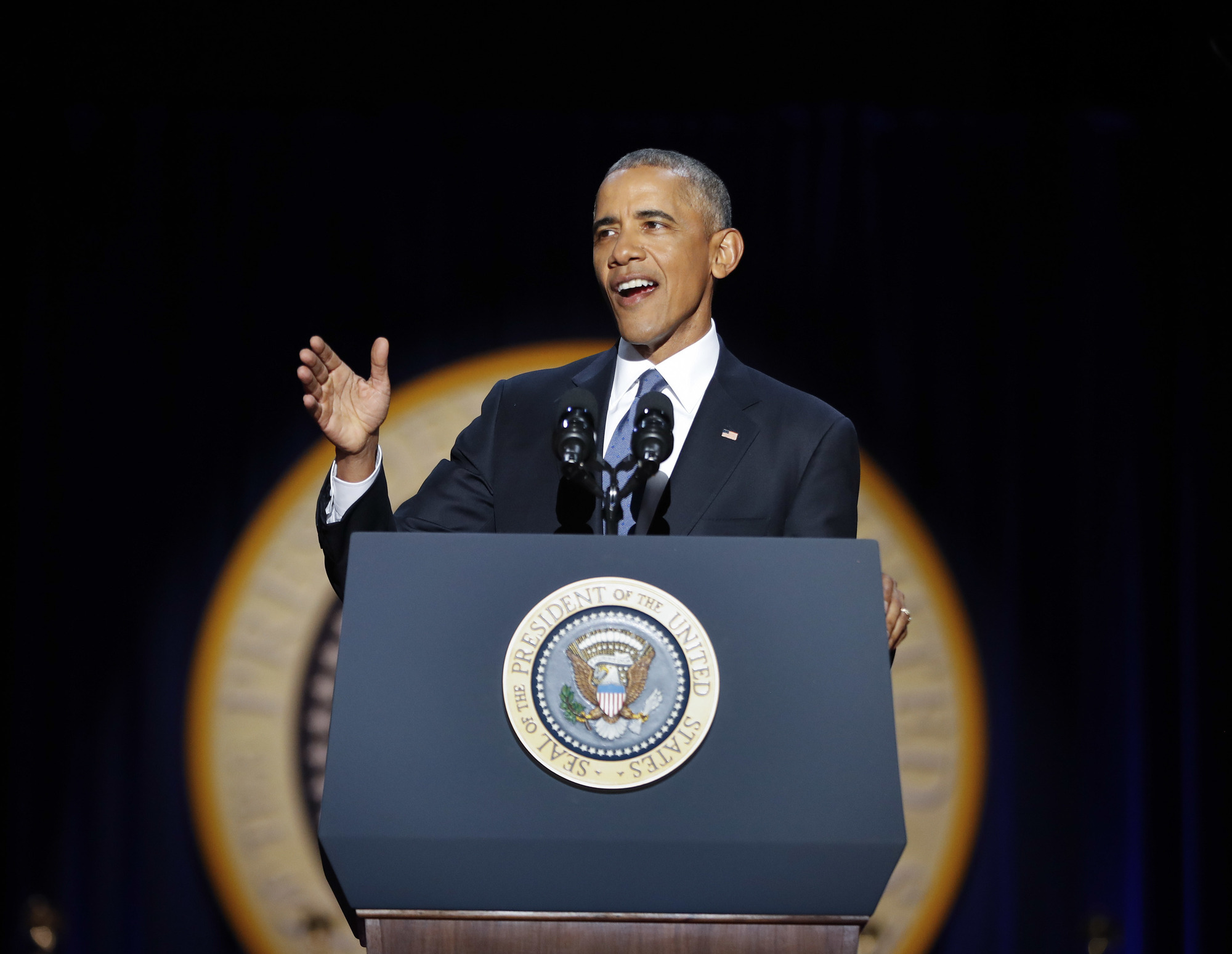
US president Barack Obama speaks during his farewell address in Chicago, January 10, 2017; his reverence for the responsibility he carried reverberates through the book but to an outsider, his iron clad belief in America jars with every firestorm his successor sends with a tweet. Picture: Pablo Martinez Monsivais/AP

  • A Promised Land
  • Barack Obama
  • Viking, €29.99

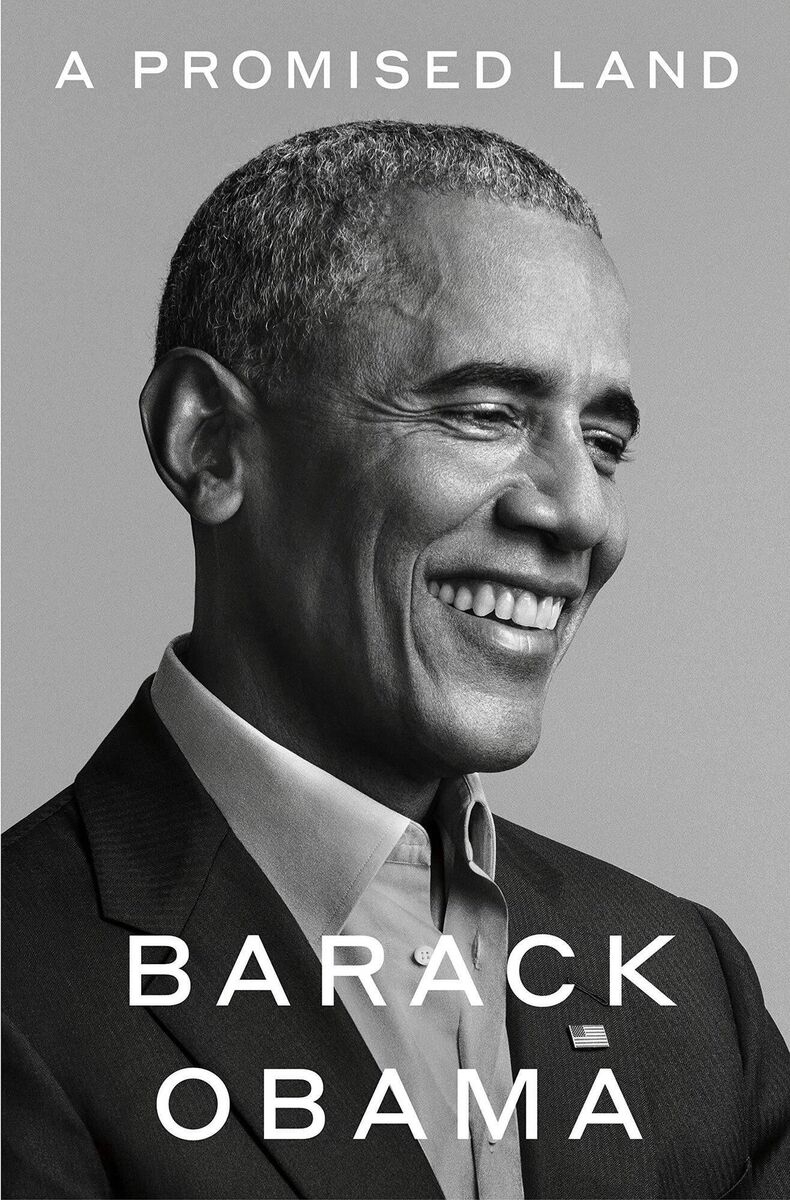
IN THE introduction to A Promised Land, Barack Obama explains how his original vision for his memoir of his time as President of the United States was a standard 500-page tome. He expected it to take a year to draft and finish and was comfortable he would meet this self-imposed deadline.
He quickly realised that this deadline was folly, his penchant for introspection and flair for language, and his sprawling ideas and analysis of events ensured that his original timeline was not realistic and the mooted length of the book wouldn’t come close to covering everything he wanted to say.

So, instead, we are treated to part one of a two-part volume, a 700-page behemoth chronicling his campaign for political office and his time in the White House finishing with the operation that led to the death of Osama Bin Laden in 2011.

Political biographies can be read in a few ways, many are standard recounts with names, dates, and times of important world events. Often, it will be a president or prime minister justifying an unpopular decision, rationalising these decisions, and presenting the supposed full facts while their successor often distances themselves from them.

Obama’s book is very different in this regard. Hovering over its pages is a malevolent shadow. Released as it was when counting was still not finalised in the 2020 election, you cannot help but digest this book in that context.

Obama is self-conscious almost to a fault. He is constantly analysing and assessing, his decision-making process is exacting, every word carries weight and is carefully measured. His reverence for the responsibility he carried reverberates through the book but to an outsider, his iron clad belief in America jars with every firestorm his successor sends with a tweet.

Trump of course, has developed an uncanny knack of occupying space in whatever medium you are consuming and you cannot help but notice the signposts Obama erects along the way in his story, mapping the chaos that was growing.

A Promised Land – Barack Obama €29.99

Sarah Palin’s nomination as Republican vice presidential candidate seems to be identified as not necessarily the start of a descent to populism — that was already well established — but as a significant Rubicon crossing moment, a moment described by Obama as “a larger darker reality, in which partisan affiliation and political expedience would threaten to blot out everything — your previous positions, your stated principles, even what your own senses, your eyes and ears, told you to be true”.

Political bias will inevitably shade the reading of a book such as this, America choosing a Republican president after eight years of a Democrat is a tale as old as time but this book highlights the near absurdity of lurching from a man such as Obama who places such a premium on facts to his successor, who as you read this is quite likely to still be growling about a rigged election.

The story of Barack Obama can of course, sit independent of Donald Trump and still be utterly inspiring. He mostly stays away from his early life here, chronicled previously in Dreams From My Father and instead starts with his nascent political career. As a young man we chart the change in him, from easy going party animal to a man in a rush to accomplish something. He reads voraciously, starts to work out constantly and starts to fill notepads with ideas on just about anything. He is never sure why he is doing all this; he just understands that one day it will pay off.

The man of destiny vibe is always around Obama, but destiny is not something he completely believes in. He worries that “it encourages resignation in the down and out and complacency in the powerful”.

He places a premium on luck and happenstance and points out that when he was flying home from the 2000 Democratic convention having not being able to gain entry, thought of high political office was a million miles away. Four years later he would give the keynote address at the convention and his career went into orbit.

Where this book rises over the standard political fare is the novelist in Obama trying to break out, this is not just confined to description where his natural knack for a turn of phrase shines through. A gardener’s hands are “thick with veins and knots like the roots of a tree” and his description of light in the Oval Office has the flourishing touch of a fiction writer: “The room is awash with light. On clear days, it pours through the huge windows on its eastern and southern ends, painting every object with a golden sheen that turns fine grained, then dappled, as the late afternoon sun recedes.”

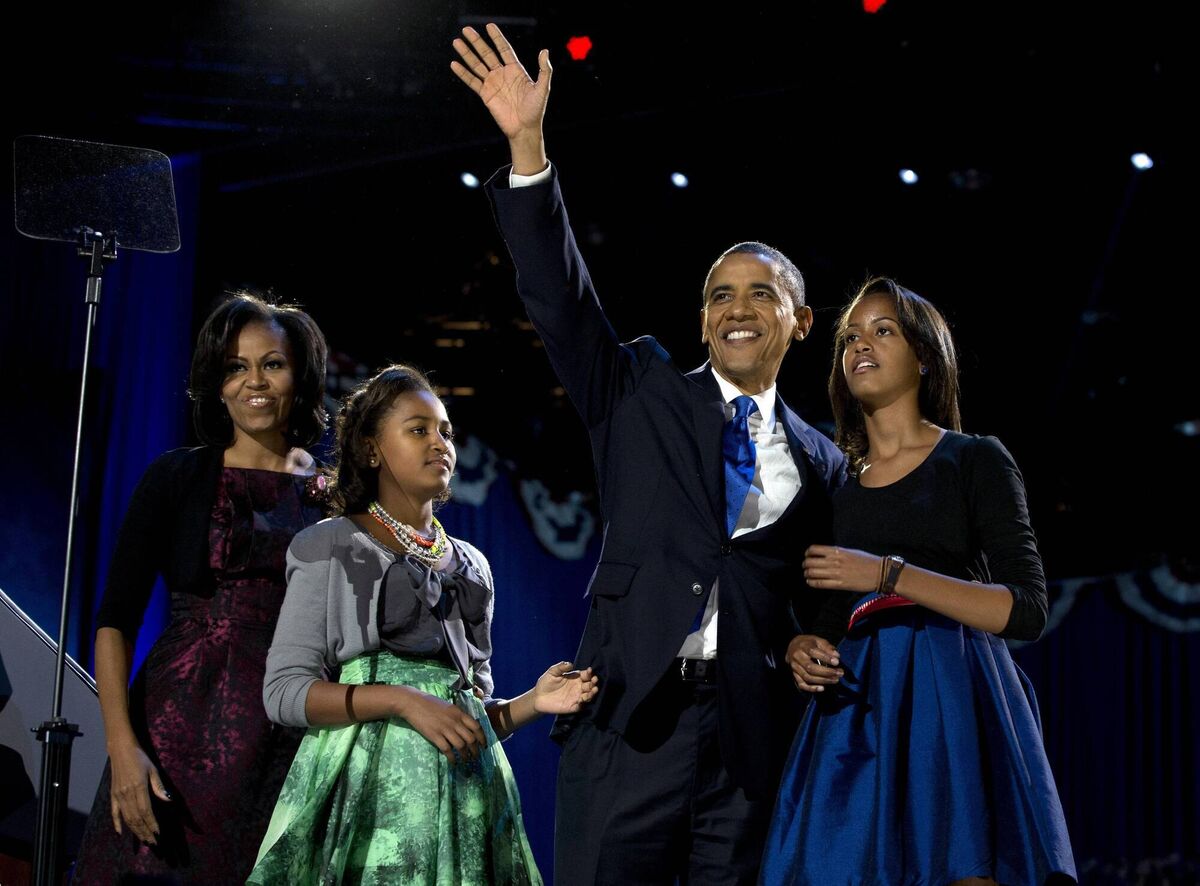
US president Obama waves as he walks on stage with First Lady Michelle Obama and daughters Malia and Sasha at his election night party for his second term of office in November, 2012. Picture: Carolyn Kaster/AP

His novelist tendencies come to the fore in his recollection too. He constantly points out little moments that bring him back to a particular time, something an aide said or some detail in the White House, the book is punctuated with these details and they help present a more rounded picture rather than rote recollections of policy decisions and partisan rancour.

That partisan rancour steadily increases as Obama’s first term starts to make inroads on a gigantic stimulus package to ward off the financial crisis and then his attempts to introduce universal healthcare.

The ferocity of the Republican backlash surprises him and it is here we start to see his near misty-eyed belief in the system wane. His opposition are only interested in beating him, stalling any progress he can make and as he explains no amount of hand holding or summits or Super Bowl parties can change it.

On foreign affairs, he is restrained in his descriptions of other leaders and meticulous in his appraisal of what he got right and wrong during his time in office. The interconnected gears of the world weigh heavily on him. When Navy Seals execute three Somali pirates during a hostage crisis in 2009, Obama thinks about the choices he has to make, he wants to “save them, send them to school, give them a trade, drain them of the hate that had been filling their heads. 

And yet the world they were part of, and the machinery I commanded, more often had me killing them instead.

This is a more brutal example of the compromises of office — something that he as a candidate could perhaps not see coming. Amid that whirlwind campaign in 2008, he cautions himself against believing the hype, he worries he is becoming a symbol and that the man cannot live up to it.

The same man is rooted in family and the book is marked by the cherished love of his wife and kids. Michelle Obama is at once both his anchor and seer, early on when he is debating running for office, she asks why does he have to take the hard way? She maintains he has a hole to fill. At various times, with decisions looming about what to do, Michelle is in the room and you are struck that she already knows what he will do.

Early in the book we learn that his famous campaign slogan “Yes We Can” was the creation of one his team — David Axelrod. At first, Obama dismissed it as corny, but it soon took on a life of its own and began to symbolise his campaign. It preached hope and while the man outlines that he did not get everything right, he did his best to understand and to compromise and he did his best to see the best in people.

We can justifiably hope that these qualities have returned to the most powerful office in the world and that however corny it is — a message of hope will always find a way to prevail.

More in this section

Scene & Heard

Newsletter

Music, film art, culture, books and more from Munster and beyond.......curated weekly by the Irish Examiner Arts Editor.

Cookie Policy Privacy Policy Brand Safety FAQ Help Contact Us Terms and Conditions

© Examiner Echo Group Limited