From Grease and Fawlty Towers to Mad Men: Deirdre O'Kane picks her favourites
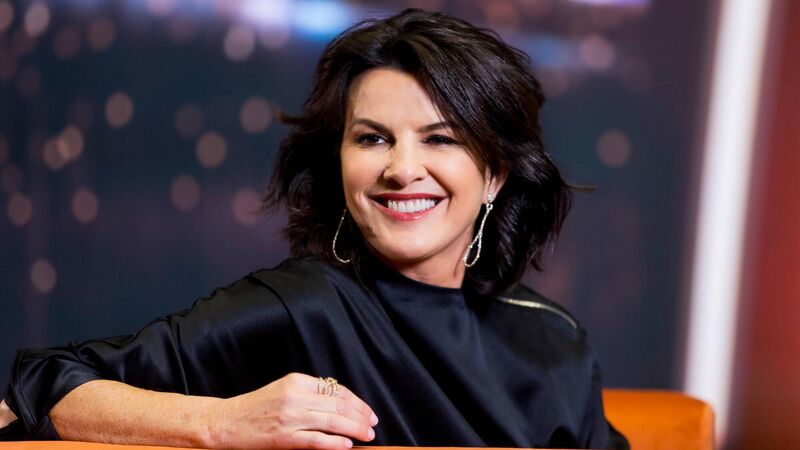
Deirdre O'Kane.
As a kid, the only shows on telly I remember are what my parents were watching. I remember my father howling at Fawlty Towers. I was intrigued at the amount of laughter coming out of him. I couldn’t make him laugh like that. I was thinking: what about this show is so funny? I didn’t get it because I was too young, but I got pleasure out of watching him laughing at it. “I know nothing! I come from Barcelona.” That was one of his regular quotes if you asked him anything.
I was in sixth class when Grease came out. I queued round the block to see the film in Drogheda. If it was now, you’d buy the DVD, but then it was on in the cinema once – and that was it. I had the top. I bought the trousers, these stretchy sequined Lycra pants. I loved the songs, the vibe. I wanted to be in that world. I got hold of the screenplay and directed bits of it in the classroom. I was obsessed with it. I must have been thinking: I want to do that. I loved being in school plays at school. I dressed everybody. My mother said at one point she thought they’d been robbed because dad’s dressing gown and silver goblets were missing from the dining room. I brought the whole lot into school.
The show I desperately wanted to be in was Will & Grace. At its height, it was phenomenal. There was a season that Woody Harrelson was in that’s insanely good, with a gag every 30 seconds. It’s so well written. I was also very aware of watching four comedic actors be match fit. Watching four comedic actors together like that is like watching fantastic doubles tennis – the craft and skill of it. I remember having deep-seated jealousy of the four of them, thinking that’s my dream – to work with three other comic actors who have great timing. When you work opposite an actor who has great comic timing, you can do anything because they elevate you.

I devoured Mad Men. I couldn't believe how good that show was – the style, the premise. The fact it went back to the 1960s and showed you harassment in the workplace, how badly women were treated, the shock of it. There were so many great scenes. One I remember howling at was when they went for a picnic. They got up to leave, picked up the picnic rug and shook out their rubbish onto the grass and off they went. It must have happened back in our day. We must have done it as well. Who were these magic people who were going to come along after to pick up our rubbish? It was hilarious. Those details in the show are amazing.
You’d forever be covering your tracks if you were in Don Draper’s shoes, and living with the fear of being caught out, but I think any actor could do that [laughs] – in that we study the human condition and we like being other people. We’re certainly able to immerse ourselves in another personality. I think we all do it a little bit. If we travel or go on holidays and meet people, it’s an opportunity to not haul all of our baggage into the conversation. If we want to, we can create whoever we want to be.
I lived in London for 10 years. It’s interesting: your humour isn’t understood straightaway there, the way we take it for granted in Ireland. I was forever throwing funny quips into conversation and I found myself stopping. I realised I didn’t need to be so friendly to everybody. They didn’t care: “On you go, now. I’m busy.” It was a bit depressing. I was shocked people weren’t thrilled with me. Whereas Irish people are dying for a bit of chat. Myself and my husband [filmmaker Stephen Bradley] used to regularly have a look at each other and go, “Oh, yeah, no craic here now.” It was a little refrain we had.
I’ve seen brilliant Irish theatre productions but the one that blew my mind was in London. It was seeing Rachel Weisz as Blanche DuBois in the Donmar Warehouse in Tennessee Williams’s play A Streetcar Named Desire. Every actress wants to play that part. That’s a female Hamlet right there. I had a friend who was in the production. She said Rachel was in pieces almost every night – she gave it so much. She used to say, “I’m just playing my mother.” It made sense to me because she was flawless. Hugh Laurie said the same about House because his father was a doctor. He knew this man. He knew his character. Sometimes you get a part and you think, This is mine. Nobody can do this better because this is in me.

The key to playing Christina Noble [in the 2014 film] was what I knew of her personally. I wouldn't have thought about wanting to play Christina had I not see Christina be very funny. So even though there isn't huge comedy in the film, I know that she's a show woman. Christina wanted to be a singer. She’s a star. It was going to come out. Whether it was as a star aid-worker, singer or actor, she's got presence. She's got a huge personality. If she had a more privileged life, or a little help from anyone, she would have gone down the performer route. Christina’s talent did come out, but in a different field.
Once I started to see stand-up, it was like a Road to Damascus moment. I went to the Kilkenny Cat Laughs festival in 1996. It was, like, Oh my God what is this? How did I not know about this world? I feel like I'm the epitome of, if you can’t see it, you can’t be it. I never saw a female stand-up until I went to Kilkenny that year. I take great satisfaction when a comedian like Aisling Bea says to me, “I did stand up because I saw you being a stand-up.” I didn't have that role model. When I went to the Cat Laughs, there were four women on the bill – and 40 men – and they were American women. I noticed it – wow, there's no Irish woman on the bill. It was a huge moment. It wasn’t until years later, I appreciated how eye-opening and wild that was.
- Deirdre O'Kane Talks Funny is on RTÉ One Saturday nights, 10.10pm.