John Creedon: Why our place names say so much about us
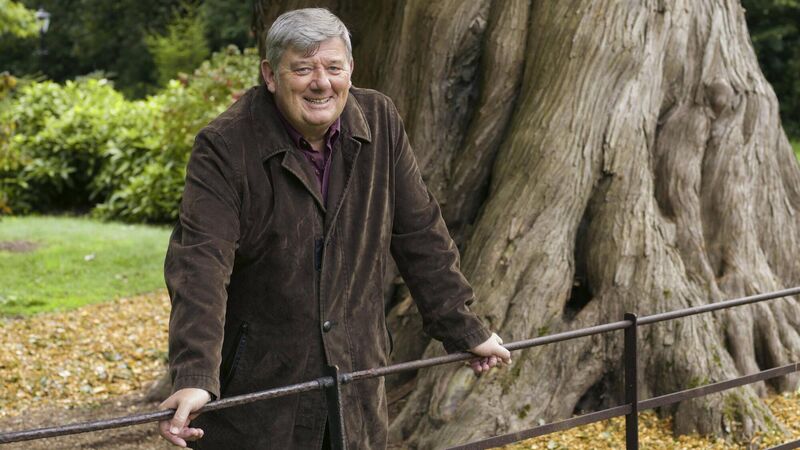
John Creedon, broadcaster and author of That Place We Call Home. Picture: Don MacMonagle
“As a kid, in my head, I was always doing little mini-tours,” says John Creedon with a laugh. “On my way to school, I’d be bringing some imaginary Yank on a tour of Cork.” Warming to his theme, he launches into an improvised monologue.
“This is Roman Street, they’re all holy names around here, Redemption Road, Assumption Road, Ascension Place’ or ‘This is the brewery, Cork has two breweries, Beamish on the southside, and Murphy’s on the northside, and interestingly, Murphy’s was owned by a brother of the Bishop of Cork, and his other brother was the man who started the distillery in Midleton…”
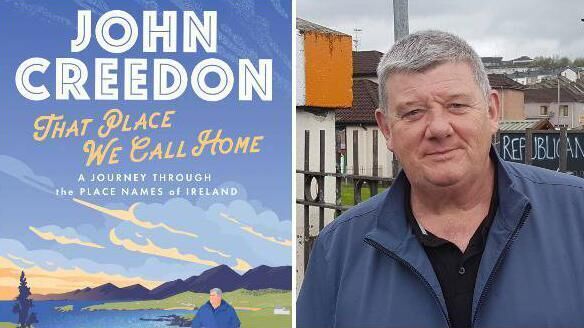
Regular listeners to Creedon’s weeknight radio show will recognise his distinctive voice in his debut book, That Place We Call Home, a voice to which no ghost writer could ever do justice. On the radio, in between playing songs from everyone from ABBA to ZZ Top, Creedon regularly wanders down bóithrín na smaointe, “the little byroads of thought”, where musings on the origins of place names are a regular theme.
His 2019 television series Creedon’s Atlas of Ireland, which returns for a second series in early 2021, allowed him to explore that lifelong interest, and that in turn led to That Place We Call Home.
He describes the book as a labour of love. “I’m not a professional writer. I’ve written 800 words here and 800 words there, but really not a whole lot. Pretty much during the pandemic I wrote it. I started in January, and I really got a push-on during the lockdown. They were crazy days really, ten hours a day for ten weeks.”
Creedon says he inherited his interest in place names from his father, Connie-Pa, who divided his time between driving a bus and running a newsagent’s shop on Devonshire Street.
“My father was a fluent Irish speaker. He was from Inchigeelagh, which he called a ‘Breac Gaeltacht’, a speckled Gaeltacht, where some houses were Irish-speaking and some English-speaking. My dad had Classical Latin and Greek. And he was fluent in makey-up words!”
He says he clearly remembers standing in the well of the family car, in front of the passenger seat, elbows on the dashboard, quizzing his father about place names.
“‘Dad, what does Glengarriffe mean?’ ‘It’s from gleann, meaning glen, and garbh meaning rough. So rough glen. And if you look around, you’ll see why!’”
A two-year Regional Studies diploma course in UCC, where Creedon studied Folklore, History and Archaeology as a mature student, was a “godsend” which saw him, for the first time in his life, the first student into class and the last to leave.
“And my homework was always done without fail!”
In That Place We Call Home, Creedon talks about the “Dindsenchas”, the lore of places.
“Long ago, the lore would have been passed on by word of mouth, and that’s why our mythology is so bizarre. It’s all fanciful, but within it usually is the germ of information. Some of the place names we still have come from languages which are now obsolete, so we will never know for sure what the names of some places mean, and if the natural features have changed, then the clues are gone as well, and we can’t say, for instance, ‘That word pops up wherever there’s a lake’.”
Wherever he goes, he says, he has an acute sense of those who came before.
“They’re gone now, but they did live here, and they did love, and long, and all the rest of it. The place names, in many ways, offer us clues about who these people were, and if you look at those names, you’d have to say they sound like a nice people, a gentle people.”
Creedon remembers drifting off as a child in his aunt Kit’s house in Adrigole, the sound of adult voices “like a mumbled rosary”, absorbing what they were saying. “A lot of it was about placing people, like the roots of a tree, spreading our understanding of the world, and what lies beyond the parish.
Creedon says writing the book has only reaffirmed his sense of place.
“I love being Irish, but not in a chauvinistic way, in the same way as I love being from Cork, but not in a chauvinistic way. I’m sure if I was from Timbuktu I’d love being from there, too!
“Cork is my well, it’s my home, it’s where I’m from. A sense of place can influence your mental health, and I know that when I open my curtains and look out at Cork, I think ‘I’m home’,” he says.
“When I walk the streets, I’m still back doing my guided tours again. I’m still in my head saying ‘We’re here on the aptly named Drawbridge Street, and here on my right…’ or ‘Cork from the air reveals that Patrick Street, although you mightn’t feel it on the ground, is actually horseshoe-shaped…’”
For John Creedon, the world is alive with the names and the thoughts of those long gone, and the Dindsenchas they passed on to us, a three-dimensional map full of signs and stories.
“For me it’s all there, living and breathing. For me, place is animate.”
Boherboy therefore means “the yellow road”.
Helvick Head in Irish is Ceann Heilbhic, deriving from the Old Norse hellavik, meaning “bright bay”, or helgavik meaning “safe bay”.
If it didn’t already exist, you’d swear the name Ballydehob had been dreamt up by an American movie producer looking to name an Irish location in a film. As Gaeilge, Balldehob is Béal Átha an Dá Chab, which means “mouth of the river with two openings”.
In English we call it Leixlip – and that comes from the Old Norse lax hlaup, which translates as “the leap of the salmon”. The Irish name, Léim an Bhradáin, is true to that original meaning, whereas “Leixlip”, the translation of the Viking name, means, well, nothing really!
This translation tells us that Youghal had a yew-wood forest at one point. Interestingly, in 2019, one of that year’s many raging storms resulted in high tides on Youghal’s Claycastle Beach exposing remnants of an ancient forest floor, subsequently nicknamed the “drowned forest”.