Appliance of Science: A look at some unusual autumnal gathering in nature
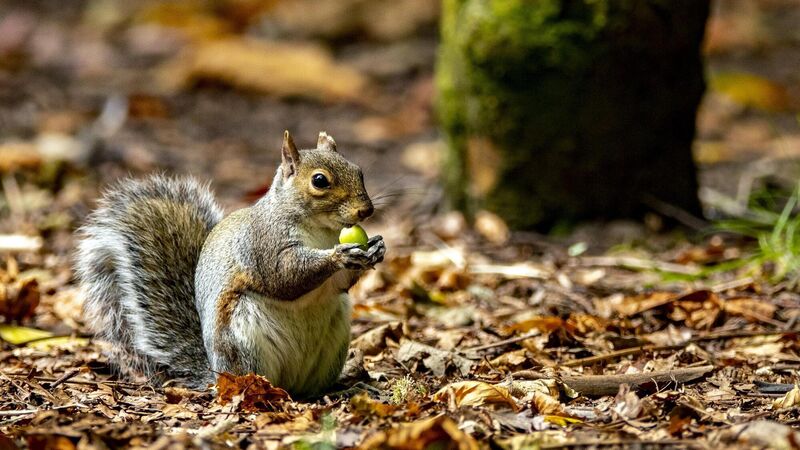
A grey squirrel eats an acorn in Sefton Park, Liverpool.
As the days get shorter and colder many animals are busy building up little stashes of food supplies for the winter months. Some have developed interesting ways to save, or store, their food.
When it comes to stockpiling food the squirrel is probably the first animal that comes to mind. At this time of year they are busy gathering seeds and nuts, before bedding down for a sleep-filled winter. Rather than store their cache in just one place, squirrels usually have many little food larders.
They make small holes over a wide area, and fill them with their food supplies, before covering them up again. It is called scatter-hoarding and one of the reasons they spread their bounty is to prevent it all being lost in a raid, because squirrels are not just good at collecting and gathering food, they are also quite adept at stealing it too.
To overcome this problem squirrels have develop the art of deception. They will often dig holes that contain no food at all, so other squirrels will raid the wrong area. Research suggests that squirrels are also more likely to create these fake caches when other squirrels are around to see them. While these thieves are using up precious energy to unearth an empty store they are less likely to be raiding the real larders.
Of course squirrels are not the only animals that build up food stores for the lean months, other animals do it too. Short-tailed shrews are very partial to a meal of insect larva.
They also like to keep the larder well stocked but they like their food to be fresh. To overcome this problem they simply turn their dinner into zombies; they inject them with their toxic saliva, not strong enough to kill them but it does cause paralysis.
The shrew can then keep the comatose larvae for weeks before eventually consuming them.
Any bee keeper will tell you how it is important to leave a good store of honey in the hive at this time of year, so the bees have enough to see them through the colder season. It is not just bees though, that store honey for the lean times, other insects do it too. Honeypot ants are one example, but they don’t store it in neatly constructed honeycomb, they take an even more organic approach.
In the social strata of honeypot ants there are a very specialised group of workers called repletes. These ants are well fed when food supplies are plentiful; in fact, they are literally gorged with food.
They are so overfed that their abdomen swell, they can no longer walk and they turn into living honey pots.
Such food supplies are obviously of great value, worth raiding other ant colonies for and this is a common occurrence. Rival colonies will often plunder other honeypot ant nests, removing the repletes and adding them to their own food supplies.
Rival colonies are not the only threat though, humans can pose a problem too. Gorged honeypot ants are considered a delicacy to certain indigenous tribes in Australia; once located, they will dig out a nest to retrieve them.
When it comes to stealing food caches, I think I’d prefer to raid the nuts from the squirrels rather than the honey swollen ants.


CONNECT WITH US TODAY



Be the first to know the latest news and updates



![<p>Kiran Kumar behind his desk at work at Phonewatch: 'When I’ve done my last [night] shift, I try to stay up for as long as I can so I get back into the daytime routine. That’s what works for me.'</p>](/cms_media/module_img/10027/5013992_5_augmentedSearch_Kiran..jpg "<p>Kiran Kumar behind his desk at work at Phonewatch: 'When I’ve done my last [night] shift, I try to stay up for as long as I can so I get back into the daytime routine. That’s what works for me.'</p>")


