Special Report: Saving lives by the second from the silent killer
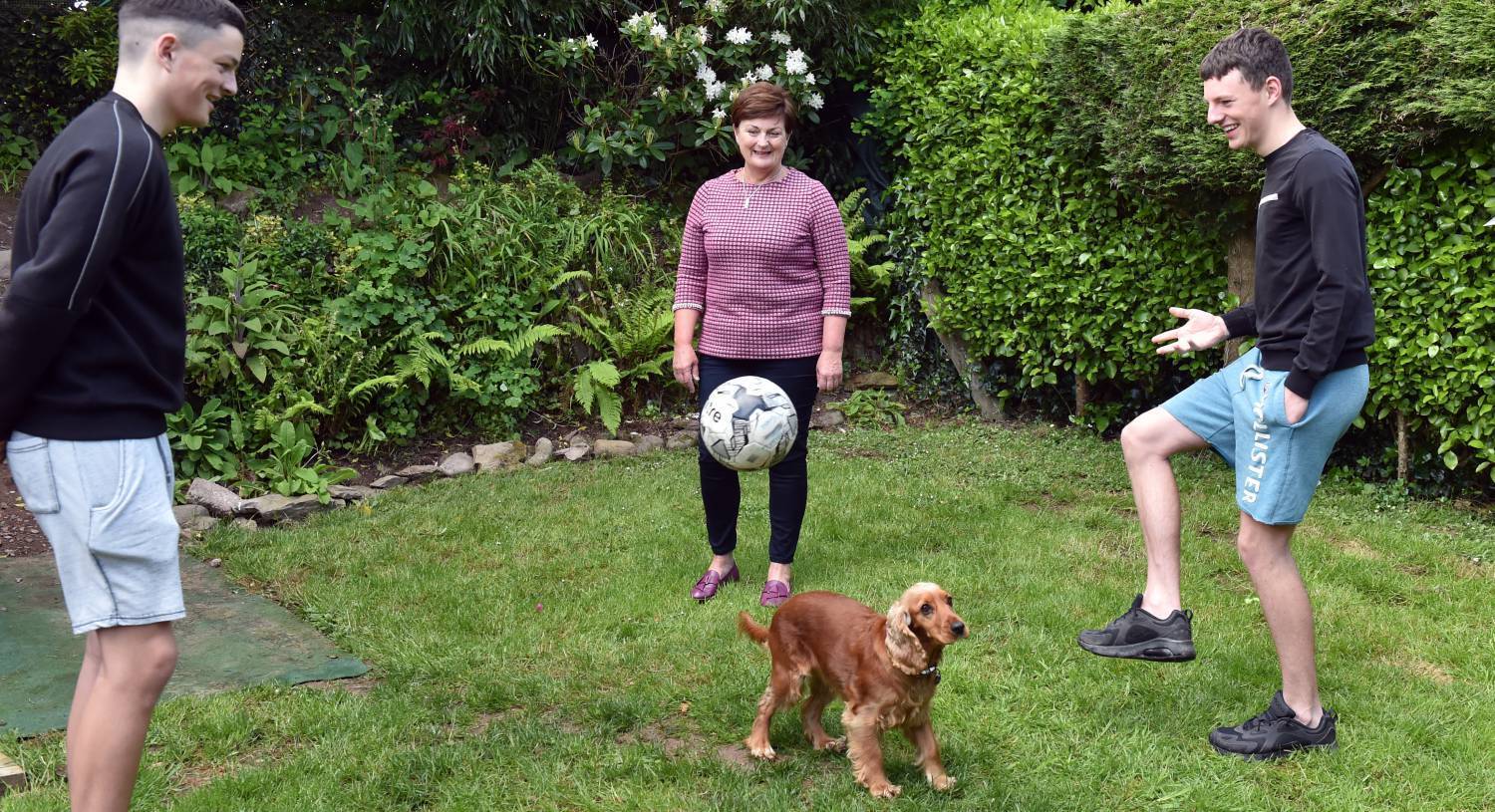
Gerry Wyse was at home in Douglas on a sunny Saturday afternoon when the call came through from Cork University Hospital - a 17-year-old boy, Roger Timon, was on his way in by ambulance following a suspected stroke.
As an interventional neuroradiologist working in a field of medicine where fast action is essential, he didnât dally about. Although not on-call, he organised himself quickly and set out for CUH.
The Covid-19 travel restrictions meant traffic was light on April 25 and it took just 20 minutes to reach the hospital.
âBecause it was a 17-year-old, you are automatically thinking âthings are unusual,â Dr Wyse says.
âIn fact we are seeing a few little unusual things since Covid-19 arrived. Only the other day I was on a conference call with a group in Toronto and their experience is that they are also seeing some usual stuff.
âSo even though a lot of Covid tests [for stroke patients] have come back negative, we are not sure we believe them,â Dr Wyse says.
There is a suspicion, he says, that Covid may be causing âendothelial dysfunctionâ, a condition in which the inner lining of the small arteries fails to perform normally, which is not good for the normal function of the bodyâs tissues and arteries. But itâs just a suspicion at this stage.
In the case of Roger, the cause of his stroke is unknown and investigations are ongoing. He tested negative for Covid-19.
Formula 1 PrecisionÂ
As Dr Wyse was making his way to CUH, a team was being assembled to assess and treat Roger, a sports-mad teen who plays his GAA with Nemo Rangers and is current captain of Douglas Hall u-18 Premier Cork Youth League team, currently topping the league table in Cork.

Although co-ordinating the team is usually a function of one of two clinical nurse specialists (CNS) in stroke at CUH - Karena Hayes or Glen Arrigan - neither was on duty that day.
Their hours are Monday to Friday, dovetailing with the hours that a thrombectomy service -mechanical removal of a blood clot- is officially available at CUH.
Ms Hayes says staff follow a protocol once the ambulance transporting the stroke patient rings the red emergency phone in CUHâs emergency department (ED) to alert the hospital that a stroke patient is on the way.
The protocol ensures nurses, porters, radiologists and the relevant doctors are ready to receive the patient. The aim, she says, is â30 minutes or less from door to decisionâ - in other words that the patient is assessed, has undergone a CT scan (medical imaging) and has had a decision made on their treatment within half an hour of arriving at CUH.
âItâs like a Formula 1 car coming in for a pitstop. Everyone has a specific role and the aim is to get everything done as quickly as possible,â Ms Hayes says.
Following a CT scan, Roger was deemed suitable for thrombectomy and was taken across the corridor to the thrombectomy suite where Dr Wyse had scrubbed up.

Speaking to the Irish Examiner, Derbhile Timon, Rogerâs mother, describes how the Gods were in their favour that day.
âFrom my perspective, we had the luck of the gods and even Covid-19 worked in our favour because it meant Roger was at home instead of out playing football.
âThen the fact that Gerry Wyse was available - he was on a day off but he still came in and if he hadnât, I donât know what the outcome would have been,â Ms Timon says.
Dr Wyse and fellow interventional neuroradiologist Noel Fanning between them cover the greater Munster area. Theyâve been waiting a long time for a third consultant to boost their thrombectomy service [an appointment is in the pipeline] - but the shortage means at the moment, thrombectomy is officially available weekdays only, 8am-8pm.
However as Dr Wyse points out, âitâs not infrequent that we will come in when we are not on-call because essentially, we realise the devastating consequences if the patient isnât treatedâ.
And so Dr Wyse was there when Roger came in.
The pandemic has made life a little more difficult in the thrombectomy suite, Dr Wyse says.
âWe have to automatically assume patients like him [Roger] are Covid-positive, so we are double-layering, getting on our PPE (personal protective equipment) as well as our routine scrubs.
âThe N95 masks (face masks) are very uncomfortable and we have been doing thrombectomies while wearing them for the past few months, and it adds a little heat to the whole procedure.
âBut overall, Rogerâs case was relatively straightforward.
âWe did put him to sleep because of his age (patients are usually awake) and the whole procedure took 40 minutes.â Ms Timon is in awe of the speed at which âHe had just put something in the oven and walked into the sitting room. It sounded like he was banging the oven, but his co-ordination must have been gone as he was putting the food in.
âIt literally happened within two minutes of that. I went to check what he was cooking because I was hungry myself and I went into the living room. I had a good idea that it was a stroke because he couldnât move his right arm or his leg.
âHe wasnât unconscious and he told me afterwards that he could hear me but he wasnât able to communicate. Heâs a physically strong guy, so using his left side, he actually dragged himself onto the couch.
âHe did actually realise he was paralysed, but he wasnât able to verbalise it,â Ms Timon says.
Relying on FacetimeÂ
The Covid-19 visitor restrictions meant Roger and his mother had to rely on Facetime to communicate during his recovery.
âOnce he felt safe and was getting movement back, it wasnât as hard. But we had to rely on Skype and Facetime until I picked him up from hospital the following Thursday (April 30).
âIn saying that, the clinical nurse specialist, Glen, was fantastic. He kept me in the loop. I still have his mobile and if I have any questions, I can just ring him,â Ms Timon says.
Her son is doing well now and doesnât require physiotherapy or occupational therapy or speech and language therapy. Heâs been on the playstation: âThe physio tells me thatâs brilliant for hand/eye co-ordination,â Ms Timon laughs.
Roger, who is a student of Rochestown College, Cork, will be on blood thinners longterm, but medication wise, not a whole lot else.
He remains under the care of consultant neurologist Ăine Merwick, who sees younger stroke patients (under the age of 65).
Dr Merwick says the data shows more young people are having strokes than used to be the case. Risk factors include diabetes (people are developing diabetes at a younger age), being overweight, lack of exercise, smoking, high blood pressure, use of amphetamines such as cocaine. However pre-existing or undiagnosed cardiac issues are more prevalent as cause of stroke in younger people, Dr Merwick says.

Rogerâs mother is hoping for some sort of outcome from the investigations into the cause of her sonâs stroke.
âThere are two ways of looking at it from my perspective: They will find something that is straightforward enough and can be rectified or they will investigate and find nothing fundamentally wrong.
âSo when a [Covid-19] antibody test does come along, if they havenât found something that they can say was conclusively the cause, then that test will be worth doing when it becomes available,â she says.
For now, Ms Timons is exceedingly thankful to live near a major stroke unit - the busiest inpatient stroke service in Ireland and the specialist stroke centre for the people of Munster, as Dr Liam Healy, CUH clinical lead for stroke points out.
He is constantly campaigning to improve their service, including extending to 24/7 the availability of thrombectomy, to match Dublinâs Beaumont Hospital, the only other hospital in the state with a thrombectomy service.
Some improvements are forthcoming. After a long wait, funding has finally been approved towards developing an hyper acute stroke bay on the CUH stroke ward, where patients who undergo thrombectomy or thrombolysis will be monitored very closely and receive a high level of specialist nursing care.
The money will also help create a therapy suite on the ward. As CNS Karena Hayes points out, there is no rehabilitation facility in the south of the country for younger patients (and a 12-bed unit for the over 65s at St Finbarrâs Hospital is currently closed due to Covid), so patients must go on a waiting list for the National Rehabilitation Hospital in DĂșn Laoghaire.
This can mean an interminable stay in CUH as for some patients, their level of post-stroke disability means they cannot be discharged home. âThe longest stay here last year was c205 days,â Ms Hayes says.
For patients who must remain in hospital, the pandemic has made things even more difficult because of the visitor restrictions.
âSome patients havenât seen relatives for 60 days,â Ms Hayes says.
Roger is very fortunate his excellent outcome means he is not on a waiting list for rehab.
As Ms Timon points out, he is also extremely fortunate not to live in a remote part of the country where timely intervention in the form of thrombectomy is probably not possible (Dr Wyse says options have improved for patients who take longer to get to hospital as CUH now does thrombectomy upto 24 hours after symptom onset, where previously the cut-off point was six hours).
âTo me the big story here is that CUH is doing an absolutely fantastic job with fantastic expertise. And thanks be to god we live in Cork,â Ms Timon says.
Her decision to share her sonâs story publicly is to highlight two things: âBecause my son is such a fit, healthy young man, I feel it is important to highlight that a stroke can happen unexpectedly to young people where there is no identified underlying cause.
âAnd if our story can help anyone else and highlight the importance of having a centre of excellence for stroke patients available in Cork 24/7, then I am happy to be involved.â
Dr Wyse, who equates his role to being âa plumber of the brainâ, says seeing the likes of Roger recover makes his job âvery, very worthwhileâ.
âThereâs no doubt the whole team gets a great kick out of it when patients have good clinical outcomes. That is very gratifying.â
Case study: âMy intention was to say Mass, but I wasnât ableâ

As a former ecclesiastical diplomat and head of many overseas missions, retired archbishop Patrick Coveney was not going to be kept down by a pandemic.
Instead of hanging up his vestments for the Covid-19 lockdown, Fr Coveney, 85, chose not to break with his cherished daily routine of celebrating Mass, even if he was preaching to an empty church. (He goes by âFatherâ now, saying: âIf itâs good enough for God, itâs good enough for me.â_
On April 20, like any other day, he headed for St Brigidâs Church, in Crosshaven, to say 7.30am Mass, intending to read the Scriptures and say the prayers.
âI wasnât feeling that well, but I didnât realise how bad I was,â says Fr Coveney. âMy intention was to say Mass, but when I went out on the altar, I realised I wasnât able to.
âI headed back to the sacristy and tried to hang my vestments up, but found that I couldnât. I was on the ground, at that stage.
âBecause of Covid-19 restrictions, there were no parishioners in the church, but Fr Pat Stevenson, the parish priest, arrived, as he normally does, to say his prayers in the morning.
âHe found me. I realised I couldnât stand up and could only drag myself along the ground. Fr Stevenson called an ambulance. At that stage, I was conscious.
âSometime later, I arrived at Cork University Hospital [CUH] and noticed quite a lot of people around me, looking down at me, but I donât remember much more. When I woke up again, I was in a hospital bed.â
Fr Coveney had suffered a major stroke.
Fortunately for him, he was a suitable candidate for thrombectomy, a procedure that can lead to disability-free survival.
The operation was successful and he was discharged from CUH on April 24.
Following his return to the curateâs house in Crosshaven, Fr Coveney received a call from Cork County Council, telling him he had been in contact with someone who had tested positive for Covid-19. It was a nurse who had cared for him at CUH.
âIâd be self-isolating in any case, like other over-70s,â Fr Coveney says. âThe self-isolation did not inconvenience me in any way, except for setting me thinking of the nurseâs situation. I felt very sorry for her.
âI appreciate all of the great care I got at CUH, but especially that nurse.â
Fr Covneey says heâs never seen anything like the current pandemic, despite several assignments, as papal nuncio, in a variety of countries, such as Ethiopia, Zimbabwe, Mozambique, New Zealand, and Greece.
âMalaria, yes, but nothing comparable to this,â he says. âAnd, thankfully, I never came across ebola.â
Fr Coveney, from Tracton, Co Cork, has had a long and colourful career.
After teaching in Farranferris, in the 1960s, he went to work in the Vatican, occasionally acting as interpreter at papal audiences, including when Pope Paul VI received the Apollo 11 crew of Neil Armstrong, Michael Collins, and Buzz Aldrin, following their successful moon landing, in 1969.
He entered the diplomatic service of the Holy See in 1971 and retired back to Crosshaven in 2009.
Heâs looking forward to being able to say Mass to a congregation again â churches reopen for personal prayer this week â and the nurses and doctors at CUH will remain forever in his prayers.
Case study: 'I heard her say âMammyâs on the floor and she canât get upâ

âI heard her say âMammyâs on the floor and she canât get upââ
âMammyâs on the floor and she canât get up,â was the
terrifying message relayed via iPad from five-year-old Priya to her father, Damien Galvin, just days before Christmas last year.
âTurn the iPad around and show me,â came Damienâs reply.
Priya did his bidding, and the scene that greeted him filled him with horror.
His partner, Mary Constant, 35, was lying on the floor of their home in Tower, Cork, while their two-week-old baby boy was lying on a couch, mid-way through a nappy change.
Damien, who was at work, immediately contacted Maryâs sister Stephanie, and Stephanieâs husband Paul rang Maryâs parents, David and Geraldine, who live next door.
Priya, who had been on the couch with her leg outstretched to keep her baby brother safe, also figured out how to operate the latch on the door to let her grandparents into the house.
âI was on the floor,â says Mary. âThey didnât know what had happened, but they thought it could be a stroke.â
An ambulance was called and arrived 45 minutes later to transfer Mary to Cork
University Hospital.
âI could see, but I couldnât move or speak,â Mary says.
Up to that point, her morning had been following the usual routine. She got up around 8.15am, Damien had gone to work so she set about getting Noah his bottle. Priya was on the couch with her iPad.
âI went to get myself a cup of tea and I put Noah in the bouncer,â says Mary. âAfter Iâd had the tea, I took him out to change him and suddenly felt dizzy. I canât really describe it, it felt weird.
âI fell down and tried to get up about 10 times but only one side of me would move. I couldnât talk.
âPriya didnât know what was going on, so she decided to call her dad on the iPad.
âI could see Priya and I was crying. Then I heard her saying: âMammyâs on the floor and she canât get up.â â
Mary doesnât remember anything once she arrived at CUH.
âThe doctors did scans and they told my family to get anyone who was abroad home, that it was not looking good,â says Mary.
âBut they did the procedure [a thrombectomy] and an hour and a half afterwards, they couldnât believe how good I was.
âWhen I came out of recovery, I hadnât a clue what had happened so Dad came in and told me Iâd had a stroke. I was in hospital 11 days and to be honest, it didnât hit me until I got home.â
Mary has struggled with anxiety since, but says she is improving every day.
The reason for her stroke is unknown, but Mary had suffered from high blood pressure for the last four years and is on blood pressure medication.
She was asked in hospital if sheâd had an accident or if she was weight-lifting in the gym. Neither applied in her case.
Mary was sorely disappointed to miss her first Christmas at home with Noah and the familyâs first Christmas in their new home, but sheâs looking forward to her wedding next year â and is hoping the pandemic will not play havoc with her plans.
âWe are hoping to get married on July 9 and itâs Priyaâs birthday on July 10, so weâll have plenty to celebrate,â says Mary. âPriya is the hero and she knows it.
âAnd the other heroes in this are the stroke team at Cork University Hospital, especially the doctor who operated on me, Gerald Wyse. I am forever in their debt.â
Case study: âItâs amazing what doctors did for meâ

Frances Milner is blown away by the science that saved her, even though she understands more than most how the circulatory system works.
âIâve been teaching biology to Leaving Certificate students for years and the circulatory system is part of the curriculum, but I still think itâs just amazing what the doctors did for me.
âIt boggles the mind as to what they can do,â she says.
Her awe seems well-founded: she was admitted to Cork University Hospital (CUH) on April 14 last, having suffered a major stroke, and discharged home to Rosscarbery, West Cork, less than a week later.
Starting this week, the 67-year-old is cleared to drive. Her short-term goal is to get back on her beloved bike and take up where she left off the day before a major stroke threatened to paralyse or kill her.
âI do a good bit of cycling and I was out on the bike the evening before,â says Frances. âEverything was normal. Then at around 8am the next morning, having gone to the bathroom and gotten back into bed, my husband, Colman, noticed that I was very restless. He spoke to me and when I replied, he knew my voice wasnât right.
âHe called my two sons, Eoin and Colm, and they were clued in because they are trained in first aid and are familiar with Fast [an acronym to help detect stroke â Facial drooping, Arm weakness, Speech difficulties, and Time to call emergency services].
âThey called an ambulance from Clonakilty and it arrived in 10 minutes. I was so lucky the ambulance was at the base.â
Frances doesnât remember much about the ambulance journey other than the paramedics telling her their names. She is eternally grateful to them for getting her to hospital.
She doesnât remember who she met on arrival at the hospital either. She says it was later in the day she noticed a dressing on her groin and âcouldnât figure out what it wasâ.
She subsequently learned it was the incision made to insert a tube into the artery which is then guided internally to the main artery supplying the brain. From there, the doctor carrying out the procedure locates the clot and removes it either by stent or suction in a procedure known as thrombectomy.
âI do realise what the outcome could have been if I hadnât been successfully treated,â says Frances. âI could have been paralysed down my left side and unable to talk to you to do this interview.â
Frances, who retired from teaching at Mount St Michael Secondary School in Rosscarbery last year, says the stroke âcame out of the blueâ and she has never had high blood pressure.
Her cholesterol was up slightly, âbut not enough to be on medicationâ. There appeared to be no risk factors.
Everything went smoothly at CUH, even though she was in there âat the height of the coronavirusâ. It meant her family could not visit, even her son Ronan, who lives in nearby Glasheen.
However, Glen Arrigan, a clinical nurse specialist in stroke, regularly made contact with home on Francesâ behalf.
âThe whole thing was surreal really,â she says. âI never thought for one minute that I would be a stroke victim. Iâve seen what stroke can do so I know how great it is that my only concern is how soon I can get back on my bike.
âI have nothing but praise for the CUH stroke unit. Iâve been assessed by the physiotherapist, the occupational therapist, and the speech and language therapist and I donât think I have any side-effects whatsoever.
âWhen I think what my life could have been like only for the treatment I received, I am gobsmacked.â
Improving excellence
While the patients featured in these case studies all benefited from successful thrombectomy - mechanical removal of a blood clot - Dr Liam Healy says âat mostâ just one in five stroke victims are suitable for acute intervention - either thrombectomy or thrombolysis (where drugs are administered to dissolve the clot.)
Those not suitable for such dramatic interventions can benefit from other interventions on the stroke unit, Dr Healy says.
âThe message is still everyone who has had a stroke needs to get to hospital as quickly as possible, whether itâs a major or minor stroke, because the stroke unit has a number of interventions it can do like looking after someone's blood sugar, their blood pressure, monitoring heart rhythm - actions that are very important in the acute phase of peopleâs lives as well.
âWhile the stroke unit interventions are less dramatic than thrombectomy or thrombolysis, they are even more powerful, because the benefits are applicable to a much broader percentage of the stroke population.
âEveryone benefits from coming to a stroke unit: young, old, small stroke, big stroke. The simple act of getting to a properly resourced stroke unit saves lives, reduces disability and gets people home,â Dr Healy says.
As stroke services clinical lead at CUH, the consultant geriatrician is part of the push to develop a Munster stroke network where an evolving series of protocols and systems hope to ensure that suitable patients can access acute treatment like thrombectomy âregardless of whether you live in West Clare or East Waterford or the Dingle Peninsula." A component of this is the RAPID imaging system.
Consultant interventional neuroradiologist at CUH Dr Gerry Wyse describes the Rapid system as a neuroimaging platform to select stroke patients who are likely to benefit from thrombectomy.
âWe put that [RAPID system] into Kerry, Waterford and Limerick hospitals last year and we are in the process of putting it into Clonmel and basically itâs instant imaging [real time easy-to-read view of blood flow to the brain] that appears on my mobile phone and thereâs actually an AI (artificial intelligence) component with it that helps local radiologists to assess the patient.â
The system allows the suitability of a patient for thrombectomy to be assessed closer to home.
âSo once a patient hits a CT scanner in those locations, we can actually have the data and know whether to immediately transfer them to CUH or not so itâs been a big step up for us,â Dr Wyse says.
âWeâve had it over a year now and itâs funded through industry sponsorship, itâs not state funded, but itâs made a big difference to us as far as actually getting patients here rapidly and in the room and identifying who is appropriate.â
Some funding - âŹ500,000 - has been approved recently by the HSE towards redeveloping the instructure on the CUH stroke ward to include a therapy suite and a hyper acute stroke bay. But Dr Healy said there is âstill a lot to do to make sure we are properly resourced and staffedâ.
âThe CUH service is increasingly becoming a regional service so the stroke unit has to reflect that. It has to have the level of resources and of sophistication that one would expect of other regional services in hospital, such as cardiac care and cancer care.â
Next month, CUH Charity will be launching a campaign to support the redevelopment of the stroke ward at CUH. Charity chief Michael Nason - who, coincidentally is Roger Timonâs soccer coach at Douglas Hall- said along with working to raise funds, they also intend to âeducate the community about stroke which is the second biggest killer worldwide and the leading cause of acquired adult disabilityâ.
âCork University Hospital is the stroke thrombectomy centre for the Munster region and we must ensure that the brilliant stroke team has the best of facilities and equipment to care for the people of our community,â Mr Nason said.
* To donate to the CUH Charity log onto www.cuhcharity.ie











