Culture that made me: John Boorman on his influences through the decades
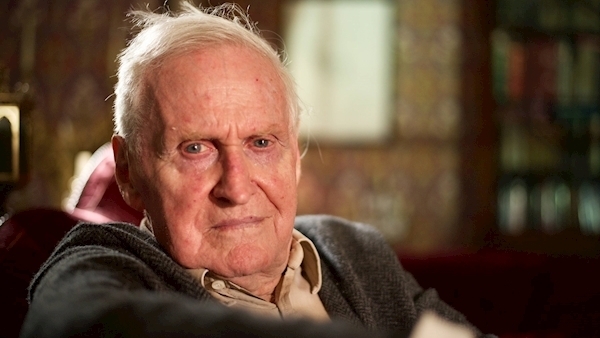
From Tolstoy and The Third Man to the Lord of the Rings film that never happened, John Boorman tells Richard Fitzpatrick about some of his major influences
Culture that made me: John Boorman on his influences through the decades
Celebrated filmmaker John Boorman recently published the latest volume of his memoris.

From Tolstoy and The Third Man to the Lord of the Rings film that never happened, John Boorman tells Richard Fitzpatrick about some of his major influences

The magic of going to the cinema

When I was a child during the Second World War, we went to the cinema to see films.

What I remember most vividly about it is the Saturday morning matinees and the children’s films that I used to see and what impressed me more than the films was the audience – it was full of kids screaming and talking and moving around.

The films didn’t really inspire me. When I was 17 or 18, I started seeing films that really inspired me like David Lean’s. There was something about being with a large audience and a big screen at the cinema. The experience was magical.

You had a high degree of concentration. Today with Netflix coming into your living room – and you’re probably doing other things at the same time – it’s a different and somewhat degraded experience.

The Third Man and the storytelling possibilities of film

Carol Reed’s The Third Man made a great impression on me. It was almost a perfect film because you had that Orson Wells character and this romantic element – where the main character is looking for this girl.

Right at the end, at a cemetery, he’s standing there and she walks right past him. It was heart-breaking I thought. What it – and filmmaking – made me feel was that stories could be done in a way that was different to any other format.

Orson Welles in The Third Man

Good filmmaking is about storytelling and the way you tell the story. You try to make it in a cinematic manner. The images must carry the story.

You try to lure your audience into the film and to lose their bearings – to get them drawn into the film. That’s what you try to do.

David Lean and the importance of being meticulous

When I made Point Blank in America, David Lean was shooting Ryan’s Daughter in Ireland. MGM sent Point Blank out to him to look at and he sent me a wonderful letter.

It was a reversal in a sense in that he was writing me a fan letter. We became friends until he died. He was a brilliant filmmaker.

He was meticulous in his preparation and he was deeply involved in every aspect of the filmmaking. He was very demanding. Peter O’Toole played Lawrence in Lawrence of Arabia. I asked him how it was working with David Lean.

He said: “I was a galley slave. The only thing that got me through that film was that I promised myself that I would take my revenge on all the other directors I worked with subsequently.”

He said that Lean was on top of him every step he took and every word he uttered.

You know that David Lean had O’Toole’s nose changed to make him look more like Lawrence? The only way to make a decent film is to put in the work.

I have described filmmaking as a form of joyous slavery because once you start a film you’re with it night and day for the whole time you’re making it. It takes every ounce of strength in your body. Every step you take is dedicated to the film.

How The Lord of the Rings helped with Excalibur

Back in 1969, I said to United Artists that I had in mind to make this film Excalibur. They said: “If you’re interested in that what about Tolkien’s The Lord of the Rings? We have the rights to it. Would you like to do that?”

So I spent a year on it, working with a writer. Then UA were very short of money. It was too expensive for them so I didn’t do it.

I did correspond with Tolkien. I told him what I was trying to do and he gave me some advice. It was interesting.

To make The Lord of the Rings with the halflings, I had to figure out solutions to the special effects problems.

A lot of the research I did became very valuable when I came to make Excalibur a decade later. This was before the advent of computer-generated images so all the special effects for Excalibur were done on set.

We did nothing in post-production. It was all done with a camera. Many of those tricks I came across in my research on The Lord of the Rings.

Fellini and Antonioni – two Italian masters

When I made the film Leo the Last the leading part was played by Marcello Mastroianni and through him I came to know Federico Fellini quite well whom I greatly admired. Fellini’s films were magical.

They were so rich and full of character. They were marvellous with wonderful images. Michelangelo Antonioni also I admired.

It was extraordinary that Italy could throw up these two completely opposite geniuses at the same time. Antonioni was so minimalist and Fellini was so extravagant.

Prior to both of them, Italy had several filmmakers making very naturalistic films like The Bicycle Thief. It wasn’t a tradition they were following from – it was just that the times threw up two extraordinary men at the same time.

Dostoevsky’s Crime and Punishment

Growing up, I loved reading the Russians. I was a voracious reader.

I loved Fyodor Dostoevsky’s Crime and Punishment. It was fascinating the way they dealt at that time in the nineteenth century with law and punishment in Russia.

If you committed a crime, you were sent to Siberia to one of these farms and you worked there. The prisoners ran the prison.

It was about your behaviour that you were judged on rather than being given a sentence.

A committee of other prisoners considered your case and if you were doing a good job, you could be released.

War and Peace and freemasonry

I loved Leo Tolstoy’s War and Peace. My father and paternal grandfather were both freemasons.

When I got to be 21, my father said to me: “Time for you to become a mason.”

I said: “Tell me what it’s about.” He said: “I can’t do that. You have to trust me.” I said: “I’m not sure I trust your judgement.”

So anyway I was reading War and Peace and there is a description in it of masonry. I read it and I went to my father and told him I now knew all about it.

He said: “You can’t.” I said: “I do”, and I started telling him and he was shocked. He went white. He said: “Where did you get that information?”

I said: “Well, it’s all in War and Peace.” I showed it to him and he was absolutely stunned. I never took up the option of joining the freemasons.

  • John Boorman’s memoir, Conclusions, is published by Faber

x

More in this section

Cookie Policy Privacy Policy Brand Safety FAQ Help Contact Us Terms and Conditions

© Examiner Echo Group Limited










