Return of the rude boy: Neville Staple of The Specials
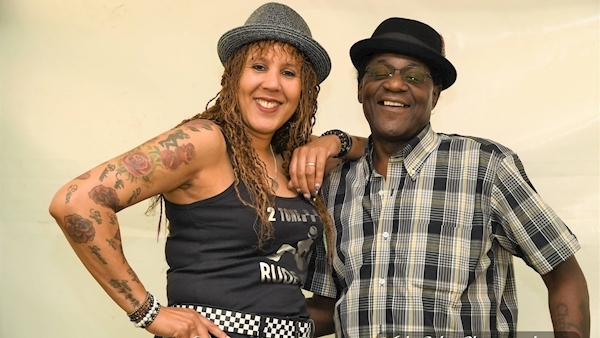
In advance of his gigs in Cork and Dublin, about the heady days of the 2 Tone movement, and the recent tragic stabbing of his grandson
Neville Staple, who was born in Jamaica and moved to the UK as a child, was an iconic figure in the heady days of the Coventry-based 2 Tone movement of the late 1970s and early ’80s.
As well as a stint with the first line-up of The Specials, and several tours with the band when they reformed, he was also a member of Fun Boy Three and The Special Beat.
Now 64, he still tours with his own band. His autobiography, Original Rude Boy, was released in 2009. In 2018, Staple’s grandson was killed in a stabbing in Coventry, triggering Staple to get involved in a campaign against knife crime.
“We moved from Jamaica to Rugby when I was five years old and I didn’t move to Coventry until I was about 17. I grew up in a musical family: we used to play a lot of sound system; my dad and cousins used to play a lot of ska, and then I got into playing on my cousin’s sound system, so I’ve been in music from a young age. I remember The Skatalites.
I saw Desmond Dekker on Top of The Pops and I thought, this is the first time I’ve seen a black person on TV, I’d love to do that.
I must have been about ten. After we moved to Coventry, I used to run a sound system called The Messenger that belonged to my cousin.”
“Sound systems are built like a wardrobe, with four speakers in them. It’s basically like a portable DJ booth and you build your own speaker boxes. We used to come along and set it up in houses: you’d play them in a house, with valve amps. You wouldn’t be allowed to do it now because it’s too loud.
Toasting is just DJing over backing tracks. A lot of people hear it and think it’s inspired by rap, but it’s actually the other way round. I think rap got their idea from Jamaicans who used to toast over backing tracks.
Coventry had a scene. We used to go to all these gigs and discos, but the [right wing extremist] National Front would be waiting outside. We would get in fights with them. That didn’t stop us going out to all the clubs that played reggae, and English music too.”
“That’s a really difficult question because with sound system, you have to have a load of records so I definitely can’t remember the very first one I ever got. I’d love to answer, but it’s too hard.
All I can remember is that for the sound system, I bought loads and loads of ska and reggae albums. We used to go into Bristol to the record shops, and Pete Waterman [DJ, producer and one third of the massively successful Stock, Aiken and Waterman song-writing team] had a big love of reggae in Coventry. I used to get records from him, but I won’t say how.”
“We had a club called Holyhead Youth Club, for black and white kids. We would be in there, setting up the sound system to play.
At the time, I knew about punk, but I was in there one day setting >up and I heard this music playing that was like punk mixed in with ska.
I thought it was interesting and I popped my head around the door and it was Jerry (Dammers), Lynval (Golding) and a different drummer and singer. I just said to Jerry, ‘can I come around with you guys and be the roadie and tidy up the wires and that?’ And he said, ‘ok.’
They were playing one gig in London and I was out by the sound desk. There was a mic there and they were playing an instrumental and I just started toasting over it, from the desk.
I was toasting and they shone a light down and Jerry just called me up on stage and the rest is history.
“I played with The Clash and they were pretty good; we toured with them when we got our record deal with The Specials. It was the energy they brought to the stage, I really loved that. They were great guys as well and I really got on with them.
But I also really liked the Sex Pistols, funnily enough. A lot of black kids thought it was funny music, but I was the type of guy who would get into anything.
A lot of the guys I knew who were doing sound system thought that this mixing punk and ska was weird, but I’ve always been like that: inquisitive and wanting to try new things.”
You’ve endured some tough times, including the terrible tragedy of your grandson’s murder. Do you have music to see you through the dark times?
“After my grandson died, we released ‘Put It Down’, which is set to the backing track of ‘A Message To You Rudy’.
Dandy Livingston, who wrote ‘Message To You’, agreed that we could use it. It was to tell young people that knife crime is a terrible thing.It’s really hard to get your mind off something like that, but to help get my mind off it, I would listen to old-time ska, all my old records.
And my wife, Sugary, is really good; when I had a knee injury from a car crash eight years ago, she was my support then, too.
I was in a three-car pile-up and I wasn’t wearing a seatbelt, and it nearly took me out. I still have problems with my knees.”
“There are lots of bands doing a lot of new ska at the moment.
I really like Death Of Guitar Pop; they’re great. But to be honest with you, I really can’t get into a lot of the other stuff. A lot of what you hear on the radio just sounds like ‘Dsh, Dsh, Dsh’ to me.
I can hear the drums but I can’t hear the melody. It all seems like throwaway music, like X Factor music. So I don’t listen to a lot of radio."
Keeping ska different and new and exciting is important; The Specials never had a female vocalist and I think that’s something ska can really do more, so Sugary sings with my band now. We write together, do production together. I want to be a bit different from how it used to be, just blokes singing."
Even when we’re playing some of the hits, we’ve injected a new dimension into it. Keeping things fresh and different is really important.”
CONNECT WITH US TODAY



Be the first to know the latest news and updates

















