The trends you'll be wearing next season - from London Fashion Week
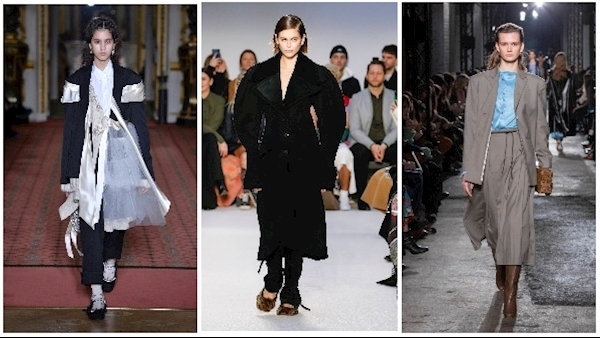
Amid all the uncertainty, this year’s London Fashion Week has quietly set about its task of asking how women will dress for the decade ahead, writes Paul McLauchlan.

The trends you'll be wearing next season -  from London Fashion Week

Amid all the uncertainty, this year’s London Fashion Week has quietly set about its task of asking how women will dress for the decade ahead, writes Paul McLauchlan.

In times full of angst and uncertainty, what role does London Fashion Week play? The answer is unchanging: with a new decade on our doorsteps, designers are tasked with paving the way forward to dress for the new decade. How will women dress in the 2020s?

At LFW, the shows had some answers. Some paid respect to fashion’s ongoing relationship with its environmental impact, for some it was lip service, and for others it was supported by credentials. Some offered grand ideas, while others accounted for some practical wardrobe offerings. Here are some of the top moments from LFW.

A determined wardrobe

When you’re tasked with school runs, a deluge of emails and meetings, making dinner, choosing from a wardrobe of reliable clothes that makes that daily workload more manageable, but nonetheless determined, is a welcome addition.

London designers have you covered. Victoria Beckham, who has been showing in London for two years now, extrapolated her workwear with shorter hemlines this time. The office is to become that bit more fun with her abbreviated skirts and deep V-necklines (“gentle rebellion” she called it) but nevertheless resolutely formal with roomy coats and structured suiting. The best look was a cobalt sweater thrown over a blue shirt and a grey wool skirt — crisp as a winter’s day, it was sophisticated, convincing, and wholly advisable for your wardrobe needs.

At Burberry, Riccardo Tisci expressed himself through practical winter garb in trench coats, car coats, and quilted jackets, alongside long collarless coats, tailoring, jodhpurs, and fluted skirts, in the brand’s trademark muted tones.

From Margaret Howell’s wool turtleneck and pleated shorts, her blanched white shirt dress, or knee-high socks and brogues, perfectly perfunctory, to Roland Mouret’s “’80s politicised outlook” which influenced his “values over trends” attitude — look to wide-shouldered tailoring contrasted with chiffon-organza dresses, fine-knit polo necks, and draped shirts, for inspiration: straightforward and stylish.

Rejina Pyo had a “feeling of determination” with a contemporary wardrobe patchworked with carefree but elegant pairings: a regenerated cashmere button-up cardigan with a leather skirt; a staid grey skirt suit brightened up with a sky blue silk shirt.

Richard Malone, too, spoke of determination, with the remnants of a harness forming the basis for his newly-introduced tailoring in an earthy palette made from natural dyes. Nothing says self-possession like his flattering fit-and-flare suiting and recycled leather jackets.

Clothes for thought

Some designers are not afraid to challenge their potential customers with unconventional silhouettes, ideas, or colour combinations. There were plenty to think about in London.

CLOTHES FOR THOUGHT JW Anderson

JW Anderson’s show artfully considered volume and movement, a recurrence in the Irish designer’s handbook. Coats had either exploded shawl collars (in leather or embellished feathers) or mid-Victorian leg-o’-mutton sleeves. Knitwear adopted a go big or go home attitude, while oversized dresses, in silver, gold and turquoise, were woven with shimmering metallic fringe, and skirts undulated with every step. The birth of a new style, perhaps.

Molly Goddard has the same idea with her billowing tulle frocks in primary colours which evoke a childlike enthusiasm that contrasted with the more grounded knitwear she offered in mohair and wool. Follow these steps to brighten up your day.

Meanwhile, Christopher Kane was thinking of creation and temptation in his singular pseudo-sexual way. Boxy tailoring with geometric geontrics patterns referenced a love triangle between man, woman and nature, with Lucas Cranach the Elder’s Adam and Eve printed on a top, while G-string lace eveningwear and cutout details posed a more daring contrast. There was a sparkling silver dress so tantalising that if you buy it, could you too, be tasting forbidden fruit?

More modest, it was in shades of sangria, cherry, olive, and sage that Roksanda’s textural endeavours were fashioned for a lifetime: think a colour-blocked gilet with a tidy oat blazer, a chocolate leather overcoat with a saffron jumpsuit, amongst other fabric combinations and colourways, while the more glamorous, flowing orange and indigo gown with lantern sleeves delighted in its painterly palette.

Grand gestures

Renowned for its gritty and naturalistic spirit, London is equally known for its grand gestures — designers wanting to dress you as if your quotidian is one big cocktail party or gala dinner.

Simone Rocha does this best. The Irish designer imbues poetry into her garments, this season trawling a seaside weekend, with a romantic earthiness that is at once transportive but wholly believable. It came in virginal whites and stark black, with flashes of blue and purple and blown-out florals. There was an accent on tailoring and trenches accented with satin sashes in ruby and sapphire, and tulle dresses grounded with chunky Aran knits, symbolising an aesthetic that is at once feminine and masculine, polished and thrown-together, pared-down and dressed-up.

The same could be said for Erdem who traditionally serves evening wear, favoured by royals and celebrities alike, but this time he imbued a practical spirit into his work. There was tailoring (enlivened with pearl embroidery) and coats (a trench with pearl detailing and a frosted lace neckline). He had been looking at Cecil Beaton photography, a post-war fantasy.

Less suitable for the office: Richard Quinn married couture and fetishism. Roses in full bloom became dresses, glistening pearls and crystals decorating his florid patterns, to dramatic effect. It was so beautiful you could almost forgive the latex bodysuits that they were accompanied by. Nothing is quite as it seems in Quinn’s garden.

Dancing queens

Emilia Wickstead advised abbreviated hemlines ‘cropped to dancing length’, though it was the sculptural draping on streamlined jumpsuits that truly made you want to get your dancing shoes on.

Keep an eye on emerging label 16Arlington who are skilled in this field too, executing the precision of a draughtsman when it comes to evening-wear in lace and leather, babydoll dresses trimmed with marabou feathers, and daring snakeskin tailoring with a glossy finish.

Halpern’s party dresses continued to tow the line between good and bad taste with garish brights and extravagant proportions. Cocktail dressing was abound at RIXO and Olivia Rubin too, while slightly more formal looks were seen at Edeline Lee. Now to the dance hall.

The Irish contingent

Some of the strongest shows at LFW were from Irish designers Simone Rocha, JW Anderson, and Richard Malone, rich in ideas, pure in heart.

THE IRISH CONTINGENTSimoneRocha

Paul Costelloe stuck to his guns, elevating the uptown girl aesthetic with his signature nipped-waist bold-shoulder tailoring, alongside some intuitive public transport upholstery graphics, concluding with a procession of his trademark ’70s-inspired fare: jumpsuits and baby doll dresses printed with dandelions.

The pair at RIXO, including Irish woman Orlagh McCloskey from Offaly, showed predictable party dresses, with unexpected Christian Lacroix prints, that are sure to thrill their loyal following.

Newcomer Katie Ann McGuigan nodded to faded photos of North London in the 1970s and 1980s, giving her ultrafeminine way a sense of raw urbanity, mixing florals with geometrics, 80s-inspired sportswear (note: a puffer jacket filled with recycled water bottles) with louche knitwear.

Building a sustainable wardrobe

For those concerned with ethics, London designers covered this base too. Richard Malone’s ongoing commitment to sustainability was evident in his show as he published a manifesto outlining his practice: well-paid workers, hand-dying from natural sources, building a regenerative farm in India that produces the collection’s cotton.

SUSTAINABLEWARDROBE RejinaPyo

Rejina Pyo listed shearling from offcuts and regenerative cashmere in her show notes.

A 222-year-old company, Johnstons of Elgin, updated their fibre sourcing, fabric innovating, and garment manufacturing to make their cashmeres more accessible and modern, forming the basis for a seasonless wardrobe.

Roland Mouret said, “the core fabrics (equating to 54% of the outer fabrics buy) will be fully eco-friendly.” Moreover, the brand aims to be carbon neutral within the year. “through offsetting the brand’s remaining negative carbon footprint”. Preen by Thornton Bregazzi used sustainable viscose, tweed from end-of-line stock at British woollen mills, recycled wool, and upcycled deadstock.

However, it was their ideas that mattered most. (Malone, Mouret, and Pyo focused as much on sustainability as dressing the self-determined woman.) It was at Preen where co-creative directors Justin Thornton and Thea Bregazzi truly let their ideas run wild. There was talk of Italian art which was rendered in 14th century painting blue, elaborate gold sequins, and pixelated prints of Jesus Christ.

The standout looks were a dress with glittering gold top, a turquoise bodice and argyle sweater skirt, and a red sequin midi with gold sleeves. Built from leftovers, the way the two coalesced generations and ideas was utterly compelling.

Invest in our future where possible.

x

More in this section

Cookie Policy Privacy Policy Brand Safety FAQ Help Contact Us Terms and Conditions

© Examiner Echo Group Limited













