Secret Diary of an Irish Teacher: of daydreams and 'maths anxiety'
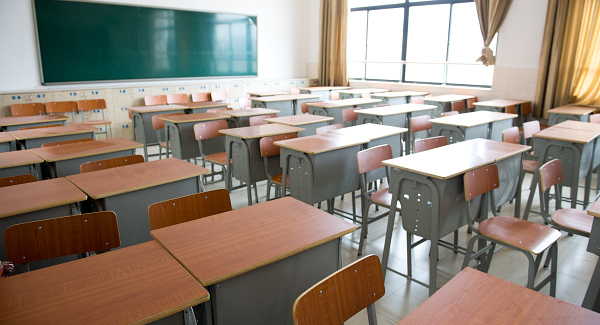
I’m staring out the window, gazing at trees. I’m 15 years old. My maths teacher is busy, untangling knots of algebra on the blackboard; my friend is taking it all down. She’s using different coloured pens, underlining, highlighting. There’s a tug in me because I know I should be doing the same.
But that same tug is intoxicating. It feeds my rebellion. It “smells like teen spirit”.
Maths is just not for me.
Classrooms across the country still reek of this fear and lack of interest when it comes to maths. Maths anxiety is a perceptible thing and according to a Timss report in 2015, it affects almost half of students in second year across Ireland, 35% of them saying it makes them ‘nervous’. With the incentive of 25 extra points, numbers of students taking higher maths rose last year by about a third to 18,000.
But 40,217 took Higher level English. Maths is still viewed as a harder subject by students.
But where would we be without mathematicians? Certainly, we wouldn’t have phones, computers, the ability to forecast the weather (however bad we might be at it!). Maths is deeply creative. It’s invention. It’s the palate and easel of engineers, computer scientists, and of all digital technologies. It’s our future in a very real way.
Ironically, It’s perfect for the day-dreaming rebellious artist I cast myself as, back in my teenage years. Quite literally, it’s “the wonder that keeps the stars apart,” to borrow from poet andromantic, EE Cummings.
So why is there a disconnect between maths and our perception of it?
Perhaps it’s how we talk about it. I made a mistake at 15 but I didn’t make it in a vacuum. I grew up thinking maths was boring; you were either good at it or not. Maths felt like an army line-up — we were the rank and file, doing our drill.
That’s how classes were organised and taught. Teachers streamlined us into Honours and Pass early on. As years went by, more and more dropped out, injured by a lack of confidence, a fear of making mistakes, of not being good enough. I was that soldier.
The root of this problem grows outside the school walls. It’s nurtured at home before secondary schools get a look-in. I have certainly said to my kids, “Your dad will have to help you with that” or “I was never good at maths.” Reports suggest that how a kid feels about maths aged nine, plays a role in how they will feel and perform in secondary school. Our societal attitude towards maths can be damaging. We have the same notions when it comes to the arts. True, very few of us have the talent or perseverance to play to huge concert halls but music is for all of us. As is art. As is literature. As is maths.
The inspirational maths teacher in our school drapes her classroom in colourful and exciting displays. “It’s everywhere,” she exclaims, her eyes shining. “It’s in everything.” Recent moves by the state to re-brand maths are a welcome development, she explains. Project maths and now the new junior cycle are all about applying maths to real-life situations, which she lauds.
This same maths enthusiast places a gag on all staff when it comes to phrases like ‘I could never do maths.’ A whiff of that anywhere at school and we’re in serious trouble. We all know it.
For maths week, we’re invited to wear patterned clothes and to make meaningful links in our subjects. “The biggest obstacles I face in my classroom are preconceptions about maths,” she tells me. “We’re all responsible for that.”
She’s echoed by another mathematician I interviewed this week, a retired maths professor who explains that the joy of maths comes in its problem solving. “Once you get the ‘wow’ look in a kid, you know you have them.”
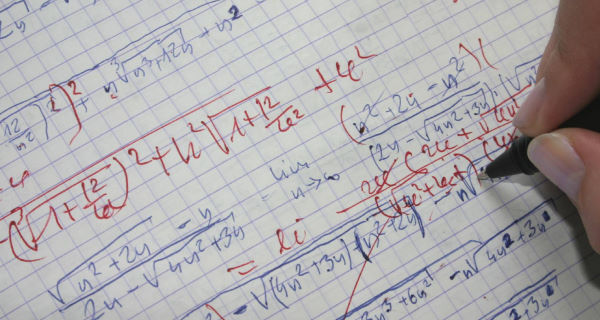
He first fell for maths at 10, when his teacher told him that no-one had ever figured out how to trisect an angle. He went home and devoted hours to solving the problem. At university, he learned the proof of its impossibility. Did he regret the hours spent? Not at all!
This is significant. Maths is pre-designed to build resilience. Resilience is a buzz word in all educational circles of late. We are seeing a huge rise in anxiety, and SPHE teachers are constantly espousing resilience in the face of failure. But perhaps we’re missing a trick. Resilience is part and parcel of the experience of maths. It’s simply not about being good at it or not. It’s about enjoying the process of problem solving. Enjoying it so much that you accept failure as part of the experience of life.
So don’t say to your kid that you were “never good at maths”. If they start to feel downhearted about not getting the answers right, tell them about Fermat’s last theorem, worked on for 350 years until finally solved by a shy mathematician. Unsurprisingly, he first heard of it when he was 10 years old.
If they gaze out the window, ignoring the numbers, tell them how mathematician Fibonacci studied trees too. That he discovered the sequence of numbers relating to the golden ratio that exists throughout nature, in seashells, daisies, and pinecones.
As it turns out maths is everywhere and everything. It’s there, even when we gaze at trees.


CONNECT WITH US TODAY



Be the first to know the latest news and updates









