Special Report: UCC forensic expert sifted through wreckage of Towering Inferno
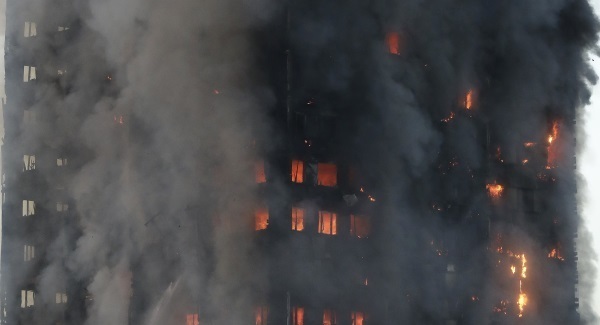
For a couple of months in 2017, Martin Keogh spent 12-hour days picking over the charred remains of Grenfell Tower apartments.
It was a surreal and harrowing experience for the man whose day job is technical director of a hi-tech surgical skills lab at the Assert centre in University College Cork. He talks to Catherine Shanahan about the physical and emotional toll
ON June 14, 2017, when 72 people lost their lives in one of the UKâs most devastating modern-day disasters, Martin Keoghreceived a phone alert from Kenyon International Emergency Services Inc, a global outfit that specialises in disaster management.
A phone call followed at a later date to put him on standby for anticipated work in the wake of the horrific blaze that had torn through Grenfell Tower overnight, causing mass fatalities.
Martin had signed up with Kenyon three months previously at the suggestion of a University lecturer in Edinburgh, Scotland, during a discussion with students on human tissue identification and forensic disaster work.
At the time, Martin was studying for an MSc (Masters) in Human Anatomy.
âHe mentioned that this might be something we may get involved with and no-one expressed any interest, but I checked it out online afterwards and I saw this company and I thought âI can do thatâ.
âI had the experience having worked in pathology in a mortuary. I had the skillset, so Idecided to register.
âI had also worked with the Coastguard in New Zealand and Australia and as a reserve fire fighter, so I actually kind ofticked all the skills that they needed.â
The way Kenyon works is in addition to having its own core staff, it maintains a roster ofon-call specialists, like Martin, that it can call on at any time to quickly and effectively respond to disasters around the globe.
It looks for specialists close to the scene of the emergency.
They have on their books, so to speak, forensic people, police, investigators, fire investigators, psychologists, odontologists (dentistry), pathologists, anthropologists, DNA technicians âso they can basically set up in a disaster zone to help local government deal with a problem.
âOnce youâve been accepted with your particular skill set and profile, you have to be available.
âIf an emergency occurs and you are on their on-call roster, you will be given three choices; The first is to respond within 12 hours saying âI am available nowâ and they say âOk, go to this airportâ and they get you to wherever you need to be.
âOr you say âI am not available now but I will be in two to three weeks time â because they tend to work in rotations so that might suit. âOr you say âIâm not availableâ and itâs not a problem.
âMy first contact fromthem was in relation to theManchester bombing the month before Grenfell (22 people lost their lives during an Ariana Grande concert at theManchester Arena), but in the end, they didnât need me.
âBut it was still a shock to get called up for Grenfell, because, like I said, Iâd only been registered with them for three months.â
Although he received a phone alert on the day of the disaster, it was two months later when he got the official call-up. Martin happened to be in the right part of the world at the right time.Kenyon âactivatesâ those close to the disaster to save on response times and on cost.
So how did he feel when he got the call-up?
âI thought âthatâs exciting, thatâs interestingâ, and also Iâd just graduated and I was at a point where I was looking for work, and doing a little bit of part-time teaching, so it fitted in with my life. It wasnât a case of having to tell an employer that I needed lots of time off.

âHaving said that, most employers will let you go because you are doing something thatâs humanitarian. So I was excited, but a little bit concerned as well as to what I was letting myself in for.
âI wasnât really incredibly clear about what I was going to be doing either because there were multiple agencies involved.â
They said âWhen can you startâ and they wanted me to do athree-week rotation. So if you were on forensic recovery and personal effects, consultant work, which I was, they wanted you to do a three-week rotation. So I did 12 hour days for three weeks back to back.â
Tough Gig
Because Grenfell Tower was a crime scene by the time Martin was brought in, everything had to be taken out, even if partially damaged or burned.
âSo we had to warehouse itoff-site and it was all beingcatalogued and photographed and indexed, so ultimately it could be returned to the victims or the victimâs family or if it needed to be used for evidence in court so thatâs why itâs offsite.
âSo we were all transported by bus into the Grenfell Tower every day at 7am to start work at 8am. Then we had to clear the security corden and the police area around it. And more often than not, get through onlookers, protesters, press.
âIt was intimidating, sometimes you were going out covering your face. The crowd could be hostile. Some people wereasking if we were doing it forfinancial gratification. We were there because we were trying to help deal with a disaster in our own small way.â
Who did people think that you were?
Well they didnât know. They werenât being told. We obviously werenât police. And we werenât turning up in a firetruck either, we werenât turning up like in a Quincy show with âMedical Examinerâs Officeâ on the side of the car, so they didnât really know who we were.
They were being constantly watched, Martin says, by press camped out in buildings in the area and photographers with long lenses. They were instructed to be professional and courteous at all times. And they had a dress code.
âIt was a scorching hot summer, but we werenât allowed to wear shorts and things like that, you have to show respect on a site like that, with so many mortalities.â
Changing kit
Getting into the Tower took time. There were multiple security checks, anyone entering or exiting had to sign in and sign out, and the different recovery specialists went to their own designated area âwhich was set up like a mini camp with portocabinsâ, Martin says.
âThe Met Police were there, the Disaster Victim Identification Unit with the Home Office. Then there were people like me, contracted by Kenyon and one or two agencies/specialists like forensic archaeologists, structural engineers.
âAnd then of course there were those I would describe as ânotorietyâ â politicians, government officials, local authority members, media â people that came touring for the day to get an overview of what was going on.â
Martinâs team leader would brief them for the day, before everyone got kitted out.

âWe had the fully protective hazmat (hazardous material) suits, and, importantly for us, breathing apparatus as well because of all the damaged particles.
âEverything was sealed up â boots, gloves, torch, powerpacks, any other equipment you needed for the day. We even wore goggles.â
Once kitted out, there was more security clearance before going through the last security gate into the actual Tower. Everyone knew exactly what floor they were headed to before passing through.
âThat was your floor for the day, or your room for the day and thatâs where you would go. It was a hazardous site because of the collapse of stairways and the lifts.
âWe had to go up the stairs. We were in plastic white suits in high summer wearing hard cap boots, carrying a lot of kit. You had to take everything up with you, lights, power sources, cameras, video equipment, anything you might need.
âWeâd all head off in an orderly fashion. And thatâs when you really realised the scale of the disaster, because as you were heading over the bridge from the (rail) station towards the Tower, you could see the burn marks on it, that oblique slash you always see in the pictures.
Once across the bridge, you would head to the base of the Tower and then you would walk around all the bits that had also been damaged in the base area, like the gardens and a play ground area and a kindergarten area with a lot of broken glass.
âAnd all the strewn things that had been blown out the window were still around there, some of the evidence. And then you had to work around the safety scaffolding that was going up and wind your way up the staircases to where you were assigned.â
Each floor obviously had a different amount of damage; a different smell; a different kind of feel; a different level of destruction and disaster to it, so certain floors were worse than others.
âA lot of recovery of humanremains had already been done and you were just fine tuning, looking for other bits and pieces to go along with that.
âThe top level was the kind of forensic/mortuary hub andobviously youâd have other teams going up at the same time as you. It was just like a conga: Fire investigation, building safety, forensic, archaeology, teams of people going up for a designated time.
âYou also had to regularly check back with Control that you were ok and when you were in position you had to report back eg âWe are now in flat 9, floor 13â.â
The Damage
Inside the tower was a daunting experience with scaffolding specialists coming around every hour to measure and monitor it for any movement.
âIt was scary because it was unsafe. The scaffolding contractors were checking movement using GPS to make sure it was safe for everyone to be in the building. They were measuring using ultrasound and GPS and once theyâd finished the whole building, they had to start all over again.
âIt was an ongoing process. But they were very strong on health and safety.â

âBecause there was slippage all the time. Itâs not my remit, but I imagine high winds and environmental factors would make a difference Was Martin assigned to any particular floor?
âYou moved around, depending on the day. I generally tended to work between the 7th and 12th floor.â
âSome of the flats didnât really look fire damaged, he says, but there was water damage everywhere and dampness.
âAlso things had been moved away from exit and access points, some of the things just looked normal, like people just got up and left, like a meal at the table and the kitchen was half in use, or the laundry was half in use.
âAnd then what we found in other rooms, there was a delineation within the flats â like half of it was fine and the other half was either thrashed from the water or totally burnt and charred, likely totally, right down to the reinforced iron in the concrete, so you could actually see that. And you need 1000 degrees plus for that to happen.â
In other flats, everything was destroyed by fire, a metre of ash, burned, charred material, anything from bed mattresses to furniture to animals.
âI do remember a dead cat which was just like a cartoon cat, it just froze,â Martin says.
There was also a strong smell, even though Martin was wearing breathing apparatus. Another thing that struck him was theinstructions and commands that had been written on the wallsinside the tower by fire crews, as a back up for their communications while fighting the fire.
That depended, he says, on his remit for the day.
âIt was dictated by other people and sometimes by theinteraction the authorities were having with the residents â there might be a brief to look for and recover a specific thing. Things like wedding rings, they donât burn.
Personal possessions, computers, phones, which people need to get on with their lives, or sometimes, more emotionally connected things, photographs, wedding photographs, that kind of thing, particularly for those people who were unfortunate enough to have lost a partner or a family member, obviously you want to remember that person, you wanted their personal effects.
What happened to recovered possessions?
Everything went back to the security of the warehouse, Martin says, after it had been photographed on site at Grenfell Towers. Everything in thewarehouse was indexed and catalogued.
Tight Security
Security was paramount at Grenfell. The apartments were locked and anyone who entered to carry out work was filmed doing so.
âUsually one of the team would do the filming â a fire investigator or someone from CID (Criminal Investigation Department) or forensics.
âSo the flat was locked when you got there. You would be filmed opening the door and you would film everything as it was in the apartment.
âYou did your morning and then you came off. So you had to de-suit, secure out, get searched, come all the way through, decontaminate, sit down for half an hour, and then kit up, go back in, do the whole thing again.â
Everything that was recovered has to be indexed - where it came from, what room it was in, what part of which room, what cupboard it was in, if there were any cupboards left.

âSometimes you didnât know because everything was just collapsed or burned and you literally had to hand-sieve material to try and look for a ring or money or that kind of thing.
âAnd all of that had to be indexed and sent back to the warehouse for further corroboration.
âEverything had to come out. If there were instructions for specific things they wanted you to look for that day, they would be taken to the site supervisor and they might be given directly to the family, the police or whoever specifically requested it.
âEverything had to come out because once the apartments are knocked, thatâs it, anything left is gone. So the idea was to clear every flat and retain anything that could be retained for family and also in case it needed to be used in evidence - if you needed items to corroborate who was in the flat,â Martin says.
Martin did recover some items - which he declines to identify - that represented potential evidence of criminal activity. In these cases, the âappropriate specialistâ was called â perhaps from CID â and they would make an assessment.
âAnd then it could become another crime scene within a crime scene for that particular item or items.â
âIt was a regular occurrence, it would be fair to say,â he says. Equally, some items which appeared suspicious turned out to be entirely innocent.
And what about instances of people trying to get into the complex to retrieve items?
âYes,â he says. âSometimes they were subsequently identified as residents and sometimes they were not. There was a very tight security cordon but one or two people attempted to get through.â
Emotional Toll
Some of the toughest days on the job were those when Martin entered a flat where there was evidence of children having lived there. âThere were nurseries in some of those flats and toys and photographs and soccer kits and memorabilia to do with children.
âSome people were very emotionally hit by that back at base â you know â when all the stuff has been cleaned up and photographed and indexed and you get a reference number and you start to get a little bit more information and you start to identify that there was a family at that flat.
âThat was emotionally very hard for a lot of people. We are all human and thatâs why people are doing it [disaster recovery]. People do it for humanitarian reasons as well as doing a useful and an interesting job.
âYou are doing it because you want to help people in some way and you can help them to reclaim aspects of their life. But If you are a young mother or you are a new father and you are in our team, I mean thatâs really going to hit home â âIt could have been me, kind of thingâ.
All those working on the tower had access to a psychologist wherever they felt the need.
âBefore, during, after, anytime. After every deployment you also got a follow up from a psychologist.â
Martin spent five months in total at Grenfell. Rotations of three weeks on, three weeks off.

âThey do that to give you time to recover and you need that to recover physically. Itâs very physical, very demanding, especially when you are wearing all of that kit.
âSo you get time to recover, to reconnect with your own family and to rethink things and they will always give you the option of not going back.â
âI thought often about why I was there and who I was doing it for. Sometimes I would feel frustrated at the size and scale of the whole operation. I could spend a week going to the same room in one flat working through, collecting, identifying everything in there âand then you think âthatâs only one room, thatâs only one flat, thatâs only one floor and there are 1- 8 flats on every floorâ, so itâs a huge task.
âThen there was the multi-agency involvement and people had different objectives and sometimes those objectives would change â usually for operational reasons â but that could be frustrating.
âBut we were there to do a job and not to dictate.â
âI thought it would be very interesting and I thought I could be quite a useful member of the team because Iâve got quite a mixed [skills] background. So I was in a position to be supportive of other people and thatâs why really and because itâs dutiful to try and help out in a disaster. Is it the kind of job that would give you nightmares? Or did you just see it as a job?
âI did it on a professional basis. I think if I hadnât had previous experience of working in pathology with the NHS clinically and research- wise in the coroner service, it would have been a little bit more harrowing.
Recovery
The image of the scorched tower stays with him. He says the images on the news gave the impression that all you had to do was look at the skyline of the area and you would see Grenfell, but actually, itâs tucked away.
âWhen you are walking the streets, itâs not visible as part of the skyline. But if you hit it at a certain angle, suddenly itâs there, in your face.
âThe scale of the thing was the most shocking thing about it and I think I sometimes couldnât believe that I was doing what I was doing.â
What was the most treacherous part of the whole operation?
On some of those floors, there were no windows or there were bits of window frame that could at any point collapse in or out. There was still stuff falling down. And you could see the cladding outside on the floor in bits and pieces and so it was quite provocative to think of that.
âAnd if you were on floor nine you had this huge view of London and if you were able to stand on something that gave you a bit a height and if you were able to look out and down from the window, then you could see the carnage around the footprint of the building and imagine how awful it would have been on the day.â
When the wind was up, really howling, things could blow in and out â anything from a bit of burned plastic to a bit of wood to potentially a bit of human remains, human tissue.
âSo we had to wear goggles. You didnât always know what was blowing around you.â
Martin, who has three grown-up children, took some time out after his five-month stint at Grenfell.
âI went to the Himalayas and trekked around for three weeks and camped at altitude. And that was very pure and very clean and very nice.â
Martin, whose regular day job at the Assert centre in UCC involves facilitating the delivery of surgical skills courses and simulated training, did meet some of the residents of Grenfell when they came to survey their effects.

âThat was putting a human face to the tragedy, which was difficult. Working in the flat, everything is anonymised, but when people came to check on their belongings, you could connect them to a particular flat, and even though you donât know that person from Adam, you recognised them from the picture in the broken picture frame that you had catalogued.
"You could see the person in context. That was difficult.
âBut the people we did engage gave us very positive feedback, for instance, you would hear âThank you so much, I just wanted to get my husbandâs wedding ring back, it means so much to meâ.
"That was very sad, but actually, you felt good for being able to help that person out. When you could do that, it was great.â
The first report from the Grenfell Inquiry, published in October, found that London Fire Brigadeâs preparation for a tower block fire such as Grenfell was âgravely inadequateâ and its lack of an evacuation plan was a âmajor omissionâ.
Phase two of the inquiry began on January 28, 2020, following which the final report will be published.















