‘We have 12 years before runaway climate change’
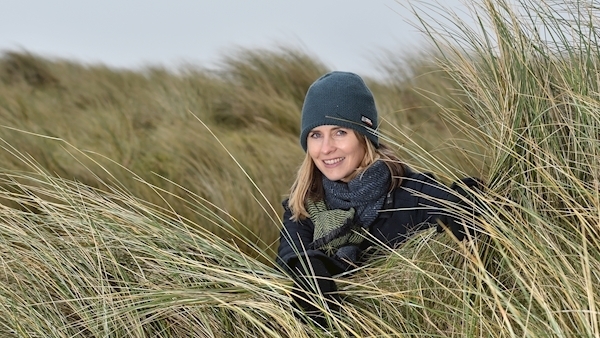
For activist, Martha Farrell, the impact of climate change on the Maharees tombolo is indicative of a global crisis.

‘We have 12 years before runaway climate change’

For activist, Martha Farrell, the impact of climate change on the Maharees tombolo is indicative of a global crisis.

“I was born in Fahamore. That’s on the Maharees, a natural tombolo in Co Kerry. My family has been connected to this area for five generations. These days, my husband and I live in Camp. We’ve three children aged 12,18, and 25. I teach at the IT Tralee, in the school of business.

The Maharees has special area of conservation status. The sand dunes are protected under the EU’s Habitats Directive. The area is home to Ireland’s only natural population of endangered Natterjack toads.

When we started looking at dune conservation, renovation and protection, we didn’t understand that under the Marram grass was an abundance of flowers such as bee orchids, and an abundance of insects and other wildlife.

The Maharees has endured chronic erosion for years. My grandfather used to fear approaching storms for what they would do to the sand dunes.

The erosion came to a head in the winter of 2015/2016 when a succession of Atlantic storms blew sand up and over the dunes, making the road impassable, and requiring the council to clear up to three feet of sand on 17 occasions.

Then in February 2016, NUI Galway’s Dr Eugene Farrell rallied the whole community to take action. 200 of the 300 or so who live in the area attended that public meeting. People were at their wits end with worry about the community’s future.

It was then that the Maharees Conservation Association was founded and I became one of the 15 involved in that.

For the first few months, we focussed on strengthening the dunes that are our natural coastal defence. As unmanaged access was causing damage, we sectioned off the more sensitive areas.

We also planted Marram grass which is useful for trapping sand and building dunes.

Sea levels are expected to rise a metre by 2100. If we don’t manage to keep the temperature from rising within the safe limit of 1.5 degrees above industrial levels, the low-lying Maharees could be cut off in two places by water during flood events.

This is something I find shocking.

The tombolo existed 10,000 years ago. People have been living on it since the Bronze Age. There’s an early monastic site there. All of these people living there for years and in the space of two generations it will be utterly altered.

I feel so sad about that and it will happen to more places than the Maharees. Many other areas with coastlines of soft clay or sand will face the same fate, if we don’t transition to a low carbon society on time.

We learned from the UN’s Intergovernmental Panel on Climate Change (IPCC) report that we’ve only 12 years to turn things around before runaway climate change.

That is frightening for, and really worrying to me, as I’d thought we had 30 or 40 years.

We’re the last generation that can make changes to protect our kids from being consigned to living in the really complicated disaster that is the future of climate change. A future in which we Irish will lose places we love and people all over the world will be displaced.

What’s not getting out enough is the message about the impact of climate change.We can watch documentaries about future flooding in Ireland but many believe it won’t happen.

People tend to talk about waste and plastic in terms of climate change when its emissions that are the big issue.

When I think of the areas in the world where people don’t believe in climate change, I feel a little hopeless. But there is time, the solutions are there and change will happen if we pressure the politicians.

At home we’re not perfect, but we’ve stopped burning coal and turf and we pumped our walls to improve insulation. Also, we’re hoping to retrofit the house to have an air-to-water heat-pump installed.

My husband set aside half the garden for biodiversity. It’s mown only once a year to allow wildflowers such as the common birdsfoot trefoil and the cuckoo-flower to grow.

We don’t aspire to go vegan but we have cut back on red meat and and last summer for the first time, we grew vegetables.

Sense of duty

In September, we took the Lisa Singleton challenge to eat only local, Irish-produced food. Other than that we car-pool, and help clean up the beaches.

Limiting the flights we take is necessary too. There was a time when I’d have flown from Kerry to Dublin for meetings, but now I take the train instead.

Once you learn about what needs to be done there’s a sense of duty to do what you can in the time that’s left to take action.

Many are resistant to carbon taxes, but the financial outlay being sought now is tiny compared with that to come if we don’t change.

I read it could cost $450bn to protect San Francisco Bay from rising seas and that flood-damaged businesses in Venice might get up to €20,000 compensation. In Ireland, the cost of future climate change issues will be met by our children and grandchildren, the taxpayers of the future.

Of my kids, the youngest is the most anxious about climate change. The older two are of the opinion that science and tech will provide solutions.”

More in this section

Cookie Policy Privacy Policy Brand Safety FAQ Help Contact Us Terms and Conditions

© Examiner Echo Group Limited













