‘My duty is to pull people’s heads out of the sand’
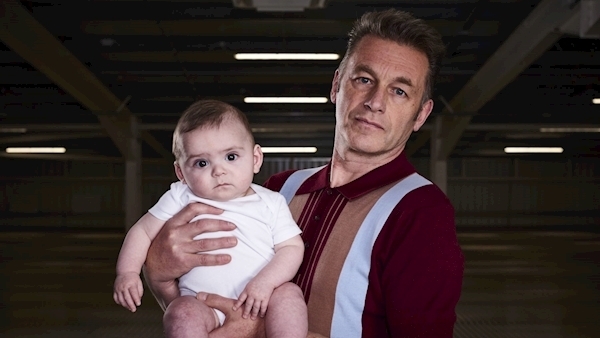
By 2050, there could be 10 billion humans living on Earth. It’s a prediction Chris Packham is gravely concerned about.
We’re all aware of the climate and environment emergency, suggests the Southampton-born broadcaster, 58, and there are plenty of conversations about biodiversity loss taking place. But the massive threat posed by human population growth is the “elephant in the room”.
So, he decided to make a documentary for BBC Two, titled Chris Packham: 7.7 Billion People & Counting.
“If people watch this and they don’t think, then we are doomed...” muses the naturalist. “We did everything we could to make this a programme which would prick up people’s ears, because it confronts them with any number of different issues — ethical, moral and biological.”
Packham travels around the globe in the one-off film to see the impact that our rapidly growing population is having.
“The human species is not particularly good at change, but we’ve reached a point in our history when, confronted with a number of serious problems, people are still putting their heads in the sand.
“My duty is to pull people’s heads out of the sand and ask them to look, listen, think about and to come up with ways in their own lives where they can make some positive progress.”
Among the places he visits is heads to Lagos in Nigeria. “Unfortunately, when it comes to addressing these issues, the finger is often pointed at sub-Saharan Africa, because that is where the human population is growing most rapidly at the moment, and most rapidly in Nigeria - hence our visit to Lagos,” he explains.
“We were very keen to address the fact that you can’t point the finger at large families with poor black children as being the problem.
Actually, at this point, we [in developed countries] are the problem, because, when it comes to exacerbating climate change and biodiversity loss, we are the principal consumers.
In exploring how the world canre-balance its consumption to accommodate the needs of more than two billion more people, Packham even analyses his own lifestyle choices.
“Because I’ve got no kids, but I’ve got 10 hoovers, and the cost of producing those, and the batteries that are in them, and replacing them... That’s the damage that we are doing, in this point of time.”
On the topic of Packham having no children, a particularly memorable segment of the documentary sees him interview a couple going through IVF treatment.
When he was in his 40s, Packham was diagnosed with Asperger’s, alifelong disability that affects how a person makes sense of the world,processes information and relates to other people.
“It’s something I can almost invariably cope with, if I know what I’m going to be doing. If you’re going to go into a situation that you know it’s not your comfort zone, then you canprepare yourself and manage yourself in that situation.
“What was an issue was this programme was bound to expose me to the worst excesses of the things that I fear most.”
“I’m a pragmatist,” the talkative star continues. “I have to remain in a position where I’m not going to give up. Because I’m determined to make a last stand, if that’s what it comes to, for our environment.
And to do that, I need to remain active and I need to remain capable about thinking about things, about communicating as best I can to try and make people change their minds in the right direction.
"So, not being overwhelmed and swamped by pessimism is something that I have to constantly guard.”















