Mixing myths and reality: Cork's Sean Fitzgerald releases impressive illustrated book of Celtic tales
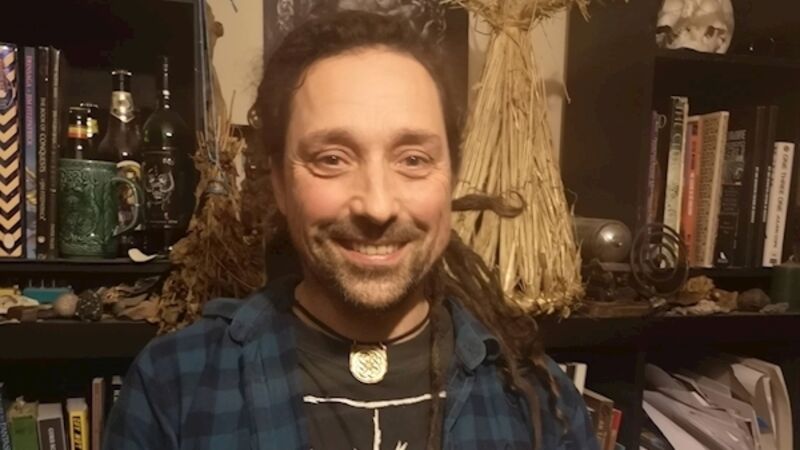
Cork illustrator Sean Fitzgerald drew inspiration from his Donegal base for his impressive book of Celtic tales, writes
IT’S A long way from Cork to Donegal, but the counties which top and tail the island have been a huge inspiration to illustrator Seán Fitzgerald in his latest project.
The Cork native moved to Donegal 15 years ago and is perfectly placed to appreciate the dramatic landscape of the northern county, from his home looking across to Tory Island. It is an area steeped in myth and folklore — according to legend, the island was home to the Fomorians, a malevolent warrior tribe loyal to the Celtic god Balor.
Fitzgerald has drawn on many such myths for his book The Last Battle of Moytura, a beautifully- illustrated retelling of the wars of Celtic gods and druids.
“Tory is about eight miles out from the coastline here, you can see it when you’re walking the mountains. You can’t help but think of the history of all the placenames and the stories,” says Fitzgerald.
“There’s a graveyard near me called Tullabegley… but before that it was called Lugh’s mound, after the god Lugh [Tuatha Dé Danann]. There was an archaeologist who went down there and he reckons that it was almost like a Hill of Tara, it’s surrounded by mountains and there’s a natural amphitheatre, at the mound of the graveyard.
“It’s just a theory but he reckons kings and queens could have been crowned there. And, while in the books we would have read growing up, Balor was killed down at the Battle of Moytura [Sligo], according to local folklore, he got killed in an area here called the Poisoned Glen. I also read a book that said Balor was buried beneath a boulder in Cork, so these stories do travel.”
It was in Cork that the seeds of inspiration for the book were sown, when Fitzgerald began working with the Meitheal Mara boat-building project in Cork, founded by Pádraig Ó Duinnín.
“I was into mythology as a kid but what really kicked it off for me was in 1992 when I saw a sign in the Quay Co-Op, looking for anyone interested in marine heritage. So I rang the number and it was Pádraig, who was looking for someone to work on currachs. So I went up to the Lough, and there they all were, speaking Irish. It was so unusual, to see that in the middle of the city. I was fascinated.”
While working on the currachs, Fitzgerald became more acquainted with unfamiliar elements of Cork folklore. “Pádraig would come out with these great stories — there was one that has always stuck in my mind about Clíodhna, who was queen of the banshees. I had never heard of her but she is very associated with Cork. She was in the magical world of Tir Tairngire and she fell in love with a Corkman, as you do,” he laughs.
“She asked to leave Tir Tairngire to go and be with him but before she could meet him, she was swept away and drowned. The older fishermen in Cork would say if you fell off the boat into the sea, you would hear the banshee cry, and that was Clíodhna.”
Fitzgerald later went on to study animation in Dublin before working in multi-media design. However, he had a yearning to return to the more pure art of his youth, which had been nurtured by his involvement as an ‘anarcho-punk’ in the zine culture of Cork, recently showcased in an exhibition at UCC.
“The zine exhibition was brilliant, and the work [curator] Siobhan Bardsley put in was amazing. It was great to have that scene recorded. A lot of it would have been forgotten, all those bands, all the tapes and it was fantastic to remember all of that. When I did the fanzines, they were plastered in sketches and drawings. I started in school so when I should have been studying, I was doodling,” he laughs.
Fitzgerald says he was also greatly inspired by the colossus of Celtic art, Jim Fitzpatrick.
“He was a huge influence. I actually rang him for advice and he was really helpful.”
However, while Fitzgerald had a desire to get back to basics, the artwork in The Last Battle Of Moytura is extremely detailed and sophisticated, drawing inspiration from the intricate ‘Celtic knot’ work which features in the Book of Kells.
“I wanted to make it as authentic as possible. It is an old text so you don’t want anything too flashy. It is all hand-drawn and a lot is based on the Book of Kells. You can see a lot of the same characters, except I change them around slightly.”
Fitzgerald’s keen eye for detail also extended to the stories featured in the book, which is based on extensive research of original manuscript sources.
“It’s all storytelling but there’s probably some truth in the mix there too. When I was researching the book, I went to UCC, where they have fantastic resources. I wanted to get to the source material. Another thing in the book is that I was trying to get in landscapes and places was the thing that was important to me because that what was got me really interested in it.”
Fitzgerald’s love of landscape and his activist roots in Cork are also reflected in his involvement in a community-based organic farm project in Donegal.
“It is very environment-focused — we are trying to use alternative energy sources, and we do corncrake tours. The people who are interested in the project also tend to be earthy, so they are into the whole Celtic thing as well. We have great conversations, especially some of the older people who come in, they’re great for the local folklore.”
Fitzgerald has been extremely gratified by the positive response to The Last Battle of Moytura,
“I have done other illustrations and I’ve been involved in other stuff as a graphic designer but this is my first time going out on my own and I was a bit apprehensive.
“First, I wondered if it would appeal more to tourists but that hasn’t been the case. One friend of mine who read it said he didn’t know half these stories. I think some of them get played down. We are familiar with Lugh because of the work Jim Fitzpatrick has done and the stories of Na Fianna and Cú Chulainn, which are great. But there are so many stories out there, you could spend a lifetime doing books of them, really.”
www.instagram.com/seanfitzgeraldart


CONNECT WITH US TODAY



Be the first to know the latest news and updates