Made in Munster: Meet the West Cork dollmaker who uses bio-degradable materials for her craft
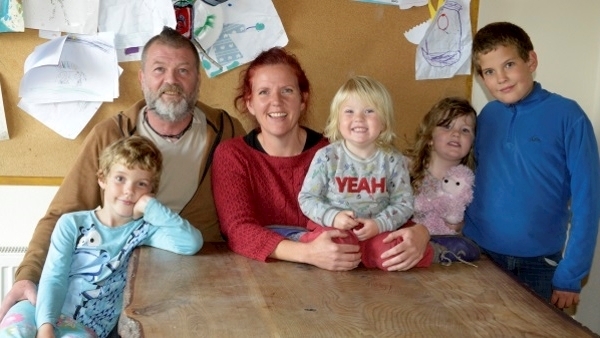
Laura Whalen is a Munster-based dollmaker and mother-of-five, and the founder of the Bábóg project, a community crafting drive to make a commemorative doll for all the babies born in Irish mother and baby homes.
Her partner, Garry Barrett, is a former bar-owner who volunteers with the RNLI.
Garry helped Laura in unattended home births for both of their babies, and since then has started his Cuidiú training as Ireland’s only male antenatal teacher.
Laura and Garry live in Courtmacsherry in West Cork.
They have five children in their blended family: Rebe, 14, Benny, 11, and Joa, 9, who are Laura’s children from a previous relationship, along with four-year-old Ena, and toddler Brock, who is two.
“We think about being mindful about what we feed our children, but we need to be mindful about what we give them to play with as well.
"I’ve always been interested in the environment, so the dolls I make are from all-natural materials and most of the cottons I use are organic as well.
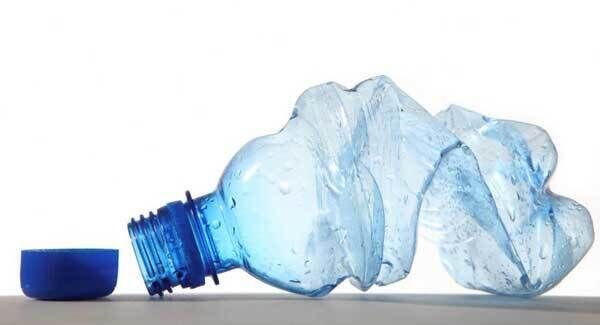
"They’re completely bio-degradable, essentially. Most plastic dolls are made from PVC.
"Not only are they completely non-recyclable, but during their manufacture, humans are exposed to toxins like mercury, dioxins, and phthalates.
"That’s just in the manufacture.
“When dolls and other toys made from that soft, rubber-like PVC are made, the toxins actually get released, which is called ‘off-gassing.’
"Some toys can smell quite strongly for quite a long time; that’s the toxic smell of the plastic itself.
“In our house, we have a lot of wooden and handmade toys. I find them more beautiful, but they’re also repairable.
"When five children are playing with things, they break a lot. Wood is repairable, cloth is stitchable, but if plastic breaks, it’s in landfill.
"We do have some plastic toys, but they’re open-ended things with a very long life like Lego and Playmobil: Things that will be played with for years.
We don’t have press-button battery toys that can only do one thing; the child quickly gets bored of them and you end up buying something else to keep them entertained.
"You just need a few things, and they can imagine them into being anything.
“We’ve asked family and friends not to give the kids toys, but to give experiences instead.
"So their granny, instead of getting each of them a plastic toy wrapped in packaging for Christmas, gave us tickets for a family outing to the panto.”
“One of the best toys is a clothes peg and a twig: You can make it into an aeroplane and race them in the garden.
"A log will become the airport, a snail becomes a bus because they use their imagination.
“We’re big into the ocean, boats, the seaside, rock-pools: We do lots of outdoor games, build tree houses, plant herbs and flowers: The youngest kids know some of the names of the birds we see, and the older kids know all of them.
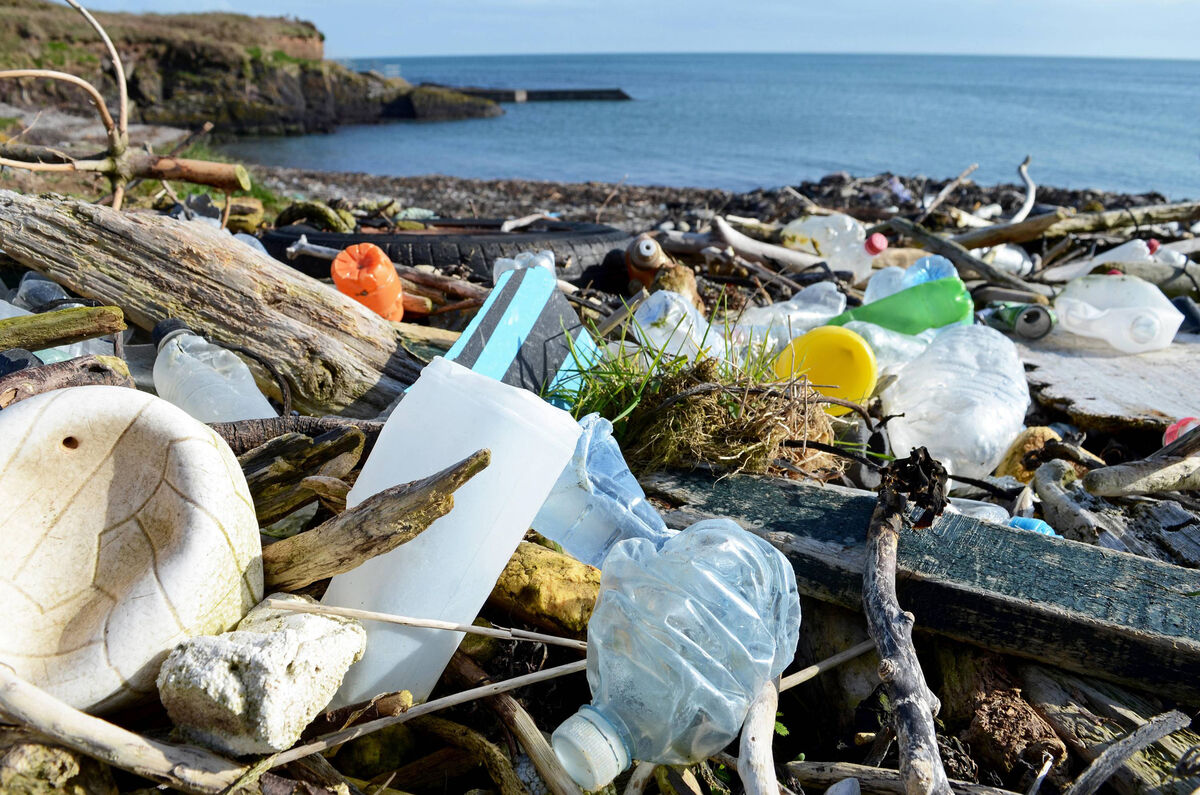
“I do a lot of work with the Courtmacsherry lifeboat. At sea, you see first-hand the impacts on the shoreline of pollution and things like animals ingesting plastic.
"I’ve seen seabirds lying dead on the rocks, that have choked to death on plastic rings from beer cans.
"It’s about respect for nature and learning life skills. Brock is two and he knows how to use a sander; that will be with him for the rest of his life.
"They’re brought up to be kind: Kind to nature, kind to other people, kind to themselves.”
“We’re on a really low budget, and it’s the bane of my life that if you’re on a low budget, shopping green is really hard.
"We reduce where we can; one of the things we do is make all our own bread.
"I have a bread-maker and we buy a big paper sack of flour every couple of months.
"We go through a loaf a day so that reduces the plastic that would be wrapped in.
“I shop in farmers’ markets when I can, but we can’t always avoid the plastic packaging that comes with food at the moment; it’s not an option for us to buy everything organic.
“We don’t use bought cleaning products; we make our own. But all these things are time-consuming so we have to be really on the ball and it’s a bit of a juggling act.
"We’re conscious of reusable lunchboxes and water bottles.”
“We do have two cars: a small car and a big, nine-seater van we call Heavy George, who is 24 years old.
"We wouldn’t trade him for anything. Rebe gets the bus from the end of the road to secondary school.
"I’m doing a health management course in Kinsale, so I drop Benny and Joa to school, then drop Ena to kindergarten in Clonakilty and then go to my course."
“Rebe went on the last climate strike with her school, and we took the four younger kids up to Cork for it; they made their own placards and it was incredible to be a part of.
"Joa is on the Green Schools committee and he’s quite involved: He actually implemented a little change at school himself.
"All the kids were using those Twistables pencils, where the pencil lead is in a plastic thing instead of wood.
"They were on the school book list.
"We worked out the school was going through 3kg of plastic per year in Twistables alone: After more research we discovered that Crayola accept the twistables back for recycling so they have a box in their school now.
"At just nine, he’s discovered that you can change the institutions that are in your life, which is a fantastic life lesson.
“We’re in the Tidy Towns group and we have litter pickers and we always take plastic litter home and put it in the bin, any time we go to the beach or the woods.
"It’s really beautiful out there, what’s on our doorstep: It’s really worth saving.”

CONNECT WITH US TODAY



Be the first to know the latest news and updates

















