Children of the Troubles: Exclusive extracts unveil story of two forgotten child victims of conflict
A new book reveals 186 children under 16 died in the northern Ireland conflict.

Children of the Troubles: Exclusive extracts unveil story of two forgotten child victims of conflict

A new book reveals 186 children under 16 died in the northern Ireland conflict.

Joe Duffy and Freya McClement's book, Children of the Troubles, goes on to recount each death in the form of heart wrenching personal memoirs.

In the introduction to the book - which was published last Thursday - Duffy and McClements reflect on how they found it “incredible” that there was no single and official list of child Troubles fatalities.

The authors have ageed to share two of these stories with the Irish Examiner.

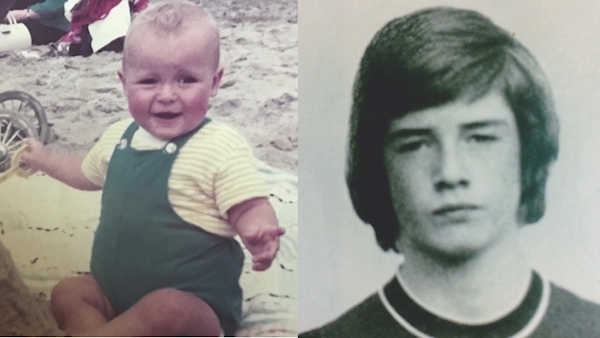
Colin Nicholl, aged 17 months and from Oldpark, North Belfast.

Date of Death: 11/12/1971

The late Colin Nicholl

The summer of 1971.

Neil Diamond’s song ‘Sweet Caroline’ was on the radio, but the Nicholls had their own version. 'I used to hold him and I would sing, "Sweet Colin mine”, says his father Jackie.

That summer Colin’s parents had taken him on holiday to the seaside resort of Portrush.

‘We had the greatest week,’ remembers Jackie. ‘We were staying in a boarding house and there were other kids there and they just lapped him up. They loved playing with him, and of course he loved it.’

The Nicholls had adopted Colin the year before. Initially, Jackie had been uncertain, but as soon as he saw the baby, ‘everything in my life changed. I couldn’t let him go, and then they said we had to wait a week to adopt him and it nearly broke my heart waiting.

‘He was fantastic, a beautiful child. He probably would have grown up saying, “Thank God I’d a different dad to you for looks.”’

Colin had just begun talking – ‘mostly “Mum”, none of the “Dad”’, says Jackie – and was his Granny Nicholl’s pride and joy. ‘My mum loved minding him, it was like a new lease of life for her.’

With Colin’s mother Ann away – her nephew had been knocked down and killed in England – his granny had been looking forward to babysitting that Saturday. Instead, her neighbour Helen Munn offered to take the children for a walk.

Colin and Tracey were killed when the IRA bomb exploded outside the Balmoral Furniture Company on Belfast’s Shankill Road.

In England, Ann saw Colin being carried out of the wreckage wrapped in a blanket; she had no idea it was her son.

The Nicholls went on to adopt two more boys; every time Jackie hears ‘Sweet Caroline’, he thinks of Colin. ‘You think of wee things, like whenever I was working and I came home his wee head would have lifted, even though I know it was probably my own imagination telling me he knows I’m home.

‘He’d have been almost 50 now. There’s a void – he should have been here to look after us.’

Jackie still keeps Colin’s favourite toy – a wooden rattle given to him by his neighbour.

‘Margaret next door gave it to him and it was with him all the time. You can see his wee teeth marks on it. I have it by my bedside, and it’s going to go into my coffin.’

Rory Gormley, aged 14 from Lisburn Road, South Belfast.

Date of Death: 27/11/1972

The late Rory Gormely

Every evening, shortly after five o’clock, the ten Gormley children would take their set positions at the table in the long, narrow working kitchen of their home in Windsor Park in Belfast – boys on one side, girls on the other – as their mother Doreen served out the dinner.

The fifth boy born into the busy household, 14-year-old Rory was fascinated by nature. ‘He built a bird table in the back garden and he saved every little creature that crawled all around him,’ says his sister, also called Doreen.

‘He actually joined the World Wildlife Fund and was very proud of it – he wanted to be a vet when he grew up.’

But with ten children, the only pets allowed at home were rabbits and goldfish.

Rory’s father, Peter, was an eye surgeon in Belfast’s Mater Hospital and was involved with the civil rights movement; both parents were keen that their children get a good education, and Rory and his brothers were sent to St Malachy’s College on the Antrim Road.

Holidays were spent in the family cottage in County Donegal. ‘We absolutely loved the holidays,’ remembers Doreen. ‘They were so carefree. Rory would swim in the sea every day at Carrickfinn beach, play hurling and run around the sand dunes.’

A ‘slim, fit, quiet boy’, Rory had been an altar boy and was learning to play the piano accordion. He loved playing soccer with his friends and following his favourite team, Everton, and never missed Match of the Day on Saturday night.

Each morning Peter would drive three of his sons, their friend and Doreen to school on his way to the Mater. Having dropped Doreen off first, at St Dominic’s on the Falls Road, Peter took a shortcut through the loyalist Shankill area as their usual route had been closed by the British army. As he did so, UVF gunmen opened fire.

Rory was killed; his father and his brother Paul were injured. ‘Mr Gormley lifted out his dying son, and as he ran down the street calling for help he was fired on again.’

It was believed the family were targeted because their school uniforms identified them as Catholics.

From then on, there was an empty place at the dinner table.

Rory’s month’s mind fell at Christmas – his presents were to include an encyclopaedia, some books on animals, and an Everton annual.

Children of the Troubles by Joe Duffy and Freya McClements is published by Hachette Ireland and is available now

x

More in this section

Cookie Policy Privacy Policy Brand Safety FAQ Help Contact Us Terms and Conditions

© Examiner Echo Group Limited













