Tom Baxter coming out the other side with new album
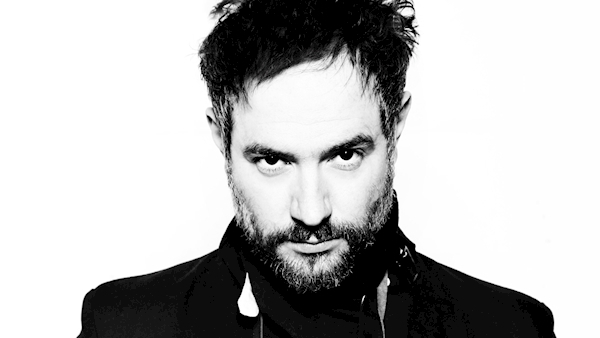
In advance of his Cork Folk Festival gig, Tom Baxter tells how his new album was inspired by a difficult divorce.
Years before Ed Sheeran, Hozier or George Ezra, rumpled English songwriter Tom Baxter was the biggest thing in sensitive-dude confessional rock.
His 2007 single ‘Better’ was hugely popular. If you’re old enough you may still remember its swooping melody and Baxter’s Sheeran-esque croon as he soared high towards the chorus.
The song was also something of an Icarus moment for the bashful singer. It marked his commercial peak. Chart-wise Baxter never did better than ‘Better’.
Off stage meanwhile, his personal life was going into a nosedive. He and his wife were trying to start a family and a punishing touring regime wasn’t helping.
Alas, and despite their best efforts, the marriage eventually unravelled. Exhausted and in a bit of a heap emotionally he stepped back from writing and recording.
And so Baxter became one of 21st century pop’s most conspicuous missing in action cases. He looks back on that period now and sounds genuinely surprised at having come through.
“Tumultuous is the best word,” he says, ahead of an appearance in Cork for the city’s Folk Festival. “My new record is in many way me explaining in words the process of going through a divorce.”
That album, The Other Side of Blue, is his first new music in 11 years (discounting a mini-LP sold directly to fans).
The Other Side of Blue is a storming comeback by the now 46-year-old, born down the road from Ed Sheehan’s stomping ground of Suffolk. It’s strikingly stripped down — a departure from the lushness of his early work. That reflected the shifting circumstances of his personal life.
“The record has a dark and a light side,” he said. “It met my partner, my new wife. So I went through the darkness and came out the other end.”
‘Better’ captures what was special about his early output in thrillingly lush fashion.
But now his forties and with so much personal history behind him he is no longer in the mood for laying it on quite so thick. Hence the minimalism that is a hallmark of the new LP.
“My first two records were quite embellished,” says Baxter.
“Lots of strings, lots of production. Which I was very proud of. But for his one, I challenged myself to strip everything away.”
He is also a visual artist and perceives clear parallels between the two disciplines. Sometime you want to splash details across the page. On other occasions, less is more.
It’s like a painter getting rid of all his technique to work in a more simple abstract way. It has its challenges.
"When you’re writing a song down, it becomes very clear whether there’s enough in it. The lyric is going to prominent. If there’s nothing but the lyric holding it down, it’s probably not going to hold anyone’s attention.”
Baxter, whose real name is Thomas Gleave, didn’t hate being successful. But nor did he take to it with Sheeran-esque levels of enthusiasm.
“You’re managing lots of new things you’ve never had to worry about about before. Suddenly you have lawyers and accountants.
"Everything gets very complicated. Everything is suddenly about money, or at least it seems that way. I enjoy success.
"What’s not to like about it? I have no interest in the fame game.”
All of that being said he wasn’t wanted to be too melodramatic about his absence. He never stopped working. But creating good, interesting music is not always straightforward. It takes time.
“I find making record really difficult. I love writing. But if I could sit down and write an amazing song every day — I’d be a much richer man.”
The industry has been convulsed by profound changes during his time away. Such, at least, is the perception. Baxter isn’t sure things are all that different.
It used to be about getting on Top of the Pops. Now it’s about how many streams you’re getting on Spotify or Apple. There are still middle-men, still radio pluggers.
"There are still all these people doing all the backroom work.
"You have these huge companies that are paid by artists to do their social media. People think the artists are doing it themselves when they aren’t. It’s all a bit of a farce.”

CONNECT WITH US TODAY



Be the first to know the latest news and updates









