Simon Amstell: When honesty is the best policy
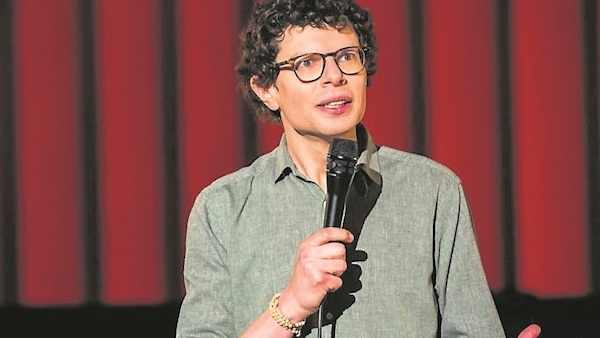
Stand-up comedian Simon Amstell tells about coming out, and how an ayahuasca experience in the Amazon helped him to let go of his insecurities.
All Simon Amstell has ever wanted is to make an impact. Family, friends, strangers, a jeering studio audience: “It’s been all of my training since the age of 13,” he declares. “How do I impress people?”
“Oh OK, let’s learn to juggle. Magic? Oh, I’m not very good at magic. Juggling doesn’t seem as impressive as I thought it would be. Let’s try stand-up comedy. Oh, that seems to be going quite well. OK I’ll be funny. I’m safe if I’m funny,” he lists, not pausing for breath.
“But then eventually a sadness develops...
There were times in the past when I was standing on stage annoyed that people were laughing because I thought, ‘I should just be able to stand here and not be funny, and you should laugh at me anyway!’
Up until that point it worked. Growing up in a Jewish family in East London, Amstell went on to perform on the comedy circuit in his early teens, before making waves as the youngest finalist to appear in the BBC New Comedy Awards.
Yet it was his subsequent TV career that would propel him to new heights. First on Nickelodeon and soon after Popworld, where he quickly garnered a Marmite reputation due to his off-beat presenting style. It was that same trademark wit that landed him the top spot on hit panel show in 2006. A gig that would go on to win him several awards and see him lauded as one of the UK’s best comic entertainers.
That was more than a decade ago. And having suffered with depression and anxiety in the years that followed, it’s only now — on the cusp of turning 40 — that he’s at his happiest.
And, rightly so, he wants to shout about it in his latest work: Simon Amstell: Set Free — his first original comedy special for Netflix.
An amalgamation of his What is This? tour and his previous show, To Be Free, the stand-up performance - filmed at EartH Hackney — is billed as a personal exploration of mental health, masculinity, sexuality, love and the journey to finding peace.
It was a chance for Amstell — who hid his sexuality for years — to finally tell his truth. “The harder thing is to lie. To wear a mask the whole time and to pretend to be somebody else, and to pretend not to have these feelings. To pretend not to feel sad or embarrassed or ashamed.”
“The whole point of [this show] for me, is saying the thing that I feel most ashamed of, out loud, because then the shame can’t breathe anymore,” he reasons. “If you want to be free, you have to tell the truth.”
Amstell credits an ayahuasca-led epiphany in the Amazon rainforest for granting him this newfound freedom.
“What’s funny is that I drank ayahuasca [a psychedelic fungus] seven years ago,” he remembers, “but when I wrote and performed the show before drinking it again recently — a month ago — I was really set free. And now I’m even freer! I let go of a lot of absurd insecurities and it was great,” he adds.
hello. this is ‘set free’. coming soon to netflix. thank you. pic.twitter.com/IJzkbRYRBa
— Simon Amstell (@SimonAmstell) August 9, 2019
“I ended up in a ceremony, taking all my clothes off, and dancing like an absolute lunatic.
The shamans found it very amusing. The next morning when I saw them, they laughed and pointed. But luckily the ceremony had freed me of shame, so I was fine!
What does his family think of his compulsion to reveal all on stage?
“My mum came to the actual live show — my dad is yet to see it,” says Amstell, who has spoken of the difficulty he faced coming out to his father.
“My mum is just thrilled that I’m in showbiz,” he adds. “And I have grown to agree with her; I’ve got less cynical about it.
“And then my relationship with my dad is a bit more complicated, but it’s getting to a place where it’s almost boring; they just all expect it from me now.”
As for his boyfriend: “It’s really freed us both. It’s only the truth, it’s not oversharing from my perspective.”
For me, in this country, we don’t overshare, we under-share. So all I’m doing is readdressing the balance.
“It means we’re not embarrassed or ashamed of anything that is going on in our relationship.
“Why pretend that you’re something other than you are? We’ve done too much pretending; we must be free!”
He recalls a time on stage recently where he suddenly saw his teenage-self, a boy once desperate to impress.
“I was talking about losing my virginity in Paris to thousands of people, and I thought, ‘Wow, if your 13-year-old self could see you, saying the things you’re saying now, in public, it would totally blow his mind’.
“Because it didn’t seem possible to be who I actually was. But what actually was impossible was not being who I actually was,” he says.
Now, he says, “if I stay focused on just following my spirit towards whatever it wants to follow, then I’m pretty all right. I feel like then I’ll end up doing whatever I’m supposed to be doing in the world.”
“That’s the wonderful thing about the spirit,” he finishes. “You just follow it and surrender.”

CONNECT WITH US TODAY



Be the first to know the latest news and updates

















