Sky Matters: August, 2019
If you watched any of the footage of the Apollo 11 moon landings in July, you could hardly have missed the pock-marked nature of the lunar surface.

Sky Matters: August, 2019

By Niall Smith

If you watched any of the footage of the Apollo 11 moon landings in July, you could hardly have missed the pock-marked nature of the lunar surface. Everywhere you look there are craters, ranging in size from metres to tens of kilometres.

Each one records the last moments of cosmic debris as it crashed into the lunar surface. The violence of the collisions has been etched into the history of our small neighbouring world for billions of years in most cases. Unlike the Earth, the Moon has no weather patterns.

If you lived there you would see an almost utterly predictable cycle of 14 days at 110 Celsius (lunar daytime) followed by 14 days of minus 200 Celsius (lunar night). There would be no “Irish summers” (like the one we’re experiencing so far this year) or September Indian summers (wouldn’t that be nice this year). Weather forecasters would be able to predict the weather with 100% accuracy.

This lack of a dynamic weather system, essentially because the Moon has long since lost any atmosphere it once had, means there is no way for the craters to be eroded by wind or rain or ocean as is the case on the Earth, where it is very difficult (though not completely impossible) to find evidence of massive impacts.

The amount of debris in our solar system, leftover from its formation some 5 billion years ago, is now at an all-time low. Most of the small rocks or grains of dust that didn’t end up as building blocks for the planets have long since plunged into the Sun and been vaporised.

Some larger boulder-sized objects, in very small numbers, continue to lurk in the dark between the planets. Many are too small to detect; others are large enough to be tracked by telescopes to determine whether there is any possibility they might collide with our home planet. (It is less clear what we would do if we knew in advance of such a collision, though new technologies designed to deflect, or possibly destroy, rogue debris are gradually being tested, just in case.)

Larger chunks of debris come in two basic types. They can exist as a solid rocklike structure or they can be composed of a loose aggregate of dust, ice and frozen gases. This second grouping, typically a few kilometres in diameter, is the realm of the comets.

As comets get close to the Sun their gases evaporate, often violently, spewing dust into space and leaving a trail in their wake that we see as a potentially spectacular tail often millions of kilometres in length. Because of its vast size it presents a target that the Earth may find hard to avoid as it sweeps behind the comet on its own orbit around the Sun. This is exactly what happens to the tail of a comet known as Swift-Tuttle. Although the comet itself is only 13km in diameter and although it returns to the vicinity of the Earth only once every 133 years, its tail lingers in an orbit that Earth collides with every year.

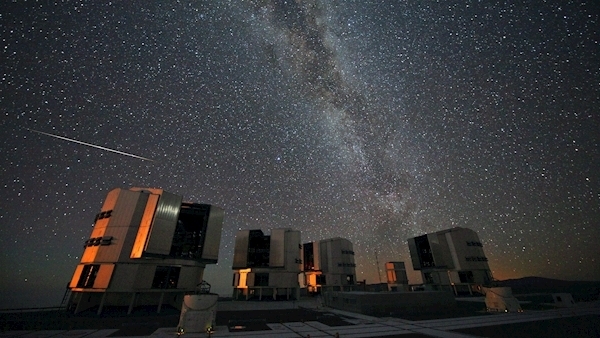
It usually takes the Earth from July 17 to August 24 to pass through the tail, but the densest part of the tail is crossed on the night of August 12 and morning of August 13 this year. On that night we get the peak of annual Perseid meteor shower, probably the best meteor shower of the year.

To view the Perseids, just set yourself up outside and look skywards. No telescopes required. This is a purely visual experience. A darker location is better – you’ll see more of these “shooting stars”. Expect up to one shooting star a minute. Although the Moon is almost full this year, reducing the contrast somewhat, you’re almost guaranteed a spectacular display – Earth’s weather permitting of course!

More details on www.bco.ie.

More in this section

Cookie Policy Privacy Policy Brand Safety FAQ Help Contact Us Terms and Conditions

© Examiner Echo Group Limited













