Appliance of Science: How is honey made?
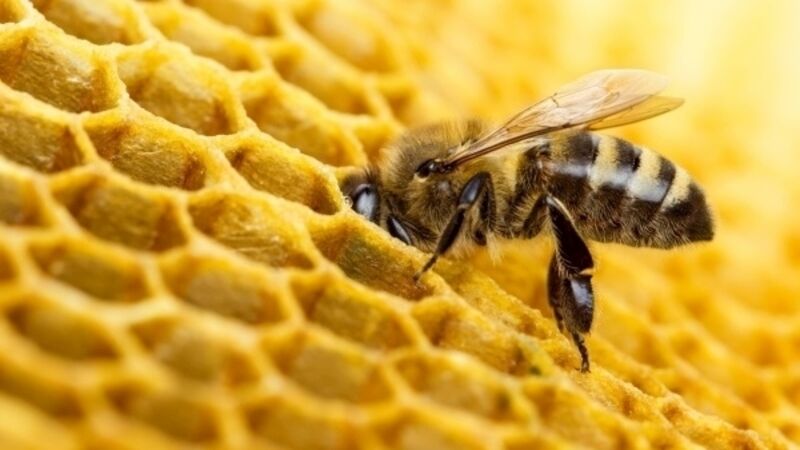
As I type this we have a cupboard full of honey provided by my lovely, bee-keeping mother-in-law and my husband is outside building our own hive.
I think it’s safe to say we have caught the bug.
The global importance of bees is as major plant pollinators, not actually to provide us with honey, that’s just the bonus, but how do they make the sweet, golden honey in the first place?
The collection
Honey is made from nectar, a sugary-liquid produced by flowers.
Foraging honeybees suck up this nectar with their long, tube-shaped tongues (proboscis) and store it in a second stomach called the honey stomach, which acts as a temporary storage unit until they get back to the hive.
Forager bees will tend to collect nectar from one type of flower at a time, visiting hundreds offlowers until its honey stomach is full at which point it returns to the hive.
From liquid nectar to thick, golden honey
Nectar is a watery sweet solution made up of different types of sugars.
The first step in changing the nectar into thick, golden honey starts in the honey stomach, where digestive enzymes start to break down some of the more complex sugars.
The main enzyme carrying out this work is called invertase, sometimes referred to as bee enzyme.
Once back at the hive the forager bee regurgitates the nectar into the mouth of another bee, called a house bee.
The house bee continues the process of honey making in two ways, firstly, by further digesting the nectar, breaking it down into more simple sugars like fructose and sucrose and secondly, by repeatedly regurgitating it onto the tip of her tongue, to allow evaporation of water.
Depending on how much nectar is being brought into the hive at the time, the nectar may be passed from bee to bee until it is finally regurgitated one more time and placed into a cell in the honeycomb.
The deposited honey still has a lot of water in it which needs to be removed to turn it into the thicker substance we know as honey.
So how do they do that?
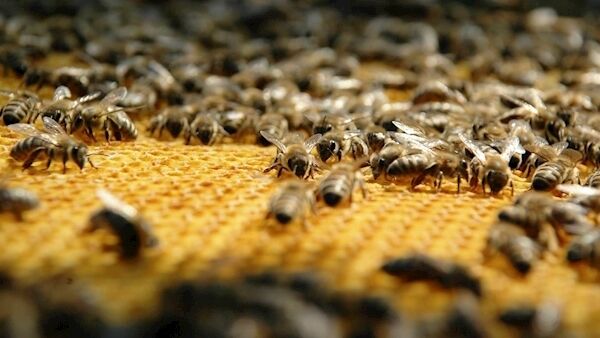
The bees create an airflow over the honey by flapping their wings and this airflow carries some of the water content away from the honey until it is as low as 17 to 18 percent.
Finally the process is complete and the bees seal the honeycomb cell with wax.
Of course the bees are not just making honey for humans and other animals to eat, they make it and store it like this as a food source in the winter months.
It just happens to work to our advantage that a healthy hive usually makes a lot more honey than they need, and we have learned how to harvest the rest for our own consumption.
Why is some honey clear and some cloudy?
This all depends on the amounts of different sugars present in the honey.
Honey is about 80 percent sugar, made up primarily of fructose and glucose.
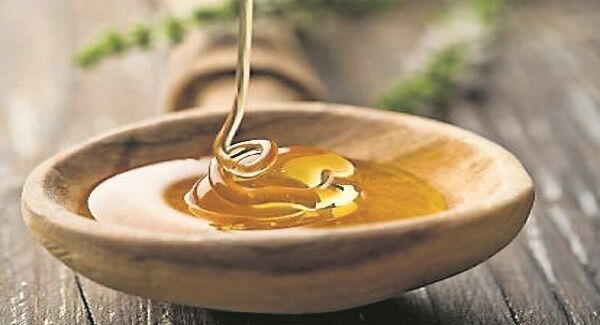
Higher levels of fructose tend to mean a more liquid honey that is clear in appearance, while honey containing higher levels of glucose are more likely to crystalize and this causes the cloudy appearance.
Final facts
One honeybee will collect enough nectar in its lifetime to make about one-twelfth a teaspoon of honey; to make just one (454g) jar of honey, honeybees will visit about two million flowers and fly about 80,000km.
CONNECT WITH US TODAY



Be the first to know the latest news and updates