Cork on the Rise: A city with all the right ingredients for a sustainable future
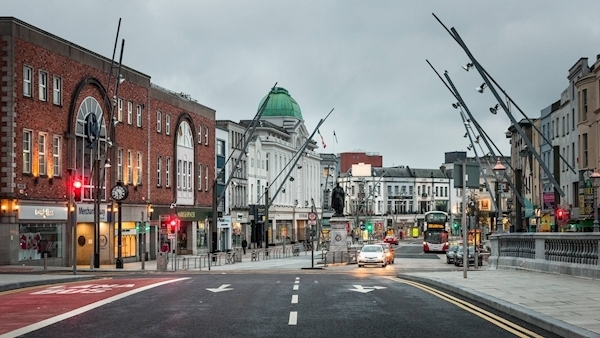
Cork has strong economic and cultural foundations and an embarrassment of natural and landscape assets. Can they be knitted together to ensure a sustainable good life for generations to come, asks , urban designer and CEO of Nano Nagle Place in Cork city.

I’m a blow in. Dublin born, London made. In 2016 myself and family upped sticks and left the comforts and excitement of one of the world’s great cities and set sail for a new home in Cork. The reason; the good life.
The good life for me; the good life for my kids. When you cut away the economic jargon and planning forecasting, I’d argue that it is – or should be - the call of the good life in Cork that motivates both the Lord Mayor and Apple’s newest immigrant tech worker.
A good life is one of opportunity and flourishing. The vibrant job market gives us economic opportunity. Cork’s excellent schools, UCC and CIT both educate and enlighten.
We have unrivalled access to some of the most scenic landscapes in Europe. The political stability of Ireland and Cork’s embrace of world cultures affords us freedom of speech and cultural expression.
One of the joys of my role as CEO of Nano Nagle Place is to witness first-hand the strength of Cork’s thriving community groups and its enviable social capital. Across all these metrics Cork is an exemplary European metropolitan region and we owe a thanks to the diversity of institutions, communities, business and individuals that have secured us such a home.

Necessary but insufficient. As a city and a society, we need to come together to help us live in harmony with nature, to realise the unsurpassed play and recreation opportunities afforded by the natural world and to build a sustainable city.
Over the course of the late 20th century, Cork has morphed from a compact European city to an extended suburban sprawl. The majority of our children are driven to school.
The historic quays to the beautiful river Lee are clogged with polluting traffic. Our public transport system is light years behind what is taken for granted by our European neighbours. The Pana-Ban has narrowed our public discourse as to the future of a liveable, progressive and vibrant city centre. Private affluence but public poverty?
In personal terms, my kids don’t have a decent park within a walkable distance of home in St Lukes. I wouldn’t dream of letting my eight-year-old walk to school given the aggressive traffic. That colleagues have to drive to work given the paucity of public transport options means I miss the after-work drinks that are such a feature of London life. The negligible inner-city population means the shops shut early and the buzz isn’t what it might be.

We can rightly take pride in burgeoning indigenous tech business such as Vox Pro but to what end if our kids don’t have playgrounds to hand.
My move to Cork – rather than back to Dublin – was based as much on the city’s potential as on the romance of the proud, historic and architecturally charming city on the Lee.
Nearly three years on I have a much more informed take on both its joys and its failings. It is as a sustainable city that Cork doesn’t – currently - deliver on the good life. Let’s benchmark the city against the open spaces of Oslo, the public transport in Bilbo, the climate realism of Rotterdam, the green infrastructure of Nantes and the sustainable housing in Freiburg.
In so benchmarking we bring out the potential of the city to capitalise on its considerable assets: the River Lee, the city’s manageable size, its economic engine, its development around a series of urban villages – its strong communities and civic pride.

Let’s move beyond the narrow ambitions of the OPW and reclaim the Quays as riverside walkways and parks. Let’s realise the brilliant and so easily achievable Lee to Sea greenway campaign.
Let’s get the old and young, the less abled and the lycra-clad, walking and cycling not by exhorting them to get on their bikes but by building a world class public realm and cycling infrastructure. Let’s not put all our housing eggs in the developer’s basket but also invest in community led mixed-use social and co-developed eco-housing. Let’s treat our city centre as the first neighbourhood amongst equals rather than as a glorified out of town shopping centre.
Voting and civic leadership are key. Whilst the majority of those school children who marched on the Global Climate Strike on March 15th won’t have a vote to cast come the next local elections – they most certainly will be in a position to judge their local councillors and politicians thereafter.
The public at large is catching up with both the environmental agenda but also to the realisation that public health and public realm are core to the good life in cities.
Cork has strong economic and cultural foundations and an embarrassment of natural and landscape assets. Can they be knitted together to ensure a sustainable good life for generations to come. Cork most certainly can!















