Creators get the balance right with new Netflix natural history series
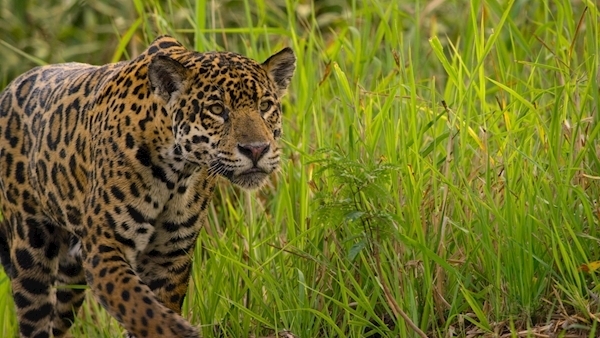
The creators of a spectacular new natural history series on Netflix tell about the tricky task of engaging an audience while warning about the state of the planet.
If you want to make an epic natural history series of the calibre of such shows as The Blue Planet or Planet Earth, you have two main options.
You can get in a team of film-makers, tell them what you want, and hope they can fulfill the brief with the millions you’ve given them; or you can just hire the same people who made those landmark BBC shows.
Sensibly, Netflix went the latter route for Our Planet. Released next Friday, the epic show was created by nature television’s A-team: series producers Alastair Fothergill and Keith Scholey, with David Attenborough on narration.
Four years in the making, with over 600 crew in 50 countries, the eight episodes are as impressive as you’d expect from a group with such a pedigree.
It looks great, with advances in technology helping to raise the bar yet again in terms of viewing experience, and we’re treated to numerous spectacular sequences.

The most obvious departure from previous series is that the perilous state of the planet is far more prominent this time around. Issues that environmentalists have been going on about for years have finally hit the mainstream, and public attitudes are shifting.
Highlighting serious issues, while ensuring that viewers stay watching is still a difficult balancing act for programme-makers. Ring the alarm bells too loudly, and many in their comfy couches will just reach for the remote.
“I think it’s probably the hardest thing we had to get right on this series, and we thought very, very deeply about it. Obviously the audience will judge that,” says Scholey.
What we found in this process was we ended up picking stories that were very interesting wildlife stories, but they also told a bigger environmental story.
"When you put that all together into a show, the overall show became so much more interesting.”
For instance, we see the most intimate footage yet of rare Siberian tigers – less than 600 in the wild – and hear about that animal’s relationship with the forest and the the importance of a food chain built on the humble pine cone.

“What we hope we’ve got are entertaining shows that show the wonders of the world, but actually have got a better story, and actually tell people so much more about where nature is now, and what its problems are, but also how you solve these problems.”
For viewers who are inspired to actually do something to help, a website, ourplanet.com, has been developed with the World Wildlife Fund (WWF) to offer more information and practical steps towards helping conservation.
Having the show on Netflix gives Fothergill and co reach even beyond that of the mighty BBC. Our Planet will be available in 190 countries to a mind-boggling 140 million subscribers. It will be online 24/7 for months and years to come.
In terms of ambition, Fothergill and co admit they hope to help move the dial about public perceptions of the importance of biodiversity.

“But with that said, we’re not political, and we’re not wagging a finger,” stresses a man who recalls filming eels in Co Cork with Attenborough back in the 1980s.
“We’re just saying ‘These are the facts, this is the truth, this is what’s out there, this is what you need to understand’. And we think it’s a message that people are ready to hear.”
Even though viewers have been spoiled with superb natural history series in recent years, Our Planet will still impress.
One of the most talked-about scenes will be the calving of a glacier in Greenland, where a skycraper-sized chunk of ice is shown splitting from the main body, creating a huge wave.
It makes for spectacular viewing, but in an era when climate change and rising sea-levels are already having a huge impact, this is also a sobering sight. Scholey is well aware of the significance of that shot.
“Why I think it’s such a standout is that it’s the most dramatic way to actually visualise climate change.
"The problem with things like climate change is that it’s difficult to show it. But that scene gives you an impression of the magnitude of what’s happening. I think that’s really important.”
One of his other favourites is the footage of Arabian leopards captured by remote cameras in Oman, a rare sight of an animal where the most anybody usually sees is their paw prints.
“The extraordinary thing was that a male met up with a female right in front of one of these cameras and they mated. It’s almost as if it had been all planned... they’re even in the right place in the frame!”
The Siberian tigers form part of another momentous sequence captured by remote cameras, after two years of effort. Fothergill points out how difficult such images can be so difficult to get.
We had two cameramen working for two winters, for six weeks in a hide, where the spent the whole time there and only came out on a Saturday for a few hours break. And neither of those guys got a single frame of a Siberian tiger.
Not surprisingly, Fothergill and Scholey are fulsome in their praise for Attenborough. At 92, the producers felt he didn’t need to go out in the field for this series, but they explain about how he’s still hands-on in writing the scripts for the narration.
Scholey recalls being in Davos for the World Economic Forum in January, and looking down the line of world leaders listening attentively to Attenborough.
He’s inspired all of us. All of us who now work in wildlife film-making as young children we watched his programmes.
"Most of the conservationists and many of the scientists we work with are in those jobs because they were inspired to study zoology or botany at university by David’s programmes.”
It was in Davos that Attenborough explained that the Garden of Eden was no more.
“We need to move beyond guilt or blame, and get on with the practical tasks at hand,” he warned.

Attenborough has several other series in the pipeline, but we all know he can’t go on for ever. There’s already been premature speculation about a successor, and while some of the recent generation of presenters have the knowledge, there is nobody to match the great man in terms of gravitas, the tone of his voice, etc.
Just like the planet he’s trying to celebrate and protect, we really do need to cherish him while we still can.
When nature meets cutting edge technology
The team behind Our Planet have long been to the forefront of using cutting edge technology in their shows, and this series raises the bar even further.

HIGH DYNAMIC RANGE (HDR)
As has been the case for a number of years, the series is filmed in 4K resolution which, particularly if you have access to good bandwidth and a top-quality screen, makes for an amazing viewing experience.
Our Planet is also the first series they’ve created in HDR, which adds even more to the cinematic quality of the images, with wider range of colours, better contrast, etc.
“When you see it on a HDR TV, it is breathtaking,” says series producer Alastair Fothergill.
“The depth in the colour, the depth in the black... it really enhances natural history. Most terrestrial broadcasters can’t broadcast HDR because it demands too much bandwidth for the data, but Netflix can. You need a good internet connection, but you can download it and it looks exquisite.”
STABILISED CAMERA SYSTEMS
A major leap in wildlife TV came with the Planet Earth series in 2002 when the switch was made from traditional film to digital. This was particularly apparent for shots taken from a helicopter, which previously would have been quite jumpy.
The stabilisation system for the helicopter-mounted cameras use gyro-sensors that not only produce a smooth, sweeping shot, but also allow for zooming in on the subject.

In Our Planet, this type of system was mounted on various vehicles, most notably for a particularly exciting sequence involving a pack of African wild dogs as they hunt a wildebeest.
“You really feel like you’re hunting with the dogs,” says Fothergill.
Every shot in that sequence is from a vehicle moving at 40 miles per hour across very rough ground. But the stabilisation — the gyros in the camera system — stabilise a very powerful zoom lens. So you’re getting beautiful close-ups of the dogs, as if you’re on their shoulder but you’re 100m or more away.
4K DRONES
Drones have become an affordable and essential part of wildlife filming over the past decade or so, allowing amateurs and professionals alike to capture sequences that previously would have required aircraft and all sorts of other difficult logistics.
For this series, the use of drones that can film in 4K resolution has been key. Combine that high-resolution with multi-axis stabilisation systems, and you have a fantastic tool that’s also quite unobtrusive for the animals.
“There’s a beautiful sequence of a newborn blue whales calf emerging from beneath its mother, a very intimate image — the whales are completely unconcerned by the drone,” says series producer Keith Scholey.
CAMERA TRAPS
Another longstanding piece of kit for wildlife shows has been remote control cameras.
Fitted with motion sensors, they can be strapped to trees or other fixed points, and are triggered when an animal walks past.
Cheap versions can cost less than €100, and are used by many amateur enthusiasts in Ireland, but the new generation versions used by the Our Planet crews allowed them to get high-quality footage that an actual camera person might never have captured.
Sequences involving rare Siberian tigers and Arabian leopards were made using these cameras, as well as footage from an area you might not associate with wildlife:
“We did a sequence in Chernobyl which you could describe as the most environmentally destroyed habitat on the planet,” says Fothergill of an area that has lost much of its human population since the nuclear accident in 1986.
It has been reforested. We used these remote camera traps over two years, and amazingly captured wolves coming into Chernobyl. The density of wolves coming into Chernobyl is higher than surrounding countries.















