Blue Planet: Diving in for live show
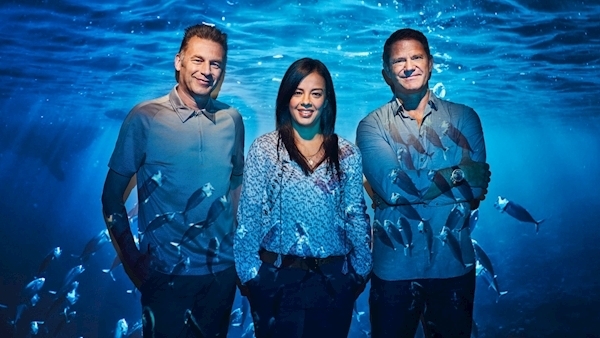
The impact of Blue Planet II has been astonishing, writes The BBC One series — a follow-up to David Attenborough’s 2001 The Blue Planet — has reached millions of people across the globe. One year on and the channel’s Natural History Unit welcomes a further spell of programming, starting with spin-off shows Blue Planet Live and Blue Planet UK. It’s a commendable effort to tackle significant subjects, remarks presenter Chris Packham, 57.
“The programmes will still be celebratory,” he vows, keen to ensure it’s an optimistic watch. “From my point of view, if you want people to help, you’ve got to get them to engage with the subject.
“But you’re trying to get them to engage with the subject from a detached point of view — they’re not with you in the water, so you’re using their awe to connect with them, to build an affinity so that they care. And then the next job, not that of the BBC, as it’s not a campaigning organisation, is to get them to act.”
During the week-long run of Blue Planet Live, Southampton-born Packham will celebrate the diverse wildlife living in the seas around us, as the naturalist pairs up with scientists at the world’s biggest whale nursery in Mexico.
“I am heading to Baja California, Sea of Cortez, which between December and April is the world’s primary birthing site for many of the whale species,” he details.
Also, Steve Backshall and Liz Bonnin will probe the Bahamas and Australia’s fragile Great Barrier Reef respectively. It’s the younger audience that’s really taking note, Packham insists.
“The schools’ climate strike is indicating that young people are fed up with the pace of change,” he begins. “They are realising they need to take matters into their own hands and I find that tremendously exciting.
“They are better educated. I was talking to some young people just yesterday and telling them that when I was their age, my environmental awareness was only beginning to come together in a cohesive understanding of what the problems were.”
And the older generation?
“Well, vote them out!” Packham quips. “And I’m not talking party politics, I’m talking that generation of people who basically don’t understand the issues nor the urgency to take action upon them.
We’ve got a new generation of dynamic, well-informed, determined young people, and this is the sea change, the shift, because then our generation can vote for people who we can trust to make decisions that need to be made, and do it quickly.
“It’s no fault of our politicians — think back 25 years, they didn’t need to know anything about climate change, it wasn’t such a big issue. Now, they do.”
Next, Packham will present a one-off film that will explore the perils of human population growth. The BBC Two show, which will feature as part of the channel’s Horizon strand, asks the question: What does a world of 10 billion people look like, and what pressures would it put on resources?
“It is, in my opinion, singularly the most important thing to talk about,” states Packham.
“As a species, we are enormously intelligent and adaptable and we will survive the impact of climate change - although the changes that we undergo will be catastrophic and life will be nothing like it is now.”
But, he adds, with the population set to continue to rise, “we’re just running out of resources” — on this he references forecasts that suggest by 2050 there will be more than 10 billion people on the planet.
“This is a conversation that very desperately needs to be had,” he says.
Is he optimistic about the future?
“I’ve got a sneaking suspicion that the best part of the human species’ time on earth is yet to come,” Packham confides.
“I think at the moment we’re the rowdy teenager that’s running before it can walk and we’re making lots of mistakes — and at this point we’re just recognising that and beginning to address them.
“We will, perhaps, get back to a time when we can live in harmony on this planet. That’s my Utopian dream.”

CONNECT WITH US TODAY



Be the first to know the latest news and updates

















