How Ireland’s first female lift engineer lifted herself out of addiction
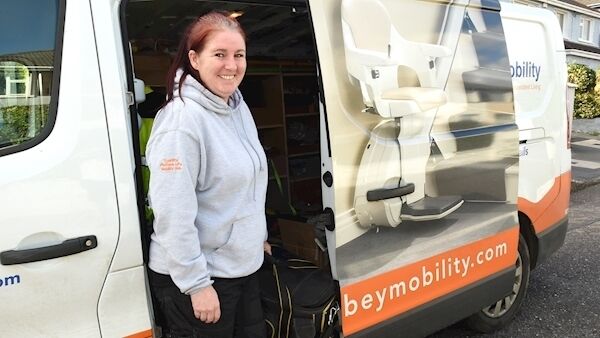
A year ago, Susie McConville was a cleaner at a lift-engineering company in Cork. Once, when engineers couldn’t figure out what was wrong with a broken lift, she suggested a solution.

How Ireland’s first female lift engineer lifted herself out of addiction

Susie McConville is Ireland’s first female lift engineer, but her early adulthood was marred by tragedy, addiction, and stigma, says Shamim Malekmian.

A year ago, Susie McConville was a cleaner at a lift-engineering company in Cork. Once, when engineers couldn’t figure out what was wrong with a broken lift, she suggested a solution.

“When I had no cleaning to do, I used to sit down and look at wiring drawings,” she says.

“So, I told my boss to check a certain side of the lift, and he did, and the problem was there,” she says, her eyes beaming with pride.

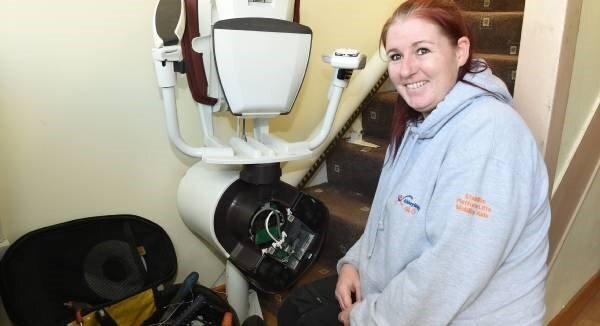
Impressed, the company’s manager, Tim Morley, hired her as a trainee lift engineer. Less than 10 months later, Susie is now Ireland’s first female lift engineer.

For Susie, who’d exchanged her ‘tomboyish’ self-confidence with merciless self-loathing, due to homelessness and drug addiction, it is the highlight of a lifetime.

“I was well proud of that. I was like ‘I’m actually good at something’. I’d worked as a cleaner all my life. That’s all that would hire me,” she says.

“Fixing things comes naturally to me. I was a daddy’s girl growing up. I was always around my dad and watched bits and pieces that he did.” Susie, who is 37, has dyed her hair fiery red and has a gentle, coy demeanour.

“I don’t talk a lot about myself to anyone at all,” she says.

In her early 20s, Susie was living with her fiancé. At 24, she became pregnant with her first child.

Nine months later, the young, expecting mother delivered a stillborn baby boy, named Nathan. It was an early reminder of the fragility of life. Later, when Susie came to know this fragility too well, she had to numb herself to forget.

What followed are pregnancies and sudden deaths; being pregnant and in mourning became the hallmark of Susie’s 20s.

Four months into another pregnancy, she witnessed her fiancé being stabbed to death by his own brother, who was grappling with addiction.

“Nine months later, my little girl, Elyssa, died of SIDS [sudden infant death syndrome]”, she says.

A growing body of research suggests that maternal stress and bereavement during pregnancy have an adverse influence on infant health.

A study published in the American Journal of Epidemiology found that infants of mothers who had experienced severe stress or death of a loved-one, a year before or during pregnancy, had an 18% higher risk of stillbirth.

Susie plummeted into unspeakable grief and swallowed pills to allay the pain. Soon, she was cushioning life’s blows using heroin.

That [her daughter’s death] led into the first addiction

Shortly afterward, Susie sobered up, worked as a cleaner here and there; she even started going to college. “I did what I had to do,” she says.

Meanwhile, she tried to secure a permanent job, refusing to spend her entire life toiling in thankless, underpaid obscurity.

Soon enough, however, Susie realised that no employee saw her as capable of doing anything besides cleaning.

Susie says even landlords would often deny her the right to view properties. She finds words insufficient for expressing the way she felt back then.

Overwhelmed with grinding poverty and the strain of securing expensive housing that laid far out of her reach, the young woman became disheartened, stopped going to college, and relapsed into addiction.

Former addicts, as well as those who have a history of job-loss, have an increasingly difficult time securing employment.

They are often subjected to “strong stigma” and overwhelming discrimination from potential employers.

On the brink of giving up hope, Susie decided to try her luck one final time and entered a rehabilitation centre.

After finishing a month of addiction treatment, Susie met Tim Morley while volunteering for a homeless charity, not knowing that he would offer her an opportunity to finally live on her own terms.

“Fixing things was always my thing,” she says.

Morley is a genial man of about 45. He is tall and slightly stooped, and kindness radiates from his face every time he looks at Susie. He says he had never believed in any form of male superiority.

“Anyone can do whatever they want. There is nothing I can do that Susie can’t do,” he says.

“I’ve had men who’d come from college, never dealt with addiction, and they were just not interested.” Morley describes Susie as one of his most diligent and loyal employees.

“Over the years, I’ve had a lot of employees, and Susie has been one of the most dedicated employees I’ve ever had,” he says.

“I have no doubt that she is going to be one of the best engineers in this country.”

Morley believes that Ireland’s labour market is steeped in discrimination, when it comes to former addicts or the homeless.

“If no one’s going to take a chance on them, they end up in the same cycle all the time,” he says.

When you hire someone from a certain background and give them a start, and they’d see that someone has a bit of faith in them, you will get 100% loyalty from them

“If Tim hadn’t gave me a chance, I wouldn’t be able to get back up on my feet,” Susie says.

“Addicts are not bad people. We just made bad choices. That doesn’t make us bad people.”

The Government aims to purvey equal job opportunities for all citizens, regardless of their social status or nationality, through an anti-discrimination legalisation.

There is scant data available to precisely assess the legalisation’s impact on protecting former addicts or the homeless from workforce discrimination.

Although Cork-based, Morley’s company, Abbey Mobility, operates across Ireland and parts of the UK. Susie heads to work at 3am, as it often takes her hours to get to a client outside Cork County.

She says some of their clients still react with disbelief upon meeting her.

“I’ve been doing this for more than 10 months now, and we just went into a home to fix a lift, and they just automatically thought that I was just there,” she says.

“A lot of people don’t think you’re there to do the job. They are scratching their heads, thinking, ‘is a woman doing it, like’? They offer me to sit down and everything, which is nice, god love them.”

Susie has now a steady income and a new apartment and she still volunteers for the homeless.

She wants to inspire other women who may have given up on their dreams, out of feeling intimidated by the idea of entering male-dominated industries.

“We can do it just as good, like. I wouldn’t even say it’s a fear; it’s more of a nervous thing of going into an industry that is male-dominated,” she says.

“But don’t be. It’s fine, girls. It’s not the ’60s or the ’90s anymore. Men are more accepting of us now. I know not every man would have the view that Tim has, but they’re wrong, because I’m doing it.”

Susie recently travelled to England to repair a few lifts. It was her first time outside Ireland.

Susie McConville is Ireland’s first female lift engineer, but her early adulthood was marred by tragedy, addiction, and stigma, says

x

More in this section

Cookie Policy Privacy Policy Brand Safety FAQ Help Contact Us Terms and Conditions

© Examiner Echo Group Limited