How bookshops can survive amid Amazon challenge
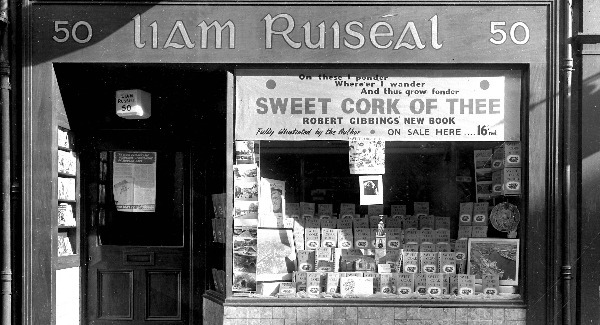
A recent trip to England had fretting for the future of bookshops in the face of the challenge from Amazon
My train to Huntingdon departs from King’s Cross at Platform 9. But, “Watch out for Platform 9¾" says a young voice from the kitchen as I leave the house.
At the station I find my required archway half-hidden by a swarm of children and adolescents, all exhilarated and patiently corralled around the mythical Platform 9. This cheerful throng has gathered in the name of a book.
It is in the name of a book that I reach Huntingdon in Cambridgeshire, remembering the recent ending at home in Cork city of the 100-year long presence of Liam Russell’s bookshop.
The signs say ‘Everything Must Go’. Gone also is the Time Traveller’s Bookshop beside the river at Wandesfords Quay. There, Holgar Smyth has found the struggle too difficult and will concentrate instead on his premises in Skibbereen.
It is no surprise that small independent outlets and booksellers are drowning in the wash of the Amazon tide. The surprise is to read that Barnes and Noble, the vast American chain of bookshops, is reducing its spread because it is threatened by Amazon’s online impact.
And now comes the news that Foyles, the legendary and hugely influential London bookseller, has been bought by Waterstones (which already owns Hatchards and Dillons). Foyles was a family business, the most famous of its seven branches the one on the Charing Cross Road. It may be appropriate in this technological age that Waterstones, the relative newcomer to the trade, is the refuge of these long-established bookshops, strengthening itself to meet the Amazonian challenge which has defeated them.
“It’s like a giant spider weaving everything into its web,” says Diana Boston when I meet her at the Manor at Hemingford Grey. “Even Abebooks is in Amazon now.”
Diana is the custodian of this ancient house, once home of her mother-in-law Lucy M Boston, author of The Children of Green Knowe series.
The Manor retains traces of its Georgian fame as the birthplace of the fabulous Gunning sisters, born here to an Irish father and a mother who rivalled the determination of Jane Austin’s Mrs Bennet by wedding two exquisite daughters into the British aristocracy.
In restoring the time-worn manor Lucy retrieved also something like its soul; its imagined life fed the ageless books she wrote here for children. She died in 1990 but Feste the rocking-horse remains at Green Knowe, along with some of the fabulous patchwork quilts Lucy stitched even when age dimmed her eyesight and passing schoolchildren dropped in to thread her needles.
Copies of her books are for sale here where they were written. “But if you don’t sell via Amazon people won’t know that your books are still in print,” Diana says. “That’s an advantage but we don’t make very much money from it.
Because Amazon can afford to be cheaper is one of the main reasons why so many bookshops are in trouble.
Endorsing my rarely-uttered conviction that dogs can read is the sign outside the entrance to Barter Books at Alnwick in Northumberland: ‘Dogs Welcome.’
While various canines slumber among the stacks their leashed owners browse the shelves, sit reading at a round table fenced by palisades of volumes or refill their tea and coffee from an alcove near the winter fire. Overhead a model train clacks along rafters decorated with literary quotations.
There is a colourful childrens’ section, there are glazed cabinets for first editions and rare and collectible volumes, the aisles are navigated by subject signage and a computer-aided search facility.

Alluring spines of contemporary fiction ( if you date contemporary from before the printing press) compete with topics ranging from Shakespeare to sheepscab while the annual footfall of 350,000 customers keep the tills ringing blithely.
There’s room for all this because we are in a former railway station, courtesy of the National Storage and Haulage Company and of Stuart Manley and his American wife Mary, proprietors of Barter Books.
“The clue is in the name,” says Manley. “We’re a second-hand bookshop operating on a barter system. We get our antiquarian items from serious auctions but most of the everyday stock just walks in the door and while we sell in the usual way we also use a system of barter credit.”
As the “everyday stock” is replenished from trolleys wheeled past by some of the 50-strong staff, Manley explains that this location is not an accident. “I’m a model-maker and railway enthusiast at heart. But we needed a new idea and Mary, who is very well read, suggested a second-hand bookshop.
“We found this premises with very accommodating landlords and Mary established the identity and the atmosphere and the customer preferences. It’s grown into a most attractive place, thanks to her.”
Innovation seems to be the key to survival, not to mind success. As for the bibliophile dogs: “People can spend quite a bit of time in here. Often they call in after going for a walk, or they don’t want to leave their dog in the car, or outside in the cold while they browse. It’s one of our most popular features in fact.”
Barter Books expresses Stuart Manley’s faith in book tourism. “It’s quite a powerful thing,” he says when I admit my fears for the independent bookseller.
When Kindles came out you couldn’t open a paper without reading about the death of the book. In fact, people with Kindles still buy actual books, even children still love to have a real, physical book in their hands.
“No, the most adverse effect on the retail book trade has come from Amazon, which can sell new books at a price cheaper than the traders can buy them. We sell via Amazon, our catalogue is there. But where new books are the core purchase the margins are too tight for the survival of smaller outlets.”
And too tight also for some of the biggest outlets of all.
My journey ends where it began at Kings Cross. It’s evening, but Platform Nine and Three Quarters is again thronged and jubilant. I salute these young evangelists of the book, and remember novelist Anne Patchett, founder of the Parnassus Bookshop in Nashville and author of The Bookshop Strikes Back (2013): “If what a bookstore offers matters to you then shop at a bookstore… This is how we change the world.”
CONNECT WITH US TODAY



Be the first to know the latest news and updates

















