Shool's out: When a teenager refuses o return to the classroom because of buillying
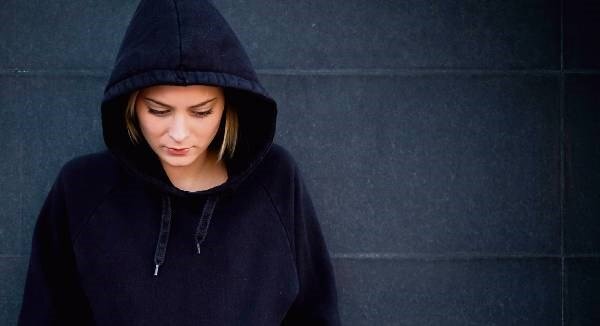
A teenage girl talks to about being bullied relentlessly at school and on social media by a ‘Queen Bee’ and classmates, leaving her with no option but to quit
BULLYING may be an age-old problem, but the rise of ‘The Queen Bee’ and her cohorts, aided by social media, can have devastating consequences for those who fall prey to her actions, and in extreme cases, leave the victim so traumatised, they find themselves unable to stay in school.

Sarah*, from Co Cork, was a happy, well-adjusted teen until transition year and the bullying began. The bullies had been her friends since nursery, but at the start of fourth-year turned on her with devastating consequences.
“With transition-year comes a lot of extra freedom, where we were unsupervised and there was constant bitching and competition. All the talk was about the weekend, going out, getting drunk. I wasn’t into that.”
The bullying quickly escalated from being bombarded by text and excluded from social occasions to having rumours spread about her to being completely ignored. It’s clear from Sarah’s demeanour as I talk to her that the experience was deeply distressing.
“I would sit in the canteen at lunchtime and nobody would talk to me, they would literally turn their backs, but at the same time it felt like the whole school was talking about me.”
Now 20, she picks nervously at her cuff sleeves as she recalls the loneliness and isolation. “I felt the bullies had turned everyone against me, I had no one. Can you imagine what it’s like sitting next to people who won’t talk to you?’
Sarah’s experience follows the classic model of what clinical psychologist Enda Murphy refers to as a ‘bitch fest’ typically led by the ‘queen bee’ or gang boss, two trusted lieutenants and two hangers on. Most interesting is his assertion that girls like Sarah are not targeted because they are vulnerable but because they are the emotionally mature ones.
“If the girls in the group were going out, getting drunk, and this wasn’t her thing, she wasn’t having the same shared social experience. Something about this behaviour didn’t sit right with her, in other words, her moral compass was different to theirs and that’s why she was targeted.”
Sarah’s mother Helen met the year head and school principal on a number of occasions to inform them about the bullying but because a lot of it was happening on social media, she says the school adopted a hands-off approach.
“What was going was very clever, very discreet. When we showed them the social media messages they said that was outside of school. They basically didn’t want to know,” she says.
The situation became so intolerable that Sarah started to refuse to go to school.
The two clearly have a close, and loving relationship, but Helen said the mornings became horrendous. “She was screaming, shouting ‘I’m not going’. We would persuade her to get dressed and my husband would drive her to the gates but she’d refuse to go in.”
“I couldn’t face it,” says Sarah.
“I couldn’t face going in to sit next to people who literally wouldn’t talk to me”.
It affected the whole house, and understandably Helen was afraid that Sarah’s younger brother, who is now 15, might follow a similar pattern.
“There was lots of shouting and roaring initially as we tried to understand what was happening and get her to go, but at no stage was I prepared to give up on her.”
Helen said the vice principal’s advice was to force Sarah to go to school, a strategy that clearly wasn’t going to work. They attended their GP and started seeing a therapist on his advice (the offer of medication was flatly refused).
However, after eight sessions they felt it was having little effect. “She basically said, ‘I understand you are fearful’ and to relax at home, watch some soaps, don’t worry about school.” This was the only therapeutic support Sarah got.
They also made contact with the HSE’s Child and Adult Mental Health Services but there was a lengthy waiting list to access it services. Cork and Kerry has the longest waiting list according to a recent report.
With only intermittent attendance, Sarah managed to sit her summer exams, and the school promised to review the situation in August. Helen said the impression was “it’s the summer we don’t want to deal with this”.
They also wrote to the Department of Education about the bullying, and the department replied via the school that the problem “was dealt with appropriately”. The principal then suggested it may be better if Sarah switched school.
She left behind the big, co-ed community school and opted for a small, single-sex rural secondary where she hoped she could start fifth-year afresh but very quickly the social exclusion started again, with her new classmates wondering why she had left her former school, reluctant to let her enter the close-knit groups they had formed.
At this stage, Sarah’s confidence was at an all-time low and she began to feel she was the problem.
“I felt there has to be something wrong with me, this can’t be happening again,” she says.
Six weeks into fifth-year in the new school she broke down in the principal’s office, but this time the school’s response was markedly different.
“They tried everything to persuade me to come in, down to offering to collect me, but I couldn’t. I would have my uniform on, bag packed but I couldn’t leave the house,” she says.
By Christmas, Sarah was unable to sit her exams and never returned to school for a normal school day.
Instead, she started studying at home. She would get up every morning and follow the timetable.
“It was important to stay in a routine, some days were harder than others, but I was determined to get my Leaving Cert,” she says.
Her parents paid for grinds at home in some subjects and the school arranged and covered the costs for one-to-one tuition in maths and biology.
Sarah would go to the school at 4pm when the other pupils had left.
“I was terrified of meeting any of them and would creep up the stairs. But I focused on the Leaving Cert, I wasn’t going to let anyone take that away from me.”
When asked if this is an option for other pupils in a similar situation, the Department of Education said “home tuition has only been provided in exceptional cases in respect of students with diagnoses of school phobia and/ or associated depression/anxiety which has caused, and is likely to continue to cause, major disruption to their attendance at school.”
After 18 months of no formal schooling, Sarah managed to sit the Leaving Cert. When it came to the actual exams, the school provided a ‘special centre’, basically a classroom where Sarah and two other girls were able to sit their exams, away from the stresses of a big exam hall.
Sarah and her mother are full of praise for the second school and the approach it took.
“Even though I wasn’t going to school they never washed their hands of me. They arranged for meetings with a guidance counsellor and suggested I do a beauty therapist course as this was something I was interested in,” she says.
They also recommended a PLC in Cork’s College of Commerce. Sarah says this was a lifesaver as it helped to restore her confidence.
“It had got to the stage that I was terrified of the whole world. I couldn’t even go into a shop on my own. The year in the College of Commerce, doing business, was the best ever, I felt I grew up, I made friends.”
She started studying business in CIT a couple of weeks, and while she was terrified at the thought of a lecture hall filled with 300 freshers, she says she was ready.
“The College of Commerce showed me I can go into a room and talk to people and make friends,” she says.
Transition times are key flashpoints for bullying, so entry into second level is a particularly risky time, the start of Junior Cert and fifth year, when exam stresses come into play, but perhaps most worrying, fourth-class in primary school.
Murphy says parents also need to change how they view bullying. “We need to view this through a different lens. Everyone sees the victim of bullying as the vulnerable one but it’s the ‘Queen Bee’ who is suffering from chronic low self esteem. The girl who is targeted will have a much higher emotional intelligence. She feels she’s in a world where she doesn’t fit in. We must teach her that it’s the situation that’s abnormal, not her.”
It’s almost impossible to obtain data on how many teens are refusing to attend school because of bullying. In Sarah’s case, only close family and friends were aware of the real reason. Anyone else who asked was simply told she was ill. As Helen says: “There is a veil of secrecy around it, and when you are in the middle of it, the last thing you want to do is talk about it”.
Tusla provides rates for non-attendance as a whole, but there is no breakdown for the reasons, and individual services like the Child and Adult Mental Health Services and Jigsaw, a free, non-judgemental and confidential mental health support service for people aged 12 to 25, do not keep specific data. International figures suggest that up to 5% of non-attendance is anxiety-based.
One teacher, a qualified psychotherapist with 24 years’ experience and who wished to remain anonymous, is employed by a number of schools to offer one-to-one therapy to school refusers, funded privately by the schools, rather than the Department of Education. She has seen a steady rise in social anxiety stemming from bullying over the last decade. Of the 12 pupils she sees on a one-to-one basis weekly, at least one is struggling to attend school because of bullying.
“Unfortunately, kindness is utterly out of fashion at the moment, mean is fashionable,” she says.
While most teens are kind and just want to get on with things, there is a small cohort who follow the ‘Queen Bee’ model, she says, adding that many schools adopt a ‘hands-off’ approach.
In the schools where she is employed, when a pupil is struggling to attend the first step is to recommend they take a week off. The next is to schedule a counselling appointment with her, and offer the pupil a reduced timetable. This, she says, is a often a successful strategy, as it takes a lot of the pressure off. “The aim is to prevent complete disconnection, so even if a pupil is just showing up and attending a few classes, at least they are staying engaged.”
Outside school, pupils are advised to ditch their SIM card, and only issue the new number to people they trust, and close their social media accounts. In other words, remove as many tools as possible from the bullies.
Erica Lawless is a full-time researcher, currently conducting a doctorate in educational psychology in UCD on non-attendance. She says there is a lack of awareness about the problem and inconsistency in the provision of services.
“The first step a school takes when there is a problem with non-attendance is to contact Tusla’s education welfare officers but this only applies if the pupil is under 16 years. Over that age, the National Educational Psychological Service should be contacted, and it advises schools don’t delay and allow the problem to fester, but to seek help immediately but their services are stretched.”
A Department of Education spokesperson told Feelgood: “Student mental health and wellbeing are key goals in the Government’s Action Plan for Education. Among the initiatives taken so far include: Restoration of 500 out of 600 of the cut in guidance counsellors.
“The Government’s intention is to deliver further progress: Implementing the new Junior Cycle wellbeing programme; recruitment of 21 (a 12% increase) additional National Educational Psychological Service psychologists between May 2016 and September 2018 and 65 over the lifetime of the Government.”
Building a relationship between the school and student is key. Lawless says ideally a school should have an extra staff member who can adopt a pastoral role, and is able to check-in regularly with pupils, but for many schools, with funding and staffing constraints, this remains a pipe dream.
She agrees that proven strategies include a reduced timetable and offering the pupil a ‘safe space’ during the day. This could be just an office, where they can get away from the stresses of school.
“For pupils in this situation simply getting in the school gates is an achievement and it’s important to build on that.”
And if a reduced timetable is in place, all of the teaching staff need to be made aware of the issue.
“If a teacher is insensitive or unaware of the issue and makes comments in the class, it can add to the problem,” she says.
‘The best practice approach is where all the relevant agencies, the school, parent and pupil work together in a collaborative approach to tackle the problem,” says Lawless.
There are supports available, she says, but they are not consistent, waiting times can depend on where you live, the attitude of the school is key, and often parents are unaware of where to turn for help.
“For example, Jigsaw offers early intervention in the form of free, one-to-one support over a six-week period,” she says.
The Department of Education says its Action Plan on Bullying sets out its approach to tackling bullying and promoting an anti-bullying culture in schools.”
However, Lawless says from her research many schools need greater awareness of the problem, too often the awareness only comes after the problem surfaces, and schools are thus slow to act.
Sarah and her mother were keen to share their story with Feelgood as they believe there are other teens out there being bullied and isolated at school, and who may not know where to turn to for help. Their advice is not to give up.
“Stay motivated, it’s hard, but it will pay off. It was great to know my parents always had my back. Try and stay positive,” says Sarah.
She describes the principal and vice-principal in her second school as ‘like second parents’, and says without them and the support of her parents, she wouldn’t have succeeded.
As I leave she says, “If I met you 18 months ago, I wouldn’t even have been able to look you in the eye, never mind talk to you. And while I lost out on a lot, and the experience was terrible at the time, I wouldn’t change it. I feel I became a better, stronger person. I was always the hanger on in the group, never quite part of the circle, now I have a new group of friends on my own terms.”
Sarah and her mother’s names have been changed to protect their identity
Support for children under pressure
Department of Education resource offering booklets and resources with tips for parents and schools on building resilience, dealing with emotional difficulties and promoting positive mental health
There are 13 Jigsaw services in communities across the country and are the only mental health service with an exclusive focus on 12-25 year olds.
HSE site provides assessment and treatment for young people and their families who are experiencing mental health difficulties.
A youth information website created by young people, for young people, it aims to help create an Ireland where 16-25 year olds are empowered with the information they need to live active, happy, and healthy lives.
Helps people understand the true nature of panic attacks and anxiety and how to overcome it.