22 July: A story of violence and healing
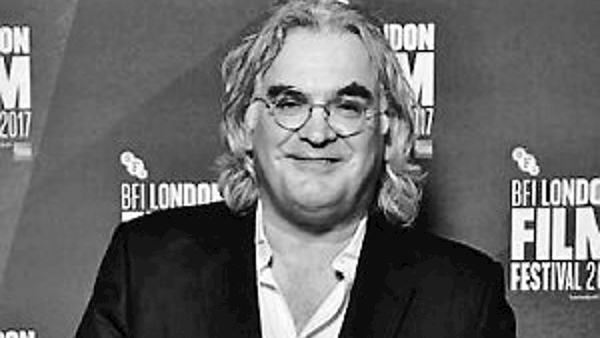
In 2011, Anders Breivik killed 69 teenagers at a youth camp on the island of Utoya, Norway. It makes for a bone-chilling start to Paul Greengrass’s new film 22 July, which examines the devastation of the attacks, but also how the country came together in the aftermath, writes
And for the filmmaker, it’s an urgent story to tell. “You’ve only got to look around the world, everywhere we look the hard right is on the rise,” he says.
“There’s a neo-Nazi party holding the balance of power in Sweden and in Austria, an extreme right-wing government in Italy, look at Tommy Robinson in the UK, Brexit, Trump, Steve Bannon.
“It’s important to make the point, that by and large they don’t agree with Breivik’s methods, but his opinions, which in 2011 were considered marginal are today mainstream. That argument that goes on about the betrayal by the elites, that’s all standard stuff.
So I wanted to make a film that dramatised it because the story of how Norway had fought for her democracy is what the film is really about. It’s not about the attack, although the first chunk is, but the story of how Norway fought for her democracy in the aftermath of the attacks is a story of today. It’s relevant to every country.
It’s not the first time the director has made a film about an atrocity that shook a nation, he is responsible for films about 9/11 (United 93) and the massacre in Derry in 1972 (Bloody Sunday).
But he has never thought about the link between them until this film.
“I think it’s part of our world, these events, and they’re really, really significant moments. 9/11 marked a big sea change in our awareness of the Middle East. We’re undergoing a similar moment now, I think people are starting to be aware now of the populist right with Trump and Brexit.
“As a filmmaker you try to reflect on the way the world’s going. Sometimes you reflect on it and try and use that to feed as entertainment, commercial movies, Bourne movies; sometimes you try and do it in a more restrained and serious and unvarnished fashion. But you’re always trying to reflect the world we live in.”
Greengrass acknowledges the complex issue of whether the far right should be given a platform.
“I can remember when I started this film I read Breivik’s testimony in court, which we use a section of in the movie, and he comes out with all these arguments about the betrayal by the elites and the sham of democracy and the evils of multiculturalism and forced multiculturalism and so forth. Those opinions would have been considered marginal in 2011 but they’re now mainstream.”
The directer says it has to be acknowledged that millions of people now hold these opinions, and that their arguments must be confronted.
“That is part of the wisdom of what Norway’s story tells us. The prime minister says in the film ‘tell him I’m listening to him’.
They face this challenge in the aftermath, do they allow Breivik to speak in the court, which of course carries the risk of giving him prominence and allowing him to spread his message, that’s a danger.
“But on the other hand, if you don’t allow him to speak, we’re not facing up to him and we’re also playing into his narrative of betrayal and sham democracy, because we would be denying him his right to free speech in a court that was going to judge him.
“With great wisdom and courage, they understood that he had to be allowed to speak.
“But even more importantly, he had to be confronted with a different perspective, and that’s where the young victims or survivors came in, because they went into court and confronted him and articulated a defence of liberal democracy, if you want to call it that.
“Through doing that, he was heard, confronted and beaten, both emotionally and morally and intellectually, and that’s what the film’s about, an inspiring story ultimately and one that’s very, very relevant today because people want to feel heard.”
CONNECT WITH US TODAY



Be the first to know the latest news and updates

















